

Thomson Reuters is laying off engineers and replacing them with those who are native to AI.
The meeting, which took place on Monday, was a technology all-hands, and afterwards, the company referred to it as involving “a small number of roles.” An employee who attended mentioned to Reuters that the figure could be as high as 500.
Thomson Reuters, the Canadian content and technology group that owns Reuters News, is globally reducing engineering positions as it integrates artificial intelligence into its legal, tax, and regulatory offerings. The employee requested anonymity as the meeting was not open to the public.
The estimated reduction of up to 500 roles represents approximately 1.8% of the company’s total workforce of around 27,100. When considering the operations and technology division, which comprises roughly 9,400 employees, the percentage rises to about 5.2%. The perception of whether “small number” is a true description or a choice depends on which figure is used.
“As customer needs in legal, tax, and regulatory workflows change, we are directing our resources to where they will have the most impact,” stated a spokesperson for the company. “We are providing support to the affected employees during this transition.” The statement did not specify any numbers, dates, or locations.
The same statement also hinted that Thomson Reuters anticipates adding over 250 net-new engineering positions globally within the next two years, with “the vast majority being senior and AI-focused.”
This sentence succinctly captures the current tech labor market dynamics. Instead of jobs vanishing, they are being reclassified at a higher level and with a more limited selection pool.
This approach mirrors the strategy GitLab employed during its shift to what it termed the agentic era, and is consistent with the new job titles that have emerged in the past 18 months, which offer higher pay and greater responsibilities while being fewer in number compared to the roles they replace.
So far in 2026, roughly 120,000 tech workers have been laid off across 228 companies, according to the tracker layoffs.fyi, which includes major firms like Meta, Amazon, and LinkedIn.
Software engineers, who were once the group most shielded from recessions and the quickest to be rehired afterwards, are now among those most vulnerable to a tool capable of writing code. The industry spent two decades encouraging others to learn programming skills.
Whether this tool is the primary cause of job losses is a separate debate, and one that the industry approaches with caution. Mark Zuckerberg informed Meta employees that the company's cuts were more related to capital expenditure than to productivity gains from AI, an unusually frank acknowledgment that the narrative surrounding AI is frequently applied retrospectively. Thomson Reuters has not clarified this point.
The company has simply associated the phrases “deploying AI” and “cutting roles” in the same announcement without further elaboration.
For the past two years, Thomson Reuters has been rebranding itself as an AI company rather than a database firm, incorporating AI assistants into Westlaw, its legal research service, as well as its tax and accounting solutions.
Legal research is a particularly suitable application due to its vast proprietary database, clearly defined inquiries, and clients who bill hourly and wish to reduce billable hours. Regulatory and tax processes share similar characteristics, which is why they were all included in the spokesperson's statement.
As the parent company of Reuters News, Thomson Reuters finds itself in a unique position where a news service reports, with due diligence and an unnamed source, on the layoffs affecting its own owner. The dateline for the report notes “July 13 (Reuters)” and has no named author, only the credit “Reporting by Reuters staff.”
Investors reacted positively, with Thomson Reuters shares rising around 5% on Monday, making it one of the day's strongest performers, despite a broader downturn in the technology sector.
The company did not provide details about when the affected employees would be leaving, which countries would be impacted, or which teams in operations and technology would face these reductions. It also did not reaffirm the figure of 500. This number became public only because someone at the meeting decided it should be.
Other articles
 The forthcoming AI energy commitment from the White House focuses on utilities.
The White House intends to request utilities, data centre operators, and governors to commit to ensuring that the demand for AI power does not increase residential electricity costs.
The forthcoming AI energy commitment from the White House focuses on utilities.
The White House intends to request utilities, data centre operators, and governors to commit to ensuring that the demand for AI power does not increase residential electricity costs.
 The upcoming AI energy commitment from the White House focuses on utility companies.
The White House intends to request that utilities, data center operators, and governors commit to ensuring that the demand for AI power will not increase residential electricity costs.
The upcoming AI energy commitment from the White House focuses on utility companies.
The White House intends to request that utilities, data center operators, and governors commit to ensuring that the demand for AI power will not increase residential electricity costs.
 The next AI energy commitment from the White House focuses on utility companies.
The White House intends to request utilities, data center operators, and governors to commit to ensuring that the demand for AI power does not increase residential electricity costs.
The next AI energy commitment from the White House focuses on utility companies.
The White House intends to request utilities, data center operators, and governors to commit to ensuring that the demand for AI power does not increase residential electricity costs.
 The public beta of iOS 27 has arrived, and you can access it without needing a developer account.
The public beta of iOS 27 has been released, featuring Siri AI, enhanced capabilities, and a more secure method for testing.
The public beta of iOS 27 has arrived, and you can access it without needing a developer account.
The public beta of iOS 27 has been released, featuring Siri AI, enhanced capabilities, and a more secure method for testing.
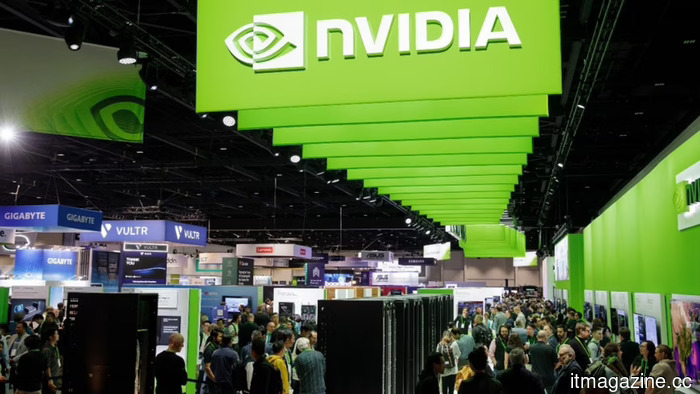 Nvidia has created a whitelist, and over fifty percent of its Asian clients have been excluded from it.
Nvidia has reduced its roster of Asian clients authorized to purchase AI chips by more than 50%, implementing a white list and stricter screening processes in Singapore, Malaysia, and Japan.
Nvidia has created a whitelist, and over fifty percent of its Asian clients have been excluded from it.
Nvidia has reduced its roster of Asian clients authorized to purchase AI chips by more than 50%, implementing a white list and stricter screening processes in Singapore, Malaysia, and Japan.
 Smartphone shipments in China decline for the fifth consecutive quarter due to the impact of memory costs.
In the second quarter of 2026, smartphone shipments in China decreased by 4.3% to 66 million units, marking the fifth consecutive decline, largely due to rising memory costs leading to increased Android prices. Both Huawei and Apple experienced growth.
Smartphone shipments in China decline for the fifth consecutive quarter due to the impact of memory costs.
In the second quarter of 2026, smartphone shipments in China decreased by 4.3% to 66 million units, marking the fifth consecutive decline, largely due to rising memory costs leading to increased Android prices. Both Huawei and Apple experienced growth.
Thomson Reuters is laying off engineers and replacing them with those who are native to AI.
Thomson Reuters is reducing engineering positions as it implements AI in its legal and tax products. It has indicated that the number is small, with staff being informed of up to 500 roles affected.