
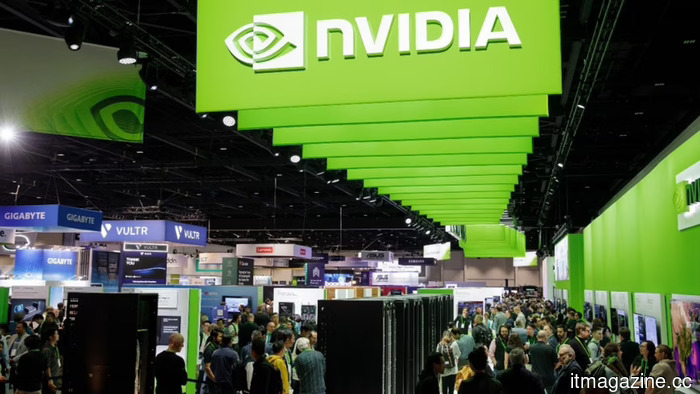
Nvidia has created a whitelist, and over fifty percent of its Asian clients have been excluded from it.
According to the Financial Times, Nvidia has significantly reduced the number of Asian customers authorized to purchase its artificial intelligence chips, as reported by three sources familiar with the situation. The company has created a new white list of approved regional buyers and has intensified its due diligence in Singapore, Malaysia, and Japan, the three areas most frequently involved in chip-diversion cases over the past two years.
This stricter vetting process has eliminated more than half of Nvidia’s former customers in these regions, although the excluded companies are allowed to reapply if they make the necessary changes. Nvidia's decision was not made out of enthusiasm; it came in response to pressures from Washington, following a period of enforcement that revealed vulnerabilities in the company’s distribution network in Asia.
In March, U.S. prosecutors charged a co-founder and two employees of Supermicro for allegedly trying to funnel approximately $2.5 billion worth of Nvidia chips into China, using a Southeast Asian company as a middleman to ship hardware from Taiwan. On May 31, the Commerce Department’s Bureau of Industry and Security provided guidance stating that an export license is needed for advanced computing chips sent to any entity whose parent company is based in China or Macau, regardless of where that entity is located. This clarification shifted the focus from shipping issues to corporate ownership, which is why a Singapore address no longer suffices.
Washington had already sought to close the subsidiary loophole that permitted Chinese companies to purchase through foreign subsidiaries. Nvidia’s white list is a commercial manifestation of this idea, placing the onus of oversight on the customer list rather than monitoring every shipment.
The economics behind the smuggling issue reveal why it persisted: restricted Nvidia hardware has fetched a significant price premium in China, with reports indicating that B300 servers are selling for about $1 million, nearly double the U.S. retail price. Such a margin can support extensive creative logistics.
Nvidia’s public stance has remained unchanged. Jensen Huang contends that smuggled data centers are futile because a grey-market operation cannot be serviced, updated, or maintained, prioritizing national security. The white list is the procedural embodiment of this argument.
Competitively, Southeast Asia has emerged as one of the fastest-growing markets for AI infrastructure, with Malaysia focusing on attracting data center investments over the past three years through incentives such as affordable land, low-energy costs, and minimal scrutiny.
By cutting more than half of its regional buyers, at least temporarily, Nvidia is directing business to those who can provide comparable computing without the compliance burdens, increasingly benefiting Chinese domestic chip manufacturers.
This situation also places legitimate customers in a tricky position. A Malaysian or Singaporean operator with no wrongdoing might find itself off the list due to a shareholder that is difficult to explain, and the path back involves a reapplication process with unpublished criteria from Nvidia.
On China's end, it has not acted as an aggrieved customer. Washington allowed Nvidia to sell the older H200 model in China last year, which led China to block domestic sales of that model, partly to safeguard its own chip industry. Both governments now seem to be restricting the same trade for opposing reasons.
Nvidia has not publicly addressed the white list, and the FT report doesn’t indicate how many companies are still included. Nvidia shares dropped about 3.5% on Monday during a wider tech sell-off, although this decline was more in line with the overall chip market rather than this specific issue.
What the vetting process does not clarify is the inherent awkwardness of the arrangement, as a U.S.-listed company is now maintaining a private registry of who in Asia is permitted to purchase its key product, at the behest of a government that prefers not to compile the list itself.
Other articles
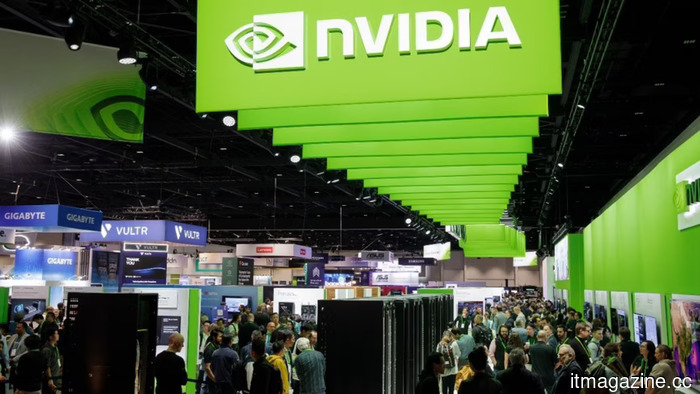 Nvidia creates a whitelist: over fifty percent of its Asian clients are excluded from it.
Nvidia has reduced its roster of Asian clients authorized to purchase AI chips by more than 50%, implementing a whitelist and stricter screening processes in Singapore, Malaysia, and Japan.
Nvidia creates a whitelist: over fifty percent of its Asian clients are excluded from it.
Nvidia has reduced its roster of Asian clients authorized to purchase AI chips by more than 50%, implementing a whitelist and stricter screening processes in Singapore, Malaysia, and Japan.
 A Seoul court has put a hold on the order designating Coupang's founder as its controlling individual.
The Seoul High Court has put a hold on the FTC’s classification of Coupang founder Bom Kim as the controlling figure of the group while his legal action against the regulator moves forward.
A Seoul court has put a hold on the order designating Coupang's founder as its controlling individual.
The Seoul High Court has put a hold on the FTC’s classification of Coupang founder Bom Kim as the controlling figure of the group while his legal action against the regulator moves forward.
 The Pentagon has temporarily halted the cyber audit regulation that was driving small suppliers away.
The Pentagon has halted CMMC Phase 2 cybersecurity audits, citing high costs and a lack of assessors as factors pushing small contractors out of the process.
The Pentagon has temporarily halted the cyber audit regulation that was driving small suppliers away.
The Pentagon has halted CMMC Phase 2 cybersecurity audits, citing high costs and a lack of assessors as factors pushing small contractors out of the process.
 The Pentagon has halted the cyber audit regulation that was driving small suppliers away.
The Pentagon has halted CMMC Phase 2 cybersecurity audits, pointing to high costs and a lack of assessors as reasons that are pushing small contractors away.
The Pentagon has halted the cyber audit regulation that was driving small suppliers away.
The Pentagon has halted CMMC Phase 2 cybersecurity audits, pointing to high costs and a lack of assessors as reasons that are pushing small contractors away.
 Thomson Reuters is reducing its engineering staff and bringing on board engineers who are specialized in AI.
Thomson Reuters is reducing engineering positions as it integrates AI into its legal and tax offerings. The company indicated that this affects a small number of roles, with employees being informed that it could be up to 500.
Thomson Reuters is reducing its engineering staff and bringing on board engineers who are specialized in AI.
Thomson Reuters is reducing engineering positions as it integrates AI into its legal and tax offerings. The company indicated that this affects a small number of roles, with employees being informed that it could be up to 500.
 Canada’s banking regulator issued a warning to banks, identifying Claude Mythos.
An email from April disclosed through access-to-information regulations reveals that Canada’s OSFI cautioned bank technology leaders regarding Anthropic’s Claude Mythos.
Canada’s banking regulator issued a warning to banks, identifying Claude Mythos.
An email from April disclosed through access-to-information regulations reveals that Canada’s OSFI cautioned bank technology leaders regarding Anthropic’s Claude Mythos.
Nvidia has created a whitelist, and over fifty percent of its Asian clients have been excluded from it.
Nvidia has reduced its roster of Asian clients authorized to purchase AI chips by more than 50%, implementing a white list and stricter screening processes in Singapore, Malaysia, and Japan.