
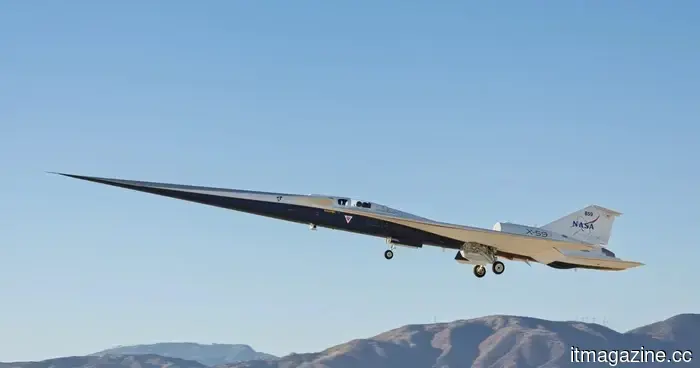
The vision of Concorde is attainable. NASA's X-59 simply needs to eliminate the sonic boom from supersonic flight.
The jet designed to eliminate the sonic boom has achieved full speed
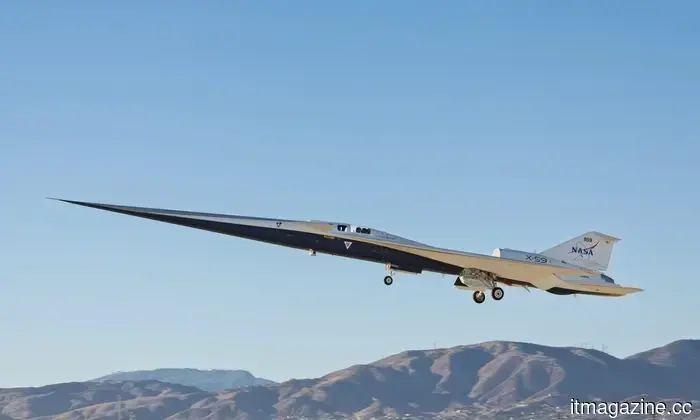
NASA has already demonstrated that its needle-nosed X-59 can reach impressive speeds during recent test flights. The next goal is to determine if it can surpass the sound barrier without alerting those on the ground. The experimental aircraft recently attained Mach 1.4, roughly 924 mph (1,487 kph), at an altitude of 55,000 feet. These conditions are what NASA intends to replicate in future tests aimed at assessing the X-59’s quieter sonic signature, marking a significant milestone for the agency's Quesst mission.
NASA’s supersonic jet has reached its maximum speed
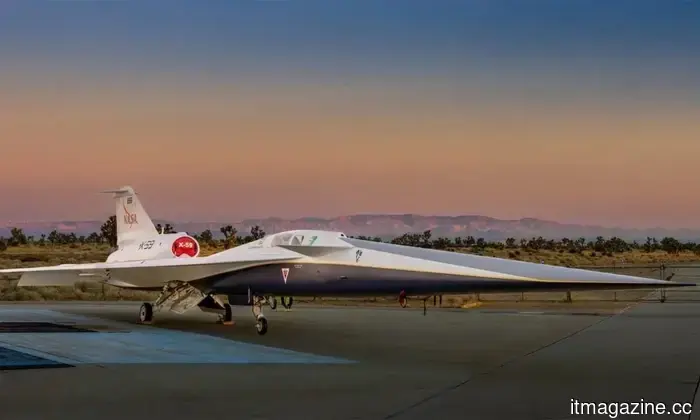
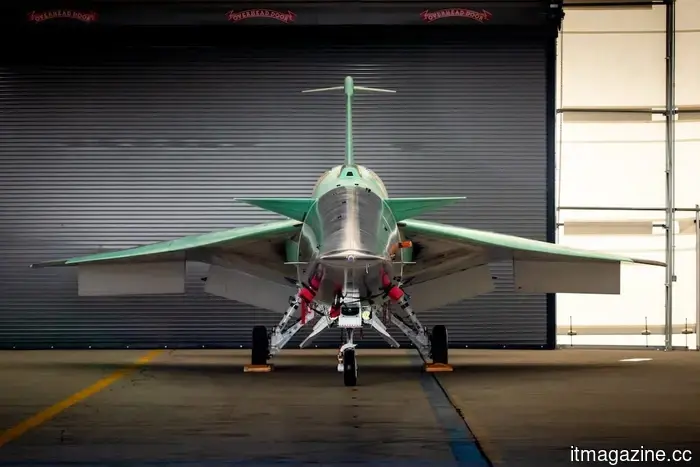
The X-59 initially broke the sound barrier on June 5, achieving around Mach 1.1 at an altitude of 43,400 feet during an 81-minute test flight originating from Edwards Air Force Base in California. A week later, NASA tested it at its full mission speed and altitude. Unlike a future passenger aircraft, the X-59 is a one-seat research plane constructed by Lockheed Martin’s Skunk Works. Its elongated nose, meticulously designed fuselage, and top-mounted engine are specifically engineered to disperse the shock waves that typically merge into a loud sonic boom.
Lockheed Martin Skunk Works
NASA aims for the noise on the ground to sound like a softer thump. Successfully proving this could persuade U.S. and international regulators to set new noise regulations for commercial supersonic aircraft flying over land. This means that future airlines could adopt technology to reduce travel times between cities without consistently disturbing the communities underneath their flight paths.
Achieving quietness is the challenging aspect
Despite this milestone, NASA has not yet accurately measured how quiet the X-59 is during these flights. An F-15 research jet has been flying alongside the X-59 as a safety measure, creating conventional sonic booms that mask the X-59’s own sound. In upcoming tests, an F-15 equipped with a shock-sensing probe will fly close to the X-59 to assess the pressure waves it produces.
NASA’s X-59 supersonic aircraft. Martin Tice / Lockheed Martin
NASA states that the aircraft will undergo several months of performance testing before entering its acoustic-validation phase. Researchers will then precisely measure its sonic signature before flying it over specific U.S. communities and soliciting feedback from residents regarding the disturbance caused by the sound. While the X-59 will not transport paying passengers, the data and design insights it provides could aid aircraft manufacturers in creating quieter supersonic airliners in the future. Thus, the vision of Concorde lives on.




Other articles
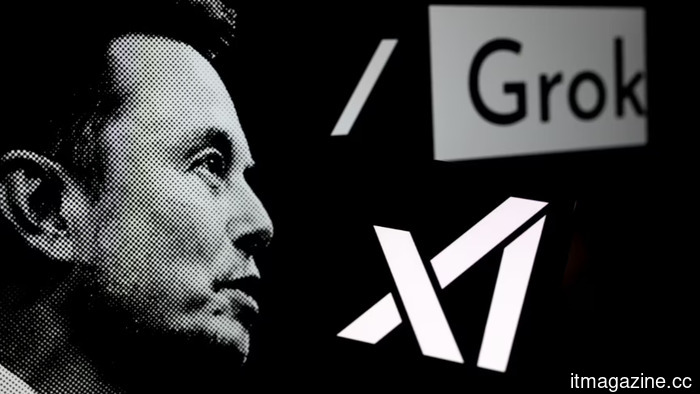 xAI is operating 59 unauthorized gas turbines, which is double the number it has acknowledged.
Emails from regulators indicate that xAI installed 59 gas turbines without permits for Colossus 2. Approximately 94% of residents within five miles of the location are Black.
xAI is operating 59 unauthorized gas turbines, which is double the number it has acknowledged.
Emails from regulators indicate that xAI installed 59 gas turbines without permits for Colossus 2. Approximately 94% of residents within five miles of the location are Black.
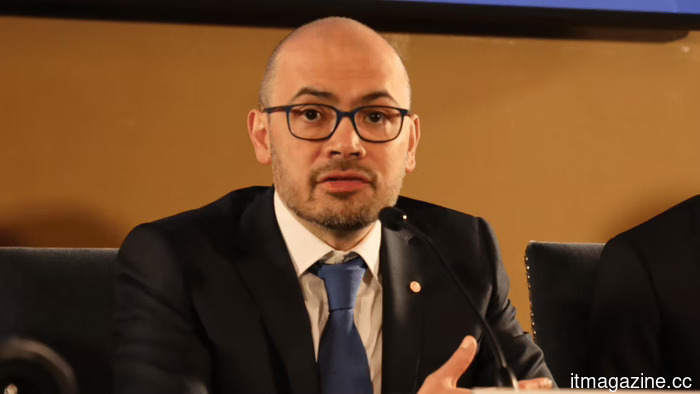 Hassabis seeks a referee comparable to FINRA for advanced AI.
Demis Hassabis advocates for a US-led AI Standards Body, inspired by Wall Street’s FINRA, to evaluate frontier models prior to their launch and to potentially decelerate the industry if necessary.
Hassabis seeks a referee comparable to FINRA for advanced AI.
Demis Hassabis advocates for a US-led AI Standards Body, inspired by Wall Street’s FINRA, to evaluate frontier models prior to their launch and to potentially decelerate the industry if necessary.
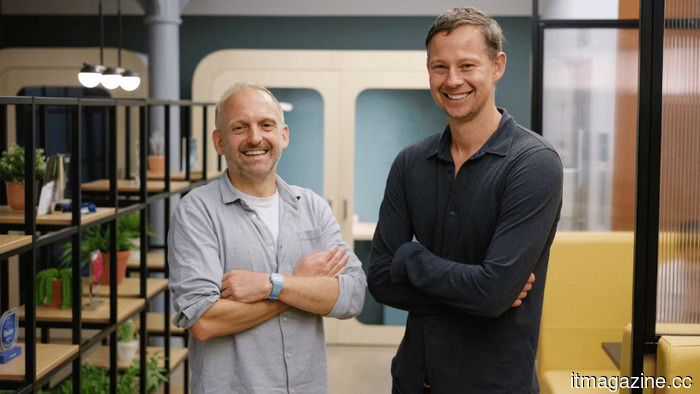 Moneybox achieves unicorn status on London's newly launched Pisces market.
Moneybox has emerged as Europe's latest unicorn, valued at £800 million (US$1.1 billion), following a £45 million staff share sale on the LSE’s new Pisces market, rather than through a fundraising effort.
Moneybox achieves unicorn status on London's newly launched Pisces market.
Moneybox has emerged as Europe's latest unicorn, valued at £800 million (US$1.1 billion), following a £45 million staff share sale on the LSE’s new Pisces market, rather than through a fundraising effort.
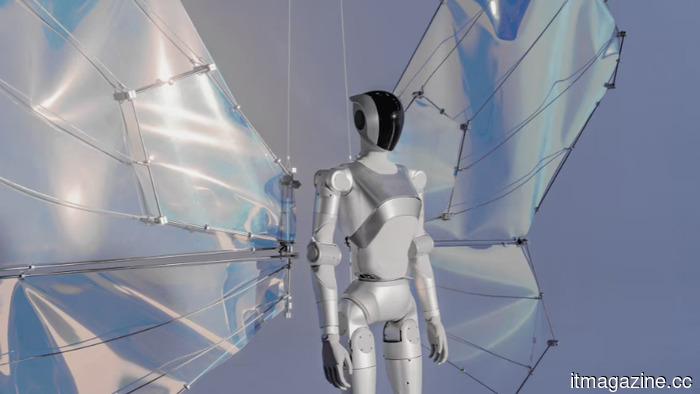 LimX Dynamics reaches a humanoid valuation of $2.2 billion.
China's LimX Dynamics secured $200 million at a valuation of $2.21 billion. The founder stated, “going public is essential” as over 100 Chinese humanoid companies compete to list.
LimX Dynamics reaches a humanoid valuation of $2.2 billion.
China's LimX Dynamics secured $200 million at a valuation of $2.21 billion. The founder stated, “going public is essential” as over 100 Chinese humanoid companies compete to list.
 Microsoft's emissions increased by 25% due to the expansion of AI data centers.
Microsoft's emissions increased by approximately 25% in 2025, reaching 20.3 million tonnes, largely due to AI data centers, making its goal of being carbon negative by 2030 more challenging to achieve.
Microsoft's emissions increased by 25% due to the expansion of AI data centers.
Microsoft's emissions increased by approximately 25% in 2025, reaching 20.3 million tonnes, largely due to AI data centers, making its goal of being carbon negative by 2030 more challenging to achieve.
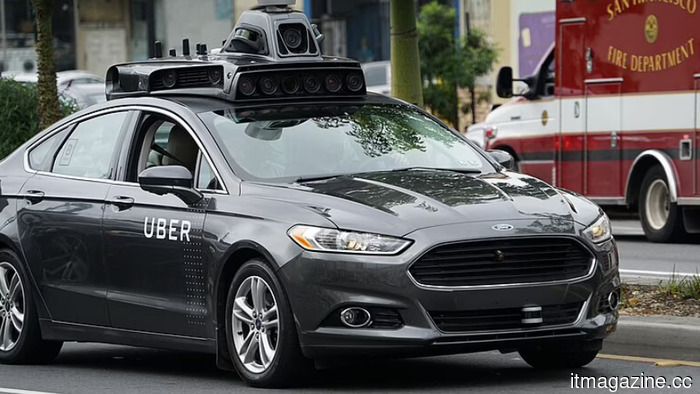 Uber is advocating for the inclusion of robotaxis on its platform.
Uber's lobbying efforts in Washington, D.C., and New Jersey advocate for a "hybrid network" regulation that would allow driverless vehicles to operate alongside human drivers on the same platform.
Uber is advocating for the inclusion of robotaxis on its platform.
Uber's lobbying efforts in Washington, D.C., and New Jersey advocate for a "hybrid network" regulation that would allow driverless vehicles to operate alongside human drivers on the same platform.
The vision of Concorde is attainable. NASA's X-59 simply needs to eliminate the sonic boom from supersonic flight.
NASA's X-59 has achieved speeds of 924 mph at an altitude of 55,000 feet, moving the agency closer to demonstrating that future supersonic passenger flights can circumvent loud sonic booms.