

xAI is operating 59 unauthorized gas turbines, which is double the number it has acknowledged.
Emails exchanged between regulators and xAI’s consultants reveal that the majority of turbines are located in Southaven, Mississippi. On the Tennessee side, within a five-mile radius, around 94% of residents are Black.
Ervin Laws, a resident of Colonial Hills in Southaven, expressed that the constant noise from the turbines resembles that of jet engines. He mentioned to Reuters, “I can’t do anything about it, because he’s got more money than me,” referring to Elon Musk. Correspondence between regulators and xAI's representatives indicates there are 59 turbines, none of which possess a federal clean air permit.
This number, disclosed on Tuesday, is approximately twice what the company has publicly acknowledged. In January, xAI reported operating 27 unpermitted turbines for its Colossus 2 project, and has consistently claimed that no permits are necessary.
Geographical factors are significant and can often be misunderstood. Colossus 2, the data center supporting Grok and xAI’s other operations, is situated in Memphis, Tennessee. At least 57 of the turbines providing power are located in Southaven, Mississippi, just beyond the state border, where residents from Tennessee have no say in the permitting process. An additional two turbines were installed at a location yet to be identified.
In March, Mississippi regulators issued a permit for 41 permanent gas turbines at the site, three weeks after the state’s sole public hearing on the project. The 59 turbines currently in operation are separate and unpermitted.
Emails obtained through a public records request were sent from Trinity Consultants, representing xAI and its subsidiary MZX Tech, to the Mississippi Department of Environmental Quality. These emails included manufacturer emissions profiles for 32 of the 59 turbines.
Using these profiles, Reuters estimated that the 30 turbines in Southaven alone could emit nearly 2,500 short tons of nitrogen oxides annually, in addition to 4,000 short tons of carbon monoxide and 22 tons of formaldehyde, assuming they operate continuously at 80% capacity, a level typically defined for efficiency by the EPA.
These emissions represent potential figures based on equipment specifications rather than actual measurements at the stack and pertain to roughly half of the plant. The Clean Air Act mandates that federal permitting is required for emissions surpassing 100 short tons per year.
Nicholas Mailloux, a postdoctoral researcher at the University of Wisconsin-Madison, indicated that a facility emitting at such levels would rank among the top 25 nitrogen oxide emitters of any gas plant in the U.S., based on the EPA’s actual emissions data.
The demographic landscape surrounding the site is stark. Within five miles of the turbines in DeSoto County, Mississippi, approximately 46% of residents identify as Black, compared to 33% across the county. In adjacent Shelby County, Tennessee, the percentage within the same radius rises to about 94%, juxtaposed with 52% for the county as a whole.
In 27 of the 28 census tracts within that area, the estimated rates of asthma exceed those of their respective counties, and in 24 tracts, the same holds true for chronic obstructive pulmonary disease. Both counties have previously failed to meet federal ozone standards.
xAI has not responded to Reuters’ request for comments, and neither the state regulator nor the EPA provided responses regarding pollution impacts on communities of color. In legal filings, xAI and Mississippi have contended that the turbines are exempt as they are mobile units intended to operate on-site for less than a year.
MDEQ informed Reuters that it “has determined that portable/temporary turbines do not require an air permit.” The EPA stated in January that temporary turbines exceeding emissions thresholds must be permitted and is currently considering “regulatory flexibilities” for portable units.
The NAACP and the Southern Environmental Law Center, represented by Earthjustice, filed a lawsuit against xAI in April to stop the turbines.
“The scale of it is astonishing,” remarked Patrick Anderson, an SELC attorney. In June, the Justice Department intervened on xAI’s behalf, claiming that restricting the turbines could jeopardize national security due to Grok’s support for U.S. military operations, including in Iran. Residents in Southaven have also filed a separate lawsuit regarding the noise.
Sarah Gladney, 72, who lives in Boxtown, a historically Black neighborhood in Memphis a few miles from the original Colossus built in 2024, stated, “Once they got their foot in the door in Memphis, I feel like it’s going to be a continuous movement of xAI into these other communities.”
The company's demand for gas is undisputed; SpaceX’s IPO documentation, which now includes xAI, positioned it alongside Tesla’s solar business in the same filing.
Other articles
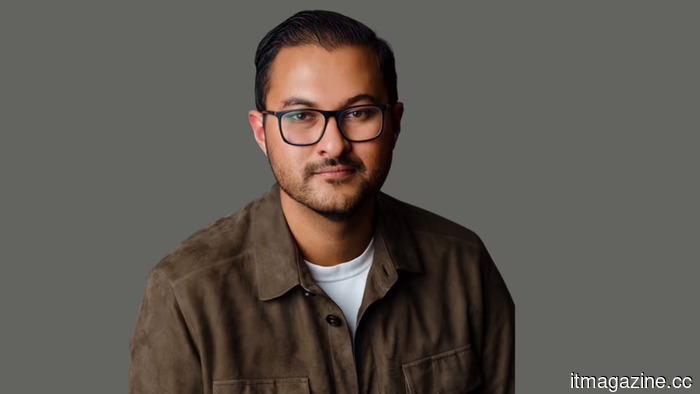 Flex secures $70 million from Ryan Smith’s Halo fund to expand its AI private banking services worldwide.
Flex has secured $70 million in a Series B1 round, spearheaded by Ryan Smith’s Halo fund, and is introducing Flex Global, which includes stablecoin infrastructure and multi-currency accounts in over 100 countries.
Flex secures $70 million from Ryan Smith’s Halo fund to expand its AI private banking services worldwide.
Flex has secured $70 million in a Series B1 round, spearheaded by Ryan Smith’s Halo fund, and is introducing Flex Global, which includes stablecoin infrastructure and multi-currency accounts in over 100 countries.
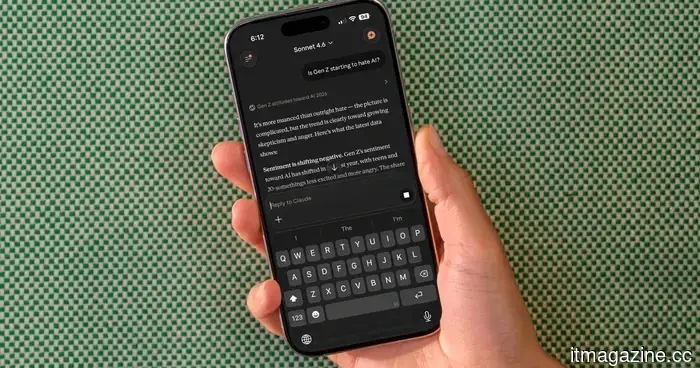 Claude identified the issue with my washing machine in just a few minutes, and it was completely free of charge.
A perplexing error code led me to believe that my washing machine was beyond repair. However, Claude posed the right questions, assisted me in identifying the actual issue, and prevented me from making an unnecessary purchase.
Claude identified the issue with my washing machine in just a few minutes, and it was completely free of charge.
A perplexing error code led me to believe that my washing machine was beyond repair. However, Claude posed the right questions, assisted me in identifying the actual issue, and prevented me from making an unnecessary purchase.
 Switzerland launches an investigation into Google for the disappearance of the Android choice screen.
Switzerland's COMCO has initiated a preliminary investigation regarding Google's elimination of the Android search choice screen, which is still operational throughout the EEA.
Switzerland launches an investigation into Google for the disappearance of the Android choice screen.
Switzerland's COMCO has initiated a preliminary investigation regarding Google's elimination of the Android search choice screen, which is still operational throughout the EEA.
 Firefox is increasing the frequency of its updates, which is beneficial for your security.
Firefox users will no longer have to wait a month for the next update, as Mozilla shifts to a quicker release timeline.
Firefox is increasing the frequency of its updates, which is beneficial for your security.
Firefox users will no longer have to wait a month for the next update, as Mozilla shifts to a quicker release timeline.
 Your seemingly dead TV might actually be much less damaged than it appears.
A repair technician suggests that a small backlight issue can cause certain televisions to seem entirely nonfunctional, which may lead owners to consider replacing them without realizing that the actual problem might still be fixable.
Your seemingly dead TV might actually be much less damaged than it appears.
A repair technician suggests that a small backlight issue can cause certain televisions to seem entirely nonfunctional, which may lead owners to consider replacing them without realizing that the actual problem might still be fixable.
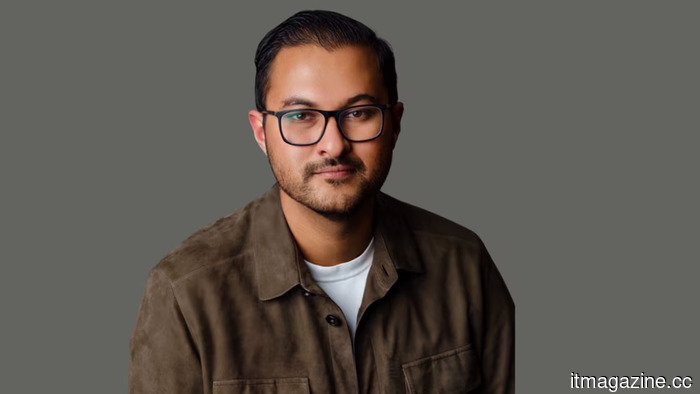 Flex secures $70 million from Ryan Smith’s Halo fund to expand its AI private banking services globally.
Flex has secured $70 million in a Series B1 funding round led by Ryan Smith's Halo fund, and is introducing Flex Global, which will offer stablecoin infrastructure and multi-currency accounts in over 100 countries.
Flex secures $70 million from Ryan Smith’s Halo fund to expand its AI private banking services globally.
Flex has secured $70 million in a Series B1 funding round led by Ryan Smith's Halo fund, and is introducing Flex Global, which will offer stablecoin infrastructure and multi-currency accounts in over 100 countries.
xAI is operating 59 unauthorized gas turbines, which is double the number it has acknowledged.
Emails from regulators indicate that xAI installed 59 gas turbines without permits for Colossus 2. Approximately 94% of residents within five miles of the location are Black.