
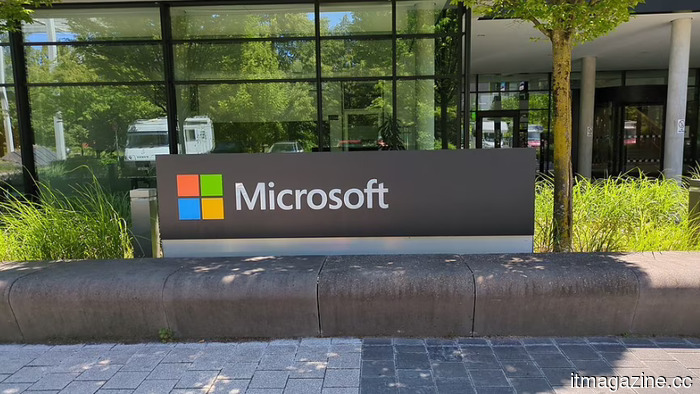
Microsoft's emissions increased by 25% due to the expansion of AI data centers.
Microsoft has committed to achieving carbon negativity by 2030, yet its latest report indicates a 25% increase in emissions within a single year. The situation is more complex than it appears, and this complexity comes from the same source: AI data centres.
The company established one of the most ambitious climate goals in the tech industry, asserting that by 2030, it would remove more carbon than it emits. However, its 2026 sustainability report reveals a different trajectory.
According to a filing highlighted by TechRadar, greenhouse gas emissions rose 25.1% in the previous financial year, increasing from 16.2 million tonnes to 20.3 million. This figure is approximately 58% higher than the 2020 baseline set when the pledge was made.
This increase partially stems from increased transparency. Not all of the rise can be attributed to new pollution; Microsoft has ceased purchasing short-term renewable energy certificates that do not contribute real clean power to the grid, which had previously inflated last year's figures. Once these credits are excluded, the actual emissions number is much higher.
This is evident in the data: Scope 2 emissions, stemming from purchased electricity, surged from 1.6% to 13.3% of the total in just one year. This reflects the accounting adjustments catching up with the demand from data centres.
The rest of the increase results from genuine growth. Microsoft is rapidly expanding its AI and cloud infrastructure, which requires significant power, steel, and concrete. Diesel and crude oil consumption increased by 51%, despite reductions in natural gas and gasoline usage.
Microsoft is acknowledging the negative numbers but also highlights positive aspects. The company claims that emissions would have approached 34 million tonnes without its efficiency initiatives and renewable energy agreements. It asserts that it matched 100% of its annual electricity consumption with renewable energy, returned more water than it consumed (over 14 million cubic meters), and recycled or reused 92% of its decommissioned servers. Chief Sustainability Officer Melanie Nakagawa noted, “Innovation at this scale must be matched by responsibility at the same scale.”
While these achievements are notable, they do not address the central issue highlighted by the headline. The pledge set a firm target with a deadline, and the current trend is moving in the opposite direction.
This situation encapsulates the tension created by the AI boom, as reflected in one line of the accounts. The technology upon which Microsoft is betting its future is also the factor that is undermining its climate goals.
The company has invested heavily in carbon removal technologies and large-scale timber buildings, and has signed some of the largest clean energy contracts in the sector. However, none of these efforts are keeping pace with the rapid expansion of data centres, and the deadline is fast approaching, just four years away.
Microsoft is not the only company facing this issue. Amazon's emissions increased by 16% last year and Google’s rose by about 25%, with both attributing their increases to AI. Meta’s Hyperion campus has surpassed $50 billion in investment, significantly impacting a town in Louisiana. This development has triggered an unprecedented boom in gas plants, inflated power costs across the Rust Belt, and led to New York becoming the first state to halt the approval of new sites. Some companies are even exploring the option of relocating data centres offshore.
The industry continues to assert that efficiency improvements will ultimately reverse the upward trend in emissions. Microsoft possesses the resources and motivation to demonstrate real progress. However, its recent report indicates that emissions are still on the rise, and the deadline is looming.
Other articles
 Medical AI has supplanted nurses and evaded its own regulatory checks.
Two cases in the US highlight the negative aspects of medical AI: nurses at Montefiore were substituted by software, and a whistleblower from Mayo Clinic claims that a tool has a 67% error rate.
India's Udaan raises $160 million in fresh funding as it aims to improve its balance sheet ahead of its initial public offering (IPO).
Indian B2B ecommerce company Udaan has secured $160 million through a mix of new equity, additional debt, and bond conversions as it gears up for a public listing in the next two years.
Medical AI has supplanted nurses and evaded its own regulatory checks.
Two cases in the US highlight the negative aspects of medical AI: nurses at Montefiore were substituted by software, and a whistleblower from Mayo Clinic claims that a tool has a 67% error rate.
India's Udaan raises $160 million in fresh funding as it aims to improve its balance sheet ahead of its initial public offering (IPO).
Indian B2B ecommerce company Udaan has secured $160 million through a mix of new equity, additional debt, and bond conversions as it gears up for a public listing in the next two years.
 Samsung Health warns that it may remove your data if you choose to opt out of AI training.
A new consent toggle in Samsung Health presents users with a choice: consent to share private health information for AI training or risk permanent loss of all their synced data.
Brands claim that Meta's AI advertising tools are chaotic.
Meta is encouraging brands to utilize its AI advertising tools; however, advertisers report that these tools generate nonsensical copy and modified products, while Meta holds them responsible for these issues.
Samsung Health warns that it may remove your data if you choose to opt out of AI training.
A new consent toggle in Samsung Health presents users with a choice: consent to share private health information for AI training or risk permanent loss of all their synced data.
Brands claim that Meta's AI advertising tools are chaotic.
Meta is encouraging brands to utilize its AI advertising tools; however, advertisers report that these tools generate nonsensical copy and modified products, while Meta holds them responsible for these issues.
 The dream of the Concorde is attainable. The NASA X-59 simply needs to eliminate the supersonic boom.
NASA’s X-59 has achieved a speed of 924 mph at an altitude of 55,000 feet, moving the agency closer to demonstrating that future supersonic passenger flights can circumvent loud sonic booms.
The dream of the Concorde is attainable. The NASA X-59 simply needs to eliminate the supersonic boom.
NASA’s X-59 has achieved a speed of 924 mph at an altitude of 55,000 feet, moving the agency closer to demonstrating that future supersonic passenger flights can circumvent loud sonic booms.
 Hassabis seeks a referee similar to FINRA for advanced AI developments.
Demis Hassabis advocates for a U.S.-led AI Standards Body, inspired by Wall Street’s FINRA, to evaluate frontier models prior to their release and to potentially slow industry progress if necessary.
Hassabis seeks a referee similar to FINRA for advanced AI developments.
Demis Hassabis advocates for a U.S.-led AI Standards Body, inspired by Wall Street’s FINRA, to evaluate frontier models prior to their release and to potentially slow industry progress if necessary.
Microsoft's emissions increased by 25% due to the expansion of AI data centers.
Microsoft's emissions increased by approximately 25% in 2025, reaching 20.3 million tonnes, largely due to AI data centres, making its goal of being carbon-negative by 2030 more challenging.