
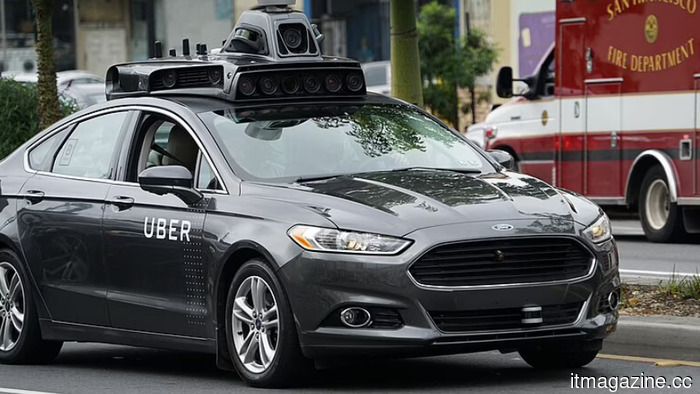
Uber is advocating for the inclusion of robotaxis on its platform.
Uber has fallen behind in the competition to develop a self-driving car. Now, it aims to establish the regulatory framework for those who have succeeded. In two states in the US, the company is lobbying for legislation that would require robotaxis to be integrated into its app, with its product chief readily explaining the rationale.
Unable to win the race for a robotaxi, Uber is now striving to lead in regulatory affairs. In Washington DC and New Jersey, the company is advocating for what it describes as a "hybrid network," according to public records. The proposal appears modest: any robotaxi service would need to operate human drivers alongside its autonomous vehicles on the same platform. In effect, this would create a regulatory hurdle that all competitors would need to overcome.
Reports from Wired’s Aarian Marshall, who accessed the New Jersey documents, and TechCrunch, which covered the situation in DC, reveal that in New Jersey, one proposed regulation would mandate human drivers to account for 85% of rides for a duration of three years. In DC, Uber is challenging a bill that would permit robotaxis to operate without any safety drivers.
Uber argues that a solely autonomous vehicle market would create a monopoly for Waymo and eliminate jobs for human drivers. Javi Correoso, the company’s policy chief, noted at a DC Council roundtable that each driverless vehicle effectively replaces about four human drivers and he advocates for this requirement to be enshrined in law. “There should be a mandate for consumers to have the option of riding in a human-driven Uber,” he stated.
Conversely, the bill Uber opposes would allow DC to license fully autonomous fleets, financed through a per-mile tax and high permit fees that critics claim would limit participation to only the largest companies. While Uber is not alone in its dissatisfaction with aspects of the bill, opponents argue that its own solution is even less favorable.
Waymo, which supports the competing bill, currently provides over 500,000 rides each week in 11 cities and does not want its vehicles to be restricted to a competitor's platform. Greg Rogers from the think tank The Innovation Majority criticized Uber’s proposal as an effort at “regulatory capture,” stating that imposing one business model on the market essentially charges rent to all operators.
Uber is transparent about its intentions. Its chief product officer, Sachin Kansal, shared with TechCrunch that the company is “not competing to be an L4 autonomy provider.” Instead, he emphasized that the company is “laying down the race tracks” to collaborate with various stakeholders and envisions a hybrid model that incorporates humans and robots within the same city.
This is where data plays a critical role. Through a division called AV Labs, Uber is outfitting hundreds of vehicles with sensors to collect millions of miles of driving data, which it plans to share with the same AV companies it competes against. By controlling the road, they also gain control over the data generated on it.
This perspective represents a notable shift for Uber. Historically, the company disregarded local taxi regulations and fought against labor-supported laws. Now, it claims to have matured. “That experience changed us,” chief operating officer Andrew MacDonald acknowledged in May. “Today, we collaborate with cities rather than confront them.”
The dual strategy is clearly evident as Uber lobbies to curb its competitors while simultaneously preparing to deploy their services. It is collaborating with Nvidia on a Level 4 service and has plans for robotaxi launches with Nuro and Lucid in Houston, as well as WeRide in Madrid. Furthermore, it divested its own self-driving unit to Aurora in 2020. Unable to secure dominance in the technological race, it is now attempting to control the infrastructure that the leading companies will use.
The situation in DC serves as a test case, with Uber planning to advocate for this hybrid model in other states as they formulate their own AV regulations. This trend poses a challenge for regulators. New Jersey has considered its own robotaxi legislation, US safety officials have instructed AV companies to cease obstructing emergency responders, and the same agency is contemplating the removal of steering wheels altogether. Meanwhile, Tesla is slowly advancing its Cybercab initiative, and Waymo is still recovering from a problematic incident in San Francisco.
For the moment, the technology is largely functional. The unresolved issue is who will control the dispatch system. Uber built its empire by owning the app that connects riders with drivers, and it is now wagering that this same control point will remain profitable, even when the driver is an autonomous vehicle.
Other articles
 I didn't fully appreciate this NotebookLM feature until it transformed my study habits entirely.
An upcoming exam prompted me to give NotebookLM's Mind Maps a try. Now, it's the first tool I turn to whenever I begin a new notebook.
I didn't fully appreciate this NotebookLM feature until it transformed my study habits entirely.
An upcoming exam prompted me to give NotebookLM's Mind Maps a try. Now, it's the first tool I turn to whenever I begin a new notebook.
 Medical AI has supplanted nurses and evaded its own regulatory checks.
Two cases in the US highlight the negative aspects of medical AI: nurses at Montefiore were substituted by software, and a whistleblower from Mayo Clinic claims that a tool has a 67% error rate.
Medical AI has supplanted nurses and evaded its own regulatory checks.
Two cases in the US highlight the negative aspects of medical AI: nurses at Montefiore were substituted by software, and a whistleblower from Mayo Clinic claims that a tool has a 67% error rate.
 X is instructing its AI algorithm on concepts that social networks used to grasp.
X is enhancing posts among mutual followers after discovering that its algorithm lacked relationship data, highlighting the discrepancy between forecasting engagement and fostering discussions that people truly desire.
X is instructing its AI algorithm on concepts that social networks used to grasp.
X is enhancing posts among mutual followers after discovering that its algorithm lacked relationship data, highlighting the discrepancy between forecasting engagement and fostering discussions that people truly desire.
 Microsoft's emissions increased by 25% due to the expansion of AI data centers.
Microsoft's emissions increased by approximately 25% in 2025, reaching 20.3 million tonnes, largely due to AI data centres, making its goal of being carbon-negative by 2030 more challenging.
Microsoft's emissions increased by 25% due to the expansion of AI data centers.
Microsoft's emissions increased by approximately 25% in 2025, reaching 20.3 million tonnes, largely due to AI data centres, making its goal of being carbon-negative by 2030 more challenging.
 Huawei's MatePad Air has finally been released outside of China, making the iPad Air seem less impressive by comparison.
Huawei’s MatePad Air, which was launched worldwide, features a 144Hz OLED screen, an impressive battery, and included accessories that underscore certain uncomfortable shortcomings in Apple’s iPad Air.
Huawei's MatePad Air has finally been released outside of China, making the iPad Air seem less impressive by comparison.
Huawei’s MatePad Air, which was launched worldwide, features a 144Hz OLED screen, an impressive battery, and included accessories that underscore certain uncomfortable shortcomings in Apple’s iPad Air.
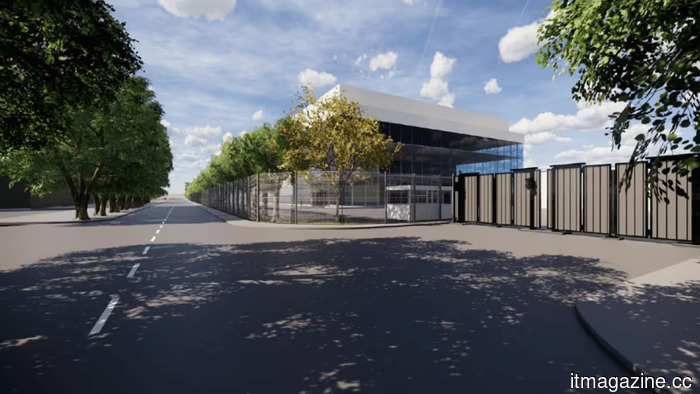 Nscale's £2 billion AI data center affected by delays in the UK power grid.
Nscale's £2 billion data center in Essex is unable to obtain grid power in time for its opening, leading it to pursue its own electricity supply as connection delays in the UK extend for years.
Nscale's £2 billion AI data center affected by delays in the UK power grid.
Nscale's £2 billion data center in Essex is unable to obtain grid power in time for its opening, leading it to pursue its own electricity supply as connection delays in the UK extend for years.
Uber is advocating for the inclusion of robotaxis on its platform.
Uber's lobbying efforts in Washington, D.C., and New Jersey advocate for a "hybrid network" regulation that would allow driverless vehicles to operate alongside human drivers on the same platform.