
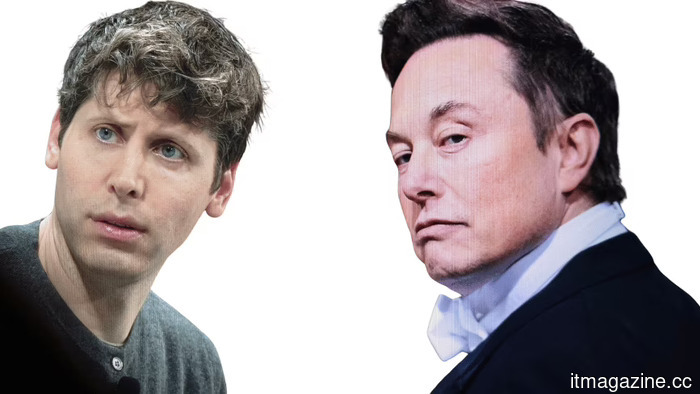
OpenAI seeks its legal expenses from xAI, while Apple pursues OpenAI.
On Monday, OpenAI requested a federal judge in California to determine that xAI’s trade secrets lawsuit against it “should never have been filed,” and to require Elon Musk’s company to pay over $1 million in legal costs. The request was made shortly after xAI announced its intention to appeal. This case has been dismissed twice and is currently under appeal while still incurring costs.
In 2025, xAI filed a lawsuit against OpenAI in the Northern District of California, claiming that its competitor recruited engineers and encouraged them to bring confidential information, focusing particularly on Xuechen Li, a former engineer at xAI.
In February, Judge Rita Lin approved OpenAI’s motion to dismiss the amended complaint but allowed xAI until mid-March to submit another attempt. xAI made a second attempt, adding claims that OpenAI had encouraged a newly hired employee to discuss his previous work.
On June 15, Lin dismissed the claims a second time, this time without the option to amend, stating that the complaint was speculative and mainly described passive receipt of information, which does not qualify as misappropriation under the Defend Trade Secrets Act. According to courthouse records, she noted that xAI attempted to portray standard Silicon Valley hiring practices as a conspiracy. This interpretation now forms the basis of OpenAI’s fee motion.
Fast forward to last Friday, where things took an amusing turn. On July 10, Apple sued OpenAI in the same federal district, accusing it of stealing hardware trade secrets to create consumer devices. The lawsuit alleges theft “at every level, from members of its Technical Staff to its Chief Hardware Officer, and in collaboration with business partners.”
The chief hardware officer mentioned is Tang Tan, who worked at Apple for 24 years, most recently as vice president of product design for the iPhone and Apple Watch. Apple claims he instructed Apple employees interviewing at OpenAI to bring digital designs and prototypes to what the filing refers to as “show and tell” sessions.
The lawsuit also names Chang Liu, who served as a senior systems electrical engineer at Apple for eight years and is alleged to have retained his Apple laptop after leaving for OpenAI, using it to download confidential technical documents. According to the filing, more than 400 former Apple employees are now with OpenAI, and it describes the evidence obtained so far as “the tip of the iceberg.”
Apple is seeking an injunction against evidence destruction, the return of its trade secrets, and damages. OpenAI has stated it has “no interest in other companies’ trade secrets” and is “focused on building innovative technology.”
Fee awards of this nature are not granted solely for losing. The Defend Trade Secrets Act permits courts to require the losing side to pay if a misappropriation claim was brought in bad faith, which is a much higher threshold than simply being incorrect twice before the same judge. OpenAI is requesting Judge Lin to find against a company whose founder has been publicly calling it a fraud for the past year.
Both cases center on very similar issues: whether a company aggressively hiring from a competitor is consequently acquiring that competitor’s secrets, and what evidence a court needs to deem recruitment as misappropriation. OpenAI has spent a year arguing the limited perspective and has succeeded; it will now argue the opposite side of the same issue.
The relationship between OpenAI and Apple has been deteriorating for some time. They announced a major Siri partnership in 2024 but began drifting apart as OpenAI ventured into hardware, acquiring Jony Ive’s io Products for $6.4 billion. The lawsuit is complicating OpenAI’s hardware plans long before any potential ruling is made.
Musk, for his part, has not had much success in these legal settings. A jury in Oakland dismissed his separate lawsuit against Sam Altman concerning OpenAI’s transition to a for-profit structure, ruling that it was filed too late.
xAI’s appeal is now headed to the Ninth Circuit, OpenAI’s fee motion is currently with Judge Lin, and Apple’s case has not yet been scheduled.
Other articles
 China's smartphone shipments have declined for the fifth consecutive quarter due to the impact of memory costs.
In the second quarter of 2026, China's smartphone shipments decreased by 4.3% to 66 million units, marking the fifth consecutive decline, primarily due to rising memory costs which increased Android pricing. Meanwhile, Huawei and Apple experienced growth.
China's smartphone shipments have declined for the fifth consecutive quarter due to the impact of memory costs.
In the second quarter of 2026, China's smartphone shipments decreased by 4.3% to 66 million units, marking the fifth consecutive decline, primarily due to rising memory costs which increased Android pricing. Meanwhile, Huawei and Apple experienced growth.
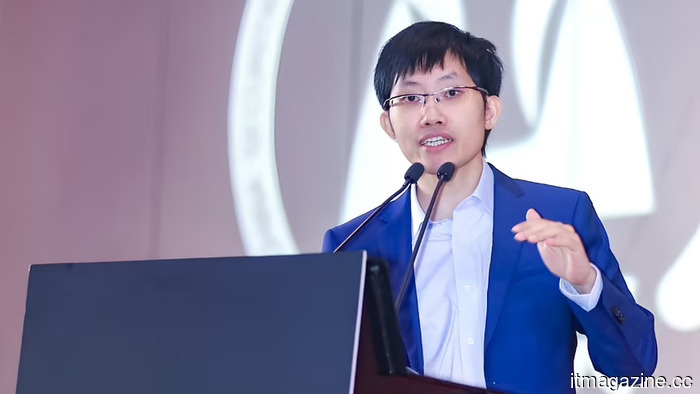 Liang Wenfeng of DeepSeek surpasses Amodei and Brockman to become the wealthiest founder in AI.
Bloomberg's index values DeepSeek founder Liang Wenfeng at $36 billion following a $50 billion revaluation, placing him ahead of Dario Amodei and Greg Brockman.
Liang Wenfeng of DeepSeek surpasses Amodei and Brockman to become the wealthiest founder in AI.
Bloomberg's index values DeepSeek founder Liang Wenfeng at $36 billion following a $50 billion revaluation, placing him ahead of Dario Amodei and Greg Brockman.
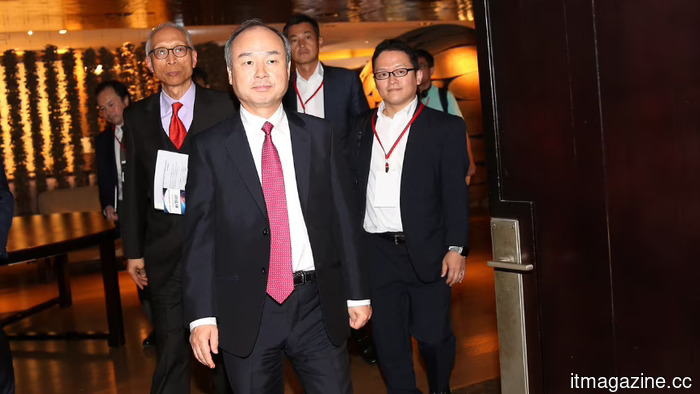 Masayoshi Son claims that AI will incur costs of $5 trillion annually by 2040, asserting that discussions about a bubble are ridiculous.
Masayoshi Son stated that AI will require an annual investment of $5 trillion by 2040 and dismissed concerns about a bubble as ludicrous during SoftBank's annual conference in Tokyo.
Masayoshi Son claims that AI will incur costs of $5 trillion annually by 2040, asserting that discussions about a bubble are ridiculous.
Masayoshi Son stated that AI will require an annual investment of $5 trillion by 2040 and dismissed concerns about a bubble as ludicrous during SoftBank's annual conference in Tokyo.
-review-Smarter-and-punchier-with-a-subscription-pinch.jpg) Google Home Speaker (2026) review: More intelligent and powerful, but with a subscription cost.
The newest version of the Google Home Speaker offers an enticing combination of effective voice controls, unexpectedly robust audio performance, and the most sophisticated set of smart home features available in a speaker priced under $100.
Google Home Speaker (2026) review: More intelligent and powerful, but with a subscription cost.
The newest version of the Google Home Speaker offers an enticing combination of effective voice controls, unexpectedly robust audio performance, and the most sophisticated set of smart home features available in a speaker priced under $100.
 How to install the iOS 27 public beta on your iPhone?
No developer account is required. The public beta of iOS 27 has arrived, and you can install it with just a few taps in Settings, along with a brief account registration.
How to install the iOS 27 public beta on your iPhone?
No developer account is required. The public beta of iOS 27 has arrived, and you can install it with just a few taps in Settings, along with a brief account registration.
 Intel invests $5.7 billion in the production of Xeon processors in Ireland.
Intel is allocating €5 billion ($5.7 billion) to enhance its Leixlip campus in Ireland and to manufacture additional Xeon processors on the Intel 3 node, with the majority of the expenditure expected by 2027.
Intel invests $5.7 billion in the production of Xeon processors in Ireland.
Intel is allocating €5 billion ($5.7 billion) to enhance its Leixlip campus in Ireland and to manufacture additional Xeon processors on the Intel 3 node, with the majority of the expenditure expected by 2027.
OpenAI seeks its legal expenses from xAI, while Apple pursues OpenAI.
OpenAI has requested a judge to require xAI to cover $1 million in legal expenses related to a trade secrets case that has been dismissed twice, just a few days after Apple filed a lawsuit against OpenAI concerning the same issue.