
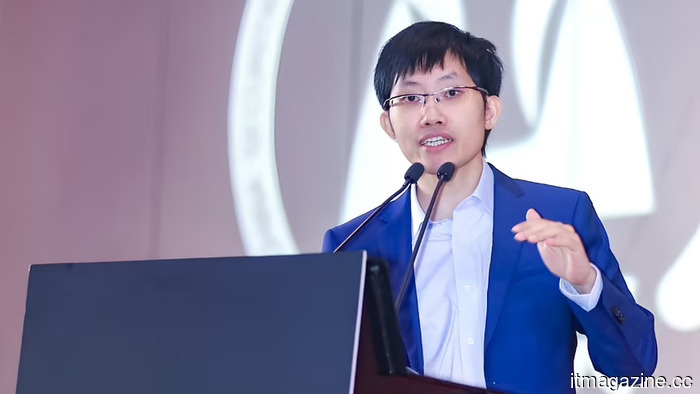
Liang Wenfeng of DeepSeek surpasses Amodei and Brockman to become the wealthiest founder in AI.
According to the Bloomberg Billionaires Index, Liang Wenfeng is currently the richest founder in artificial intelligence. His stake in DeepSeek was revalued on July 13, which added approximately $19 billion to his wealth overnight. His net worth is estimated at around $36 billion, up from approximately $16.7 billion, placing him ahead of Anthropic co-founder Dario Amodei and OpenAI president Greg Brockman.
The revaluation comes after DeepSeek's $7.4 billion funding round in June, marking the Hangzhou lab's first outside investment, which increased its valuation from about $10 billion in April to approximately $50 billion. Liang's ownership stake was diluted to roughly 78% as a result, but at these figures, dilution is a favorable issue.
This ranking is confined to companies that derive their primary revenue from AI models, excluding conglomerates and AI supply chains, thereby omitting the two individuals who would otherwise dominate such a list. Within this limited scope, Liang stands at the top.
What makes this funding round noteworthy is not just its size but the terms. Liang invested around $3 billion of his own funds, about 40% of the total, sourced from profits at High-Flyer, the quantitative hedge fund he co-founded in 2016, from which DeepSeek was established in July 2023. This type of financial arrangement would typically be seen as problematic, yet the round was reportedly oversubscribed, indicating a strong willingness from investors to participate rather than miss out on the opportunity. The unusual structure was noticeable even at the closure of the round and remains so.
Reported valuations for the funding round have varied, with estimates ranging from $45 billion to $59 billion, depending on whether the figure is pre-money, post-money, or a target suggested to potential investors; Bloomberg's index calculation uses $50 billion. Participation from state-backed funds in Beijing added a strategic dimension to the valuation as a financial statement.
Liang has clarified the purpose of the funds. He informed potential investors that the lab's primary goal is to develop artificial general intelligence and will continue to release open-source models instead of focusing on immediate commercialization, a strategy that can be maintained when those funding it do not have voting power.
Comparisons with his American peers highlight the differences in ownership dynamics. Amodei and Brockman hold minority stakes in companies with significant external investors and complex governance situations, with OpenAI even facing legal scrutiny, including issues involving Brockman's personal journals. In contrast, Liang retains majority ownership of a company that had not taken outside investment until this year and does not answer to anyone who contributed financially.
Since January 2025, when DeepSeek's R1 model significantly impacted American tech stocks, Liang has been on this upward trajectory, transforming a relatively obscure figure in Hangzhou into a nationally recognized individual. At that time, Forbes estimated his wealth to be a fraction of the current valuation.
The estimates for his fortune still vary widely, and not solely because of DeepSeek. High-Flyer, which generates Liang's capital, reportedly holds about $8 billion in assets according to Preqin, while Forbes has appraised his stakes in the fund at a considerably lower value than what Bloomberg’s index now credits him.
One Hong Kong publication encapsulated the disparity by stating that the founders of DeepSeek are worth either $1 billion or $150 billion, depending on whom you inquire. Such figures are speculative rather than factual, as no shares in DeepSeek have been sold at a $50 billion valuation on public markets, and the index figure is based on a private funding round where investors did not obtain governance rights for their investment.
Other articles
-review-Smarter-and-punchier-with-a-subscription-pinch.jpg) Google Home Speaker (2026) review: More intelligent and powerful, but with a subscription cost.
The newest version of the Google Home Speaker offers an enticing combination of effective voice controls, unexpectedly robust audio performance, and the most sophisticated set of smart home features available in a speaker priced under $100.
Google Home Speaker (2026) review: More intelligent and powerful, but with a subscription cost.
The newest version of the Google Home Speaker offers an enticing combination of effective voice controls, unexpectedly robust audio performance, and the most sophisticated set of smart home features available in a speaker priced under $100.
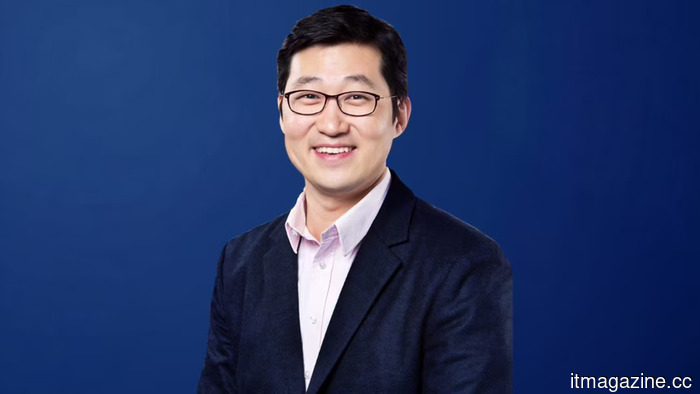 The Seoul court has put a hold on the ruling that designates Coupang's founder as its controlling individual.
The Seoul High Court has put on hold the FTC’s classification of Coupang founder Bom Kim as the controlling figure of the group while his lawsuit against the regulator is ongoing.
The Seoul court has put a hold on the ruling that designates Coupang's founder as its controlling individual.
The Seoul High Court has put on hold the FTC’s classification of Coupang founder Bom Kim as the controlling figure of the group while his lawsuit against the regulator is ongoing.
 Intel invests $5.7 billion in the production of Xeon processors in Ireland.
Intel is allocating €5 billion ($5.7 billion) to enhance its Leixlip campus in Ireland and to manufacture additional Xeon processors on the Intel 3 node, with the majority of the expenditure expected by 2027.
Intel invests $5.7 billion in the production of Xeon processors in Ireland.
Intel is allocating €5 billion ($5.7 billion) to enhance its Leixlip campus in Ireland and to manufacture additional Xeon processors on the Intel 3 node, with the majority of the expenditure expected by 2027.
 How to install the macOS 27 Golden Gate public beta on your Mac?
No developer account is necessary. The public beta of macOS 27 Golden Gate is now available for installation via System Settings, and it integrates Siri AI directly into your Mac.
How to install the macOS 27 Golden Gate public beta on your Mac?
No developer account is necessary. The public beta of macOS 27 Golden Gate is now available for installation via System Settings, and it integrates Siri AI directly into your Mac.
 Smartphone shipments in China decline for the fifth consecutive quarter due to the impact of memory costs.
In the second quarter of 2026, smartphone shipments in China decreased by 4.3% to 66 million units, marking the fifth consecutive decline, largely due to rising memory costs leading to increased Android prices. Both Huawei and Apple experienced growth.
Smartphone shipments in China decline for the fifth consecutive quarter due to the impact of memory costs.
In the second quarter of 2026, smartphone shipments in China decreased by 4.3% to 66 million units, marking the fifth consecutive decline, largely due to rising memory costs leading to increased Android prices. Both Huawei and Apple experienced growth.
 Anthropic has confirmed that Claude's behavior varies based on the language you use and the model you select.
A recent study by Anthropic shows that Claude's tone varies based on the model utilized and the language entered, with the variations significant enough to be aware of before posing your next question.
Anthropic has confirmed that Claude's behavior varies based on the language you use and the model you select.
A recent study by Anthropic shows that Claude's tone varies based on the model utilized and the language entered, with the variations significant enough to be aware of before posing your next question.
Liang Wenfeng of DeepSeek surpasses Amodei and Brockman to become the wealthiest founder in AI.
Bloomberg's index values DeepSeek founder Liang Wenfeng at $36 billion following a $50 billion revaluation, placing him ahead of Dario Amodei and Greg Brockman.