
Brands claim that Meta's AI advertising tools are chaotic.
Meta is urging advertisers to entrust their campaigns to its AI system. An investigation by Business Insider revealed that the output from these tools can often be nonsensical, featuring distorted limbs and products that no longer resemble the originals. In response, Meta essentially asserts that the responsibility lies with the advertisers.
Meta aims for brands to let its AI generate their advertisements. However, Business Insider’s investigation illustrates that the results can be far from appealing. Conversations with eight advertisers and agency executives revealed that rectifying issues caused by Meta’s AI has become a common task. They described the tools as cumbersome, producing inaccuracies and absurd results.
The examples are striking. For instance, Meta proposed transforming a client's pajama dress into a shirt and pants, as recounted by ads consultant Jessica Gleim. In another case, for a women’s networking group in Montana, Meta's idea was to introduce men into the mix.
Last month, outdoor retailer REI faced backlash for an Instagram advertisement featuring a bizarre bike with two handlebars. They mentioned that Meta had "auto-enrolled" them in an AI feature that generated an "inaccurate" image.
Around Valentine’s Day, marketer Abigail Hogue experienced Meta’s AI distorting text and misrepresenting products in a campaign she had personally shot. Friends reached out, accusing her of sharing "AI slop." She requested a refund, but weeks later, it had not yet been processed.
Given Meta's response, the onus appears to be on the advertisers. A spokesperson informed Business Insider that “AI can make mistakes and it is the advertiser’s responsibility to review the AI outputs.”
For brands, this is more than just a quirky experiment. An advertisement is a legal and commercial document. When an automated tool modifies your copy or changes your product, you may end up claiming something you never actually stated, all under your name and financed with your budget.
The situation escalates when the tools activate autonomously. Several agencies reported a glitch that reactivated AI settings. One agency mentioned that a Meta representative offered to manually verify their ad IDs before a major launch, suggesting that the bug was still operational.
The pressure from Meta is intentional. Last year, its advertising division generated approximately $196 billion, reaching 3.5 billion users daily. Its Advantage+ tools are designed to leverage this scale for automated, high-performance advertisements. Meta claims millions of advertisers are benefiting from these tools.
The same urgency surrounds Meta’s consumer AI initiatives. Shortly after launching its new Muse Image model, a feature was removed due to backlash. Additionally, its AI image detector failed to identify most fakes once they were cropped.
Meta is not the only player facing challenges. Google now categorizes AI-generated ads, and its Performance Max tool also modifies and rewrites content automatically. However, advertisers told Business Insider that Google has largely steered clear of the significant issues Meta has encountered. Meanwhile, Reddit is addressing AI marketing “slop” with more AI solutions.
The reality is that Meta works effectively; it possesses the reach, data, and outcomes, making it difficult for most brands to abandon the platform. This gives Meta the leverage to continue promoting AI usage while telling those who raise concerns that the issues are their responsibility.
Other articles
 Medical AI has supplanted nurses and evaded its own regulatory checks.
Two cases in the US highlight the negative aspects of medical AI: nurses at Montefiore were substituted by software, and a whistleblower from Mayo Clinic claims that a tool has a 67% error rate.
Medical AI has supplanted nurses and evaded its own regulatory checks.
Two cases in the US highlight the negative aspects of medical AI: nurses at Montefiore were substituted by software, and a whistleblower from Mayo Clinic claims that a tool has a 67% error rate.
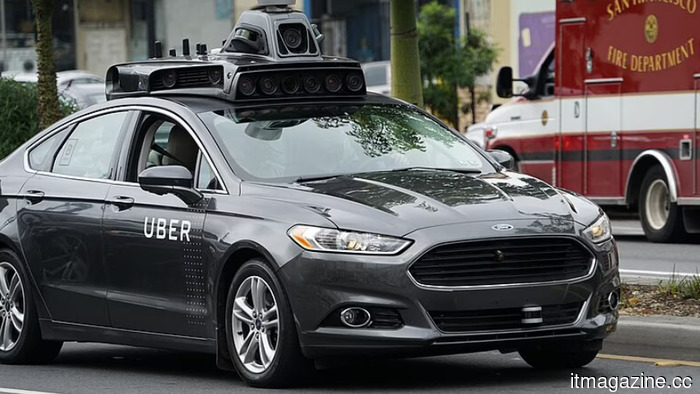 Uber advocates for the integration of robotaxis into its platform.
Uber's lobbying efforts in Washington, D.C., and New Jersey are advocating for a "hybrid network" regulation that would allow driverless vehicles to operate on the same platform as human drivers.
Uber advocates for the integration of robotaxis into its platform.
Uber's lobbying efforts in Washington, D.C., and New Jersey are advocating for a "hybrid network" regulation that would allow driverless vehicles to operate on the same platform as human drivers.
 ChatGPT’s guidance on hiking resulted in two hikers becoming stranded on a mountain in Poland.
Two hikers required a helicopter rescue after ChatGPT led them to a mountain traverse that neither of them had the skills to navigate.
ChatGPT’s guidance on hiking resulted in two hikers becoming stranded on a mountain in Poland.
Two hikers required a helicopter rescue after ChatGPT led them to a mountain traverse that neither of them had the skills to navigate.
 X is instructing its AI algorithm on concepts that social networks used to grasp.
X is promoting posts among mutual followers after discovering that its algorithm lacked relationship data, highlighting the disparity between forecasting engagement and fostering meaningful conversations people truly desire.
X is instructing its AI algorithm on concepts that social networks used to grasp.
X is promoting posts among mutual followers after discovering that its algorithm lacked relationship data, highlighting the disparity between forecasting engagement and fostering meaningful conversations people truly desire.
 Hassabis seeks a referee similar to FINRA for advanced AI developments.
Demis Hassabis advocates for a U.S.-led AI Standards Body, inspired by Wall Street’s FINRA, to evaluate frontier models prior to their release and to potentially slow industry progress if necessary.
Hassabis seeks a referee similar to FINRA for advanced AI developments.
Demis Hassabis advocates for a U.S.-led AI Standards Body, inspired by Wall Street’s FINRA, to evaluate frontier models prior to their release and to potentially slow industry progress if necessary.
 Microsoft's emissions increased by 25% due to the expansion of AI data centers.
Microsoft's emissions increased by approximately 25% in 2025, reaching 20.3 million tonnes, largely due to AI data centres, making its goal of being carbon-negative by 2030 more challenging.
Microsoft's emissions increased by 25% due to the expansion of AI data centers.
Microsoft's emissions increased by approximately 25% in 2025, reaching 20.3 million tonnes, largely due to AI data centres, making its goal of being carbon-negative by 2030 more challenging.
Brands claim that Meta's AI advertising tools are chaotic.
Meta is encouraging brands to utilize its AI advertising tools; however, advertisers report that these tools generate nonsensical copy and modified products, while Meta holds them responsible for these issues.