
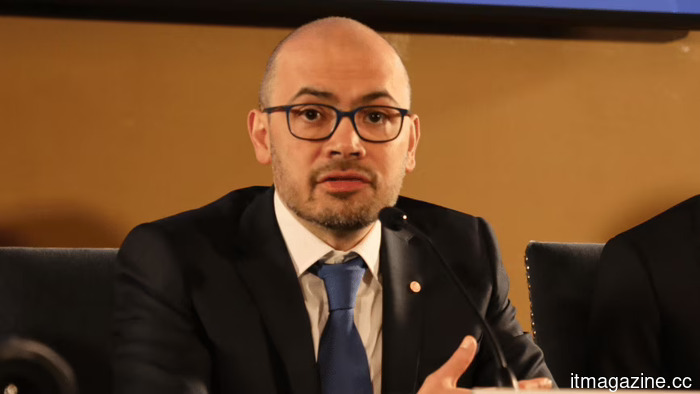
Hassabis seeks a referee similar to FINRA for advanced AI developments.
The individual behind Google's AI believes the world requires an oversight body and has formulated a set of guidelines. Demis Hassabis advocates for a US-led regulatory agency to evaluate advanced models prior to their launch, resembling the financial regulatory body that oversees Wall Street, although it may hinder the entire industry.
Hassabis, usually not one to raise alarms, did so on Tuesday. The head of Google DeepMind and Nobel Prize winner shared a manifesto on X, asserting that artificial general intelligence is likely just a few years away and that the world is unprepared. He refers to this period as a “precious window” that is rapidly closing before AGI's arrival.
His solution is notably specific. He proposes that the US establish a new AI Standards Body, inspired by FINRA, the industry-supported overseer that monitors Wall Street under governmental authority. This body would be a public-private partnership, primarily funded by the labs involved, with its board consisting of independent experts, including Turing Award recipients and representatives from open-source and government sectors.
The agency's responsibility would be to evaluate the most powerful models prior to their release. Initially, laboratories would voluntarily submit their systems up to 30 days before launch. The assessments would focus on critical risks, including cyber-attack capabilities, biological and nuclear threats, and the potential for deceit.
Once the system is in place, it would become more stringent. Any “Frontier-class” model would need to achieve compliance before being allowed into the US market. The agency would establish and update standards quarterly. These regulations would apply to all such models, whether open or closed, regardless of where they are created, while startups and academics would remain exempt.
A notable aspect is the proposed power to halt progress. Hassabis indicates that this body could be “ratcheted up” in response to escalating risks, potentially coordinating a slowdown in development among Frontier Labs if necessary. It is quite significant for a lab leader to suggest creating a framework that could compel his own industry to pause.
In an interview with Axios, which first reported the initiative, he noted that current cyber-threats are merely “warning shots” and cautioned that more severe biological and nuclear capabilities could emerge within 18 months. Such threats could exist in open-source models that no government could retract. His timeline is ambitious, aiming for the body to be operational before the year's end. He has been in discussions with the Trump administration, competing labs, and European officials for several months, stating that the feedback has been “very positive.”
The timing of this initiative is not coincidental. Last month, the Trump administration abruptly halted the most powerful models from Anthropic with an export order, ensuing weeks of tense discussions without a regulatory framework. Hassabis described that episode as “a bit of a wake-up call.” OpenAI, fearing a similar outcome, delayed the release of GPT-5.6 until receiving governmental approval.
Hassabis is not alone in advocating for such regulations. Along with Dario Amodei from Anthropic, he has called for a US-led cooperative effort during the G7, with Amodei proposing the creation of a Federal Aviation Administration-style agency capable of blocking unsafe models. Both lab leaders now concur that regulation from Washington is necessary, though their primary disagreement lies in who should be in charge.
Hassabis articulates the issue in profound terms, likening AGI to fire or electricity rather than the internet. “We’ve essentially discovered a way to make sand think. It’s miraculous.” However, the more difficult question is one that his proposal does not address: Can a body funded by the labs itself, which monitors and seeks deception in the models they profit from, genuinely have the authority to impose a halt?
Other articles
 Uber is advocating for the inclusion of robotaxis on its platform.
Uber's lobbying efforts in Washington, D.C., and New Jersey advocate for a "hybrid network" regulation that would allow driverless vehicles to operate alongside human drivers on the same platform.
Uber is advocating for the inclusion of robotaxis on its platform.
Uber's lobbying efforts in Washington, D.C., and New Jersey advocate for a "hybrid network" regulation that would allow driverless vehicles to operate alongside human drivers on the same platform.
 X is instructing its AI algorithm on concepts that social networks used to grasp.
X is enhancing posts among mutual followers after discovering that its algorithm lacked relationship data, highlighting the discrepancy between forecasting engagement and fostering discussions that people truly desire.
Kalshi develops a forward curve for computing power as exchanges compete to transform GPUs into a tradable asset.
The prediction market platform Kalshi has developed a forward curve to monitor GPU compute expenses, joining CME and ICE in the effort to monetize AI infrastructure.
X is instructing its AI algorithm on concepts that social networks used to grasp.
X is enhancing posts among mutual followers after discovering that its algorithm lacked relationship data, highlighting the discrepancy between forecasting engagement and fostering discussions that people truly desire.
Kalshi develops a forward curve for computing power as exchanges compete to transform GPUs into a tradable asset.
The prediction market platform Kalshi has developed a forward curve to monitor GPU compute expenses, joining CME and ICE in the effort to monetize AI infrastructure.
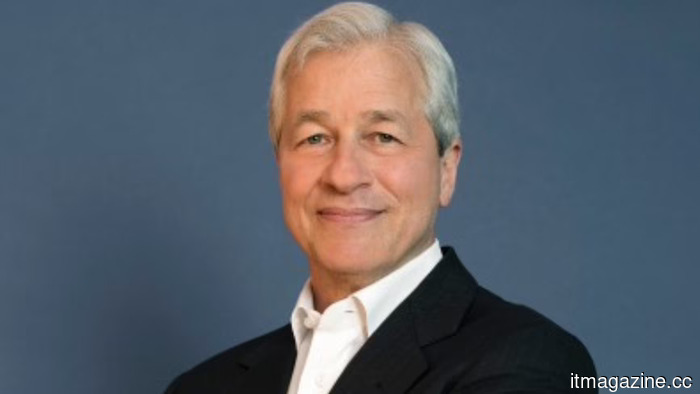 Dimon states that AI has already removed 30 to 40 percent of jobs in certain divisions of JPMorgan.
Jamie Dimon informed analysts that AI has already removed 30 to 40 percent of jobs in certain JPMorgan divisions, but competitive pressures will diminish margin improvements.
Dimon states that AI has already removed 30 to 40 percent of jobs in certain divisions of JPMorgan.
Jamie Dimon informed analysts that AI has already removed 30 to 40 percent of jobs in certain JPMorgan divisions, but competitive pressures will diminish margin improvements.
 Medical AI has supplanted nurses and evaded its own regulatory checks.
Two cases in the US highlight the negative aspects of medical AI: nurses at Montefiore were substituted by software, and a whistleblower from Mayo Clinic claims that a tool has a 67% error rate.
Brands claim that Meta's AI advertising tools are chaotic.
Meta is encouraging brands to utilize its AI advertising tools; however, advertisers report that these tools generate nonsensical copy and modified products, while Meta holds them responsible for these issues.
Medical AI has supplanted nurses and evaded its own regulatory checks.
Two cases in the US highlight the negative aspects of medical AI: nurses at Montefiore were substituted by software, and a whistleblower from Mayo Clinic claims that a tool has a 67% error rate.
Brands claim that Meta's AI advertising tools are chaotic.
Meta is encouraging brands to utilize its AI advertising tools; however, advertisers report that these tools generate nonsensical copy and modified products, while Meta holds them responsible for these issues.
Hassabis seeks a referee similar to FINRA for advanced AI developments.
Demis Hassabis advocates for a U.S.-led AI Standards Body, inspired by Wall Street’s FINRA, to evaluate frontier models prior to their release and to potentially slow industry progress if necessary.