
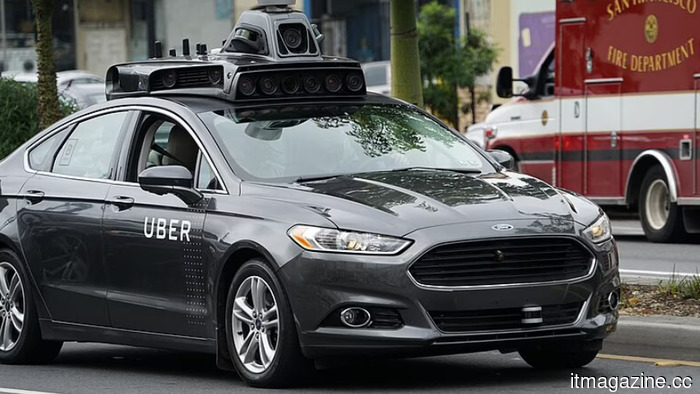
Uber advocates for the integration of robotaxis into its platform.
Uber lost the competition to develop a self-driving car but now aims to shape the regulations for those that did succeed. In two US states, the company is advocating for laws that would require robotaxis to operate on its app, and its product chief is keen to elaborate on the rationale.
Having been unable to achieve success in creating a robotaxi, Uber is now seeking to gain influence over its regulation instead.
In Washington DC and New Jersey, Uber is promoting what it refers to as a “hybrid network,” according to public documents. The proposal appears modest at first glance, as it mandates that any robotaxi service must include human drivers on the same platform as its autonomous vehicles. Essentially, this would create a hurdle that all competitors need to overcome to operate.
Reports from Wired’s Aarian Marshall, who accessed the New Jersey documents, and TechCrunch, which covered the developments in DC, reveal that in New Jersey, one proposed regulation would require human drivers to conduct 85% of rides for three years. Meanwhile, in DC, Uber is opposing a bill that would permit completely driverless vehicles to operate without a safety driver.
The hybrid network argument
Uber argues that a market consisting solely of autonomous vehicles would enable Waymo to establish a monopoly and eliminate jobs for human drivers. Javi Correoso, Uber's policy chief, stated during a DC Council discussion that each autonomous vehicle effectively displaces around four human drivers, and he believes this choice should be legislated.
“There should be a requirement for consumers to have the option of an Uber driven by a human,” he asserted.
Conversely, the bill that Uber is contesting would allow the licensing of fully autonomous fleets in DC, supported by a per-mile tax and high permit fees that critics claim would exclude all but the largest companies. While Uber shares some objections with others regarding this bill, its proposed solution is criticized as even less favorable.
Waymo, which supports the bill, conducts over 500,000 rides a week across 11 cities and does not want to be confined to a competitor’s app. Greg Rogers from The Innovation Majority think tank referred to Uber’s strategy as an effort at “regulatory capture,” arguing that forcing one business model on the market merely imposes costs on all who wish to operate.
The unspoken truth expressed
Uber is openly stating its strategy. Its chief product officer, Sachin Kansal, mentioned to TechCrunch that the company isn’t competing to become a Level 4 autonomy provider. Instead, he emphasized that they are “laying down the race tracks so we can collaborate with multiple players” and support a hybrid network involving both humans and robots within the same urban areas.
Data plays a critical role in this approach. Through a division called AV Labs, Uber is equipping numerous vehicles with sensors to collect extensive driving data, which it plans to share with the very autonomous vehicle companies it competes against. By controlling the road, they aim to control the data that operates on it.
A transformed Uber
This stance marks a significant shift. Historically, Uber aggressively challenged local taxi regulations and resisted laws supported by unions. Now, it claims to have matured.
“That experience changed us,” stated chief operating officer Andrew MacDonald in May. “Today, we collaborate with cities rather than confronting them.”
The dual strategy is evident. While lobbying to impede competitors, Uber is also preparing to work with them. The company is collaborating with Nvidia on a Level 4 service and has planned robotaxi launches with Nuro and Lucid in Houston and WeRide in Madrid. Additionally, it divested its own self-driving division to Aurora in 2020. Unable to win the technological race, Uber is focusing on owning the infrastructure that the frontrunners will utilize.
The larger struggle
Washington DC serves as a testing ground for this model. Uber intends to advocate for the hybrid approach in additional states as they develop their autonomous vehicle regulations.
This scenario is already presenting challenges for regulators. New Jersey has been deliberating on its robotaxi legislation, US safety regulators have instructed AV companies to cease obstructing first responders, and the same agency is considering eliminating the steering wheel entirely. Meanwhile, Tesla is progressing with its Cybercab, and Waymo is working through issues from a previous incident in San Francisco.
Currently, the technology generally operates effectively. The key question remains: who will control the dispatch? Uber built its empire by owning the platform that connects riders with drivers but is now betting that the same critical point will be lucrative when the driver is a robot.
Other articles
 X is instructing its AI algorithm on concepts that social networks used to grasp.
X is enhancing posts among mutual followers after discovering that its algorithm lacked relationship data, highlighting the discrepancy between forecasting engagement and fostering discussions that people truly desire.
X is instructing its AI algorithm on concepts that social networks used to grasp.
X is enhancing posts among mutual followers after discovering that its algorithm lacked relationship data, highlighting the discrepancy between forecasting engagement and fostering discussions that people truly desire.
 Huawei's MatePad Air has finally been released outside of China, making the iPad Air seem less impressive by comparison.
Huawei’s MatePad Air, which was launched worldwide, features a 144Hz OLED screen, an impressive battery, and included accessories that underscore certain uncomfortable shortcomings in Apple’s iPad Air.
Huawei's MatePad Air has finally been released outside of China, making the iPad Air seem less impressive by comparison.
Huawei’s MatePad Air, which was launched worldwide, features a 144Hz OLED screen, an impressive battery, and included accessories that underscore certain uncomfortable shortcomings in Apple’s iPad Air.
 The vision of Concorde is attainable. NASA's X-59 simply needs to eliminate the sonic boom from supersonic flight.
NASA's X-59 has achieved speeds of 924 mph at an altitude of 55,000 feet, moving the agency closer to demonstrating that future supersonic passenger flights can circumvent loud sonic booms.
The vision of Concorde is attainable. NASA's X-59 simply needs to eliminate the sonic boom from supersonic flight.
NASA's X-59 has achieved speeds of 924 mph at an altitude of 55,000 feet, moving the agency closer to demonstrating that future supersonic passenger flights can circumvent loud sonic booms.
 The dream of the Concorde is attainable. The NASA X-59 simply needs to eliminate the supersonic boom.
NASA’s X-59 has achieved a speed of 924 mph at an altitude of 55,000 feet, moving the agency closer to demonstrating that future supersonic passenger flights can circumvent loud sonic booms.
The dream of the Concorde is attainable. The NASA X-59 simply needs to eliminate the supersonic boom.
NASA’s X-59 has achieved a speed of 924 mph at an altitude of 55,000 feet, moving the agency closer to demonstrating that future supersonic passenger flights can circumvent loud sonic booms.
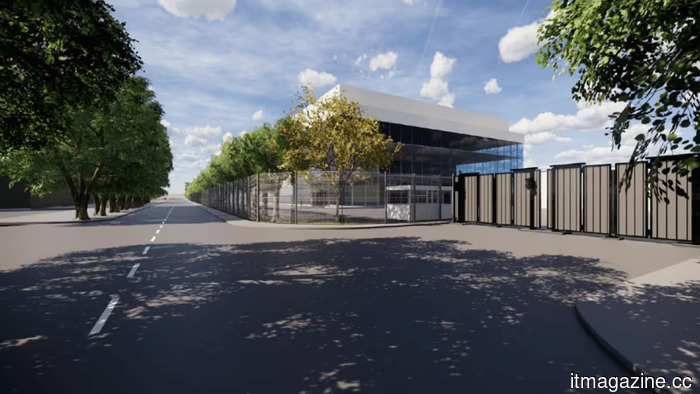 Nscale's £2 billion AI data center affected by delays in the UK power grid.
Nscale's £2 billion data center in Essex is unable to obtain grid power in time for its opening, leading it to pursue its own electricity supply as connection delays in the UK extend for years.
Nscale's £2 billion AI data center affected by delays in the UK power grid.
Nscale's £2 billion data center in Essex is unable to obtain grid power in time for its opening, leading it to pursue its own electricity supply as connection delays in the UK extend for years.
 Medical AI substituted for nurses and evaded its own regulations.
Two cases in the US highlight the negative aspects of medical AI: nurses at Montefiore being replaced by software, and a whistleblower from the Mayo Clinic claiming that a tool has a 67% error rate.
Medical AI substituted for nurses and evaded its own regulations.
Two cases in the US highlight the negative aspects of medical AI: nurses at Montefiore being replaced by software, and a whistleblower from the Mayo Clinic claiming that a tool has a 67% error rate.
Uber advocates for the integration of robotaxis into its platform.
Uber's lobbying efforts in Washington, D.C., and New Jersey are advocating for a "hybrid network" regulation that would allow driverless vehicles to operate on the same platform as human drivers.