
The AI memory shortage is unlikely to improve until 2028.
The recent surge in AI has shattered the long-standing principle of the memory market. Instead of prices declining, they are skyrocketing, and the AI-driven memory shortage is expected to persist until 2028. The subsequent fallout, when it arrives, may be severe.
Memory should be unexciting. For many years, DRAM and NAND flash have functioned like typical commodities, going through predictable cycles of growth and decline as new factories enter the market and prices plummet. That cycle has now been disrupted.
As detailed by The Register, the expansion of AI has consumed every available chip, leading to a memory shortage in AI with no quick resolution in sight.
The cycle that has been disrupted
According to established norms, 2025 and 2026 were expected to be low years. Prices were supposed to decrease as supply caught up. Instead, they increased. GPU servers require substantial amounts of high-bandwidth memory, including DDR5 and NAND, and this demand has consumed everything available.
The repercussions have reached the retail sector, driving up the prices of consumer electronics and, as The Register notes, putting an end to affordable smartphones. For manufacturers, this is a boon. Companies like SK Hynix and Micron have tripled their revenues in just a year, and Samsung has approximately doubled its revenue as well.
A solution measured in years
The clear solution is to build more factories, and investments are flowing. In June, South Korean President Lee Jae Myung announced a $576 billion initiative led by SK Hynix and Samsung. Micron recently declared it would invest up to $3 billion to bolster its US supply chain, with additional investments in Singapore, Taiwan, and Japan.
However, these solutions will not arrive quickly.
Constructing a new memory fabrication plant is one of the most challenging tasks in the industry, involving everything from securing permits to establishing ultra-pure water systems and fine-tuning lithography equipment, which takes months. Any project initiated today requires at least three years to become operational and even longer to reach full capacity. Analysts at IDC do not anticipate any relief until 2028.
Everyone downstream bears the burden
In the meantime, the costs are being passed down to everyone below the memory giants. Chip manufacturers are already reworking designs to adapt to the shortage. For instance, Samsung is preparing to launch a budget solid-state drive that eliminates onboard DRAM, as reported by TechRadar, utilizing a portion of system memory to reduce costs.
AI companies are also feeling the impact.
Every model developer utilizing AI infrastructure is facing increased costs, which is detrimental to margins that are already tight. The labs have invested four years and hundreds of billions in venture capital. They still need to convert the cost per token into profit, and more expensive memory complicates that equation.
The downturn nobody is anticipating
Here lies the dilemma. Memory vendors fund their enormous fabs based on booming demand. They recognize that when the new capacity finally comes online, it could flood the market and drive prices down. This cycle is well known, and AI has only widened the volatility.
The entire structure relies on one key assumption: that demand for AI continues to grow. If demand falls short just as the new fabs begin operation, manufacturers could face what The Register describes as a catastrophic bust. Therefore, the genuine race is not between memory supply and demand, but rather whether the new fabs will be operational before the AI bubble bursts and the music stops.
For Europe, observing from a distance in a supply chain it has limited control over, the constraints serve as a stark reminder of its vulnerability. The region is striving to establish its own AI data centers, but a few companies in Korea, Taiwan, and the United States control the rationing and pricing of the components needed to equip them.
The RAMpocalypse presents a favorable moment for memory producers, yet it is a tense time for everyone else, and the inevitable reckoning has only been postponed, not avoided.
Other articles
 'Scam Altman': Musk and Altman's weekend conflict on X
Musk labeled Sam Altman a 'scammer' throughout the weekend on X following Apple's lawsuit against OpenAI. Altman responded by stating that it merely demonstrated the effectiveness of his new model. Here's a look at the clash.
'Scam Altman': Musk and Altman's weekend conflict on X
Musk labeled Sam Altman a 'scammer' throughout the weekend on X following Apple's lawsuit against OpenAI. Altman responded by stating that it merely demonstrated the effectiveness of his new model. Here's a look at the clash.
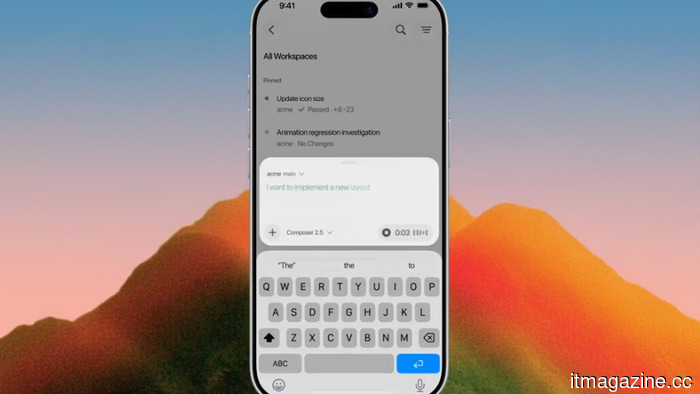 Cursor Sand: the competitor to Claude Cowork with a Musk twist.
Cursor Sand is a versatile agent designed to compete with Claude Cowork and ChatGPT Work. It's uncertain if Musk's SpaceX will eventually release it.
Cursor Sand: the competitor to Claude Cowork with a Musk twist.
Cursor Sand is a versatile agent designed to compete with Claude Cowork and ChatGPT Work. It's uncertain if Musk's SpaceX will eventually release it.
 Meta AI detector fails to identify half of its own cropped fakes.
A Reuters test revealed that the Meta AI detector failed to identify 55% of its Muse Image photos after they were cropped, highlighting the limitations of AI watermarks.
Meta AI detector fails to identify half of its own cropped fakes.
A Reuters test revealed that the Meta AI detector failed to identify 55% of its Muse Image photos after they were cropped, highlighting the limitations of AI watermarks.
 The most cutting-edge calorie tracking applications of 2026.
Five calorie tracking applications advancing the field in 2026 through AI-driven food logging, adaptive algorithms, GLP-1 integration, and customized meal planning that adjusts to personal health conditions.
The most cutting-edge calorie tracking applications of 2026.
Five calorie tracking applications advancing the field in 2026 through AI-driven food logging, adaptive algorithms, GLP-1 integration, and customized meal planning that adjusts to personal health conditions.
 The pressure on AI memory is not expected to alleviate until 2028.
The surge in AI has disrupted the boom-bust cycle of the memory market. The current memory shortage driven by AI is expected to persist until 2028, and the subsequent downturn could be unprecedented.
The pressure on AI memory is not expected to alleviate until 2028.
The surge in AI has disrupted the boom-bust cycle of the memory market. The current memory shortage driven by AI is expected to persist until 2028, and the subsequent downturn could be unprecedented.
 You can now instruct Waze to stop interrupting your playlist, and I’m surprised it took this long.
Waze's Less Chatty mode now allows you to concentrate on your music without frequent voice interruptions. In my opinion, that's the main highlight of the update.
You can now instruct Waze to stop interrupting your playlist, and I’m surprised it took this long.
Waze's Less Chatty mode now allows you to concentrate on your music without frequent voice interruptions. In my opinion, that's the main highlight of the update.
The AI memory shortage is unlikely to improve until 2028.
The surge in AI has disrupted the memory market's cycle of boom and bust. The current memory shortage due to AI is expected to last until 2028, and the subsequent downturn could be unprecedented.