
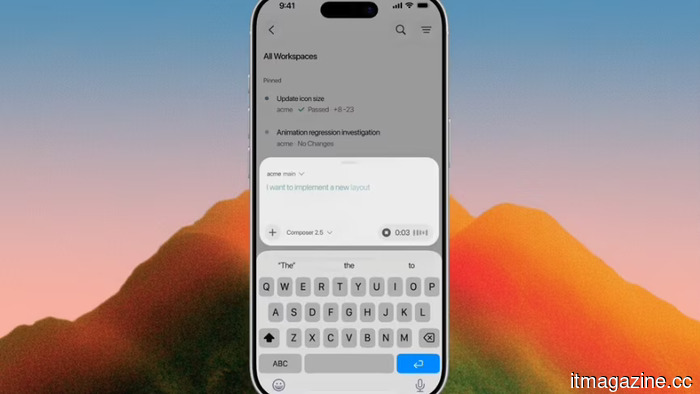
Cursor Sand: the competitor to Claude Cowork with a Musk twist.
The competition to automate the office has gained a new contender. Cursor is developing Sand, a general-purpose agent aimed at competing with Claude Cowork. The product's future may hinge on Elon Musk's involvement.
Cursor initially gained recognition as a tool for programmers, but is now creating a product for non-coders. According to The Information, the company is working on a general-purpose AI agent, codenamed Sand, designed to rival Anthropic's Claude Cowork.
Sand aims to assist with tasks such as responding to emails and texts, managing spreadsheets, organizing documents, and even engaging with engineering work. This signifies Cursor’s first endeavor focused on the general office workforce instead of primarily catering to developers.
The firm began internal testing of Sand in late June, utilizing computing resources it started renting from Elon Musk’s SpaceXAI in April. There is no commitment to a public launch at this stage.
A three-way battle for office automation
Recently, the competition has intensified. On July 7, Anthropic expanded Claude Cowork to mobile and web platforms. Just two days later, OpenAI introduced ChatGPT Work, an agent driven by its GPT-5.6 model. Both labs are vying for dominance in workplace AI, and Cursor is eager to join the fray.
Cursor’s approach would stand apart. While Cowork and ChatGPT Work excel at gathering, summarizing, and drafting documents, Cursor has invested years in building integrations via the Model Context Protocol, an open standard that Anthropic initially introduced in 2024. Its agents seamlessly connect with platforms like Vercel, GitHub, and Slack.
This capability enables Cursor to take a draft and deploy it directly to the web, rather than merely returning it. For freelancers looking to have a landing page live, rather than just written, this distinction is significant.
Shifting focus from coders to a broader audience
This shift marks a significant change for Cursor. The company has traditionally defined itself in relation to software engineers. Its AI code editor, based on Microsoft’s Visual Studio Code, was generating approximately $4 billion in annual revenue by early June, doubling its figures from February. It is now utilized by nearly two-thirds of Fortune 500 companies.
Nvidia’s Jensen Huang has praised it as his favorite enterprise AI service, and all 40,000 engineers at Stripe reportedly use it. Sand aims to extend these capabilities to a much larger group of finance, HR, and marketing professionals.
The Musk factor
However, there is a crucial caveat. The future of Sand is closely linked to a major deal in the AI sector. In June, SpaceX agreed to acquire Cursor’s parent company, Anysphere, for $60 billion in stock shortly after its own impressive Nasdaq debut.
This acquisition is expected to finalize this quarter. Cursor began leasing SpaceXAI’s computing power in April, coinciding with the reported start of Sand's development, and the two companies recently collaborated to launch Grok 4.5. Thus, the decision regarding Sand's launch may not fully rest with Cursor but could ultimately depend on Musk.
Concerns over model neutrality
This ownership structure introduces a deeper conflict. Cursor’s success has been based on maintaining neutrality by allowing developers to route tasks to the most suitable models, whether that be Claude, OpenAI’s GPT, Google’s Gemini, or Cursor's own Composer. Many enterprise teams have selected Cursor precisely to ensure that sensitive code remains within Claude’s ecosystem.
Since SpaceX now owns xAI, the creator of Grok, any tasks Cursor assigns to a competitor translate into revenue lost for Musk’s enterprise. Analysts are increasingly concerned that Cursor might become a one-vendor solution rather than maintaining its neutral stance. Cursor’s CEO, Michael Truell, has emphasized that model agnosticism remains a fundamental aspect of the product.
However, this assurance will carry little weight once the merger concludes.
Seen from this perspective, Sand may appear less as a distinct Cursor product and more as a conduit. An embedded workplace agent within Cursor’s infrastructure could provide Grok its first significant pathway into non-developer markets, targeting firms that are already reliant on Cursor’s coding solutions.
While the market for office agents continues to expand, Cursor stands out as a unique entrant with a million users already proficient in delegating tasks to AI. The true competition may not solely be between Sand and Cowork, but rather whether the neutral tool embraced by these users can endure under its new ownership.
Other articles
 You can now instruct Waze to stop interrupting your playlist, and I’m surprised it took this long.
Waze's Less Chatty mode now allows you to concentrate on your music without frequent voice interruptions. In my opinion, that's the main highlight of the update.
You can now instruct Waze to stop interrupting your playlist, and I’m surprised it took this long.
Waze's Less Chatty mode now allows you to concentrate on your music without frequent voice interruptions. In my opinion, that's the main highlight of the update.
 Meta AI detector fails to identify half of its own cropped fakes.
A Reuters test revealed that the Meta AI detector failed to identify 55% of its Muse Image photos after they were cropped, highlighting the limitations of AI watermarks.
Meta AI detector fails to identify half of its own cropped fakes.
A Reuters test revealed that the Meta AI detector failed to identify 55% of its Muse Image photos after they were cropped, highlighting the limitations of AI watermarks.
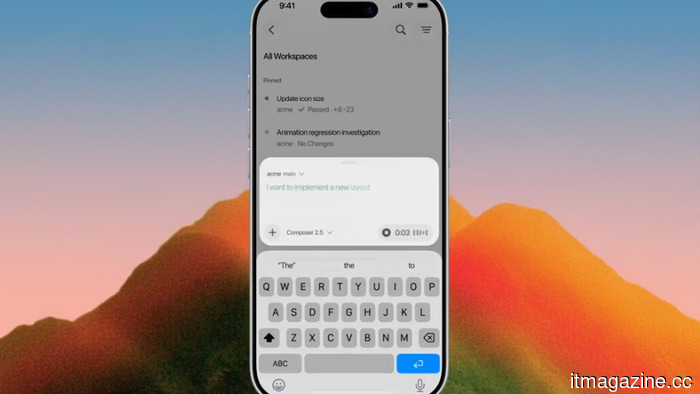 Cursor Sand: the competitor to Claude Cowork with a Musk twist.
Cursor Sand is a versatile agent designed to compete with Claude Cowork and ChatGPT Work. It's uncertain if Musk's SpaceX will eventually release it.
Cursor Sand: the competitor to Claude Cowork with a Musk twist.
Cursor Sand is a versatile agent designed to compete with Claude Cowork and ChatGPT Work. It's uncertain if Musk's SpaceX will eventually release it.
 'Scam Altman': Musk and Altman's weekend clash on X
Musk referred to Sam Altman as a 'scammer' throughout the weekend on X following Apple’s lawsuit against OpenAI. Altman responded by asserting that it simply demonstrated the effectiveness of his new model. Here's a closer look at the dispute.
'Scam Altman': Musk and Altman's weekend clash on X
Musk referred to Sam Altman as a 'scammer' throughout the weekend on X following Apple’s lawsuit against OpenAI. Altman responded by asserting that it simply demonstrated the effectiveness of his new model. Here's a closer look at the dispute.
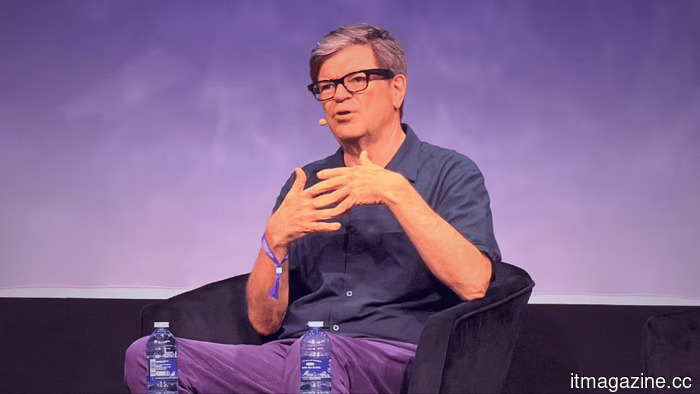 Yann LeCun's venture capital fund, Extelligence, crumbles within hours.
Yann LeCun was appointed as a partner at the new venture capital firm Extelligence Invest. However, within eight hours, the fund was dissolved due to unspecified 'exclusive relationships'.
Yann LeCun's venture capital fund, Extelligence, crumbles within hours.
Yann LeCun was appointed as a partner at the new venture capital firm Extelligence Invest. However, within eight hours, the fund was dissolved due to unspecified 'exclusive relationships'.
 Australia's AI copyright dispute: creators versus data centers
AI companies, such as Anthropic, are offering billions for data centers in exchange for an exception in Australia's copyright laws to use local content for training. The Labor party is divided on the issue.
Australia's AI copyright dispute: creators versus data centers
AI companies, such as Anthropic, are offering billions for data centers in exchange for an exception in Australia's copyright laws to use local content for training. The Labor party is divided on the issue.
Cursor Sand: the competitor to Claude Cowork with a Musk twist.
Cursor Sand is a versatile agent designed to compete with Claude Cowork and ChatGPT Work. Whether it will be released by Musk’s SpaceX is still uncertain.