
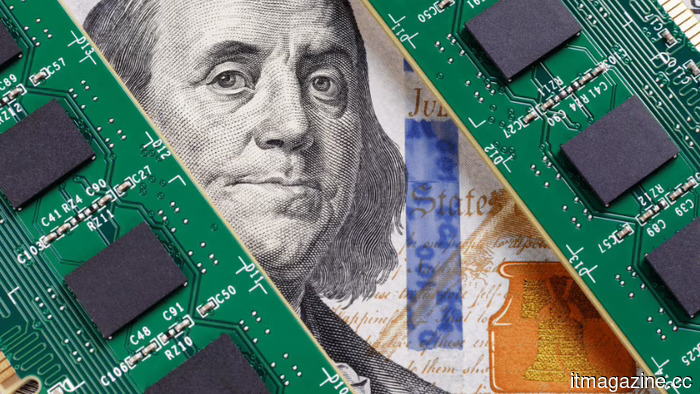
The pressure on AI memory is not expected to alleviate until 2028.
The AI surge has shattered the long-standing principles of the memory market. Prices that were expected to decline are instead rising, and the AI memory shortage is not anticipated to improve until 2028. When the repercussions arrive, they could be severe.
Memory is typically a mundane sector. For many years, DRAM and NAND flash have functioned like any other commodity, experiencing predictable highs and lows as new production facilities enter the market and drive prices down. This cycle has now been disrupted.
As highlighted by The Register, the expansion of AI has consumed all available chips, resulting in a memory shortage without a quick resolution.
The broken cycle
According to historical expectations, the years 2025 and 2026 should have seen a downturn. Prices were projected to decrease as supply balanced with demand. Instead, they have increased. The demand for GPU servers requiring considerable amounts of high-bandwidth memory, like DDR5 and NAND, has absorbed all the available supply.
The reverberations have reached retailers, increasing the prices of consumer electronics and, as noted by The Register, leading to the demise of affordable smartphones. For manufacturers, this has resulted in a windfall. SK Hynix and Micron have tripled their revenues within a year, and Samsung has nearly doubled its earnings.
A long-term solution
The clear solution is to build more factories, and investments are shifting in that direction. In June, South Korean President Lee Jae Myung revealed a $576 billion initiative spearheaded by SK Hynix and Samsung. Recently, Micron announced plans to invest up to $3 billion to strengthen its US supply chain, with additional funds allocated for Singapore, Taiwan, and Japan.
However, none of these developments will be immediate.
Establishing a new memory fabrication plant is an exceptionally complicated process, requiring permits, ultra-pure water systems, and lithography equipment that can take months to fine-tune. Any project launched now will need a minimum of three years to become operational, with even more time needed to reach full production capacity. The analyst group IDC does not foresee any easing of the situation until 2028.
The burden on all
In the meantime, the costs will trickle down to all those below the memory giants. Chip manufacturers are already redesigning their products to cope with the shortage. For example, Samsung is preparing a budget solid-state drive that eliminates its onboard DRAM, as reported by TechRadar, relying on a portion of system memory to reduce costs.
AI companies are also feeling the impact.
Every model developer utilizing AI infrastructure is facing higher expenses, further straining already tight profit margins. These labs have invested four years and hundreds of billions in venture capital, and they still need to convert their cost per token into profitability, a task made more challenging by rising memory prices.
The bust that’s being overlooked
This creates a dilemma. Memory vendors finance their expansive factories based on booming demand. They are acutely aware that once new capacity comes online, it could inundate the market and drive prices down. That is the nature of the cycle, and AI has only intensified the fluctuations.
The entire framework is based on one critical assumption: that AI demand continues to grow. If it diminishes just as new plants come online, the manufacturers could face what The Register describes as a cataclysmic bust. Thus, the true race is not between memory and demand; it is whether the new factories can start operating before the AI bubble bursts and the music stops.
For Europe, which is observing from the periphery of a supply chain it has limited control over, this pressure highlights its vulnerability. The region is hastening to establish its own AI data centers, yet only a few companies in Korea, Taiwan, and the United States control and price the components needed to equip them.
The current memory crisis presents a favorable moment for memory producers, but it is a troubling time for everyone else, with the reckoning merely postponed rather than averted.
Other articles
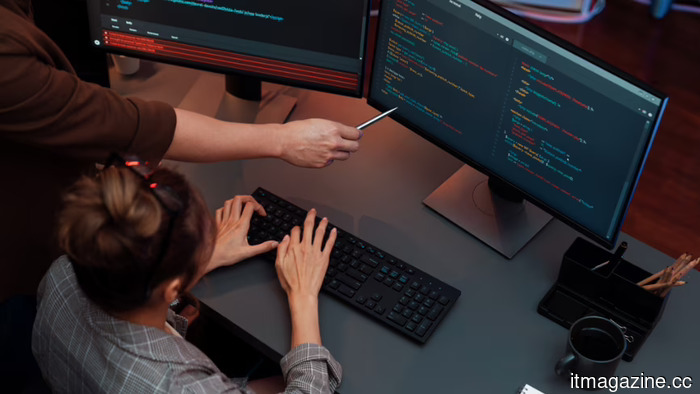 Not acquiring skills: research indicates that junior developers using AI fail to learn debugging.
A randomized trial showed that developers who utilized AI achieved a score of 50% on a quiz related to the code they had just created, compared to a score of 67% for those who coded manually.
Not acquiring skills: research indicates that junior developers using AI fail to learn debugging.
A randomized trial showed that developers who utilized AI achieved a score of 50% on a quiz related to the code they had just created, compared to a score of 67% for those who coded manually.
 Meta AI detector fails to identify half of its own cropped fakes.
A Reuters test revealed that the Meta AI detector failed to identify 55% of its Muse Image photos after they were cropped, highlighting the limitations of AI watermarks.
Meta AI detector fails to identify half of its own cropped fakes.
A Reuters test revealed that the Meta AI detector failed to identify 55% of its Muse Image photos after they were cropped, highlighting the limitations of AI watermarks.
 Apple's lawsuit is already negatively impacting OpenAI's competitor to the iPhone.
Apple's trade-secret lawsuit could span several years, but according to Bloomberg, it is already impacting OpenAI's recruitment efforts and casting a shadow over its device release prior to any judgment.
Apple's lawsuit is already negatively impacting OpenAI's competitor to the iPhone.
Apple's trade-secret lawsuit could span several years, but according to Bloomberg, it is already impacting OpenAI's recruitment efforts and casting a shadow over its device release prior to any judgment.
 Australia's AI copyright dispute: creators against data centers.
AI companies, such as Anthropic, are offering billions for datacentres in exchange for a specific Australian AI copyright exemption to utilize domestic work for training. There is a division within the Labor Party on this issue.
Australia's AI copyright dispute: creators against data centers.
AI companies, such as Anthropic, are offering billions for datacentres in exchange for a specific Australian AI copyright exemption to utilize domestic work for training. There is a division within the Labor Party on this issue.
 Yann LeCun's venture capital fund, Extelligence, crumbles within hours.
Yann LeCun was appointed as a partner at the new venture capital firm Extelligence Invest. However, within eight hours, the fund was dissolved due to unspecified 'exclusive relationships'.
Yann LeCun's venture capital fund, Extelligence, crumbles within hours.
Yann LeCun was appointed as a partner at the new venture capital firm Extelligence Invest. However, within eight hours, the fund was dissolved due to unspecified 'exclusive relationships'.
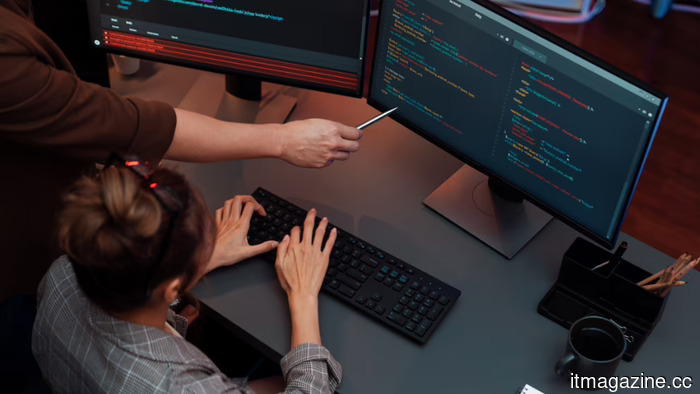 Never-skilling: studies indicate that junior developers utilizing AI fail to acquire debugging skills.
A randomized trial revealed that developers utilizing AI achieved a score of 50% on a quiz regarding code they had recently created, compared to 67% for those who coded manually.
Never-skilling: studies indicate that junior developers utilizing AI fail to acquire debugging skills.
A randomized trial revealed that developers utilizing AI achieved a score of 50% on a quiz regarding code they had recently created, compared to 67% for those who coded manually.
The pressure on AI memory is not expected to alleviate until 2028.
The surge in AI has disrupted the boom-bust cycle of the memory market. The current memory shortage driven by AI is expected to persist until 2028, and the subsequent downturn could be unprecedented.