

US states may file a lawsuit next week to prevent Paramount's $110 billion deal with Warner Bros.
A coalition of US states may file a lawsuit as early as next week to prevent Paramount’s $110 billion acquisition of Warner Bros. Discovery, according to two sources familiar with the situation who spoke to Reuters, creating a new hurdle for a deal that has already received approval from federal regulators.
This development comes a few weeks after the Justice Department cleared the merger without any stipulations, and it has the potential to postpone one of the largest consolidations in Hollywood in years. The states are worried that the merger could negatively affect competition, as reported by Dawn Chmielewski and Jody Godoy for Reuters on July 8. However, the sources did not specify which aspects of competition were of concern to the officials.
Advocacy groups and certain state regulators have cautioned that subscription costs for streaming services might increase, and that the merged entity may lead to job reductions and a narrower selection of films, news, and other content. These worries resonate with objections voiced by actors, writers, and theater owners since the takeover was announced, with theater operators particularly contending that a combined studio could approve fewer films.
This acquisition would merge two of the four major studios in Hollywood, and the size of the deal has drawn the attention of regulators. According to the agreed terms, Paramount is set to pay $31.00 per share in cash for Warner Bros. Discovery, valuing the acquisition at approximately $110 billion, including debt.
California is taking the lead in this matter. Attorney General Rob Bonta is examining whether the deal violates US laws that prohibit mergers that may unlawfully harm competition, and in early June, Reuters reported that California, New York, and several other states were preparing to file a joint lawsuit.
The actions from the states signify a broader change, as attorneys general are increasing their scrutiny of large mergers in response to a more business-friendly approach by federal antitrust enforcers. A spokesperson from Bonta’s office declined to comment, and Paramount did not immediately respond to Reuters.
Should a court challenge arise, it would impose significant costs for Paramount, which is anticipated to accrue about $80 billion in debt once the transaction is finalized. Any delays would exacerbate this financial strain. Chief executive David Ellison, the son of Oracle co-founder Larry Ellison, has already agreed to pay a “ticking fee” of 25 cents per share to Warner Bros. Discovery shareholders if the deal doesn’t conclude before October, which would amount to approximately $650 million in cash each quarter. This clause incentivizes both entities to expedite the completion of the merger.
The deal has progressed rapidly. Paramount Skydance, led by Ellison, won a bidding war for Warner Bros. Discovery after Netflix withdrew, with the streaming competitor later initiating a $25 billion share buyback as it realigned its strategy. Federal approval was granted last month when the Justice Department concluded an eight-month review, determining that the merger was “not likely to harm competition or American consumers.”
State attorneys general still retain the power to file lawsuits to block a deal even after federal approval has been granted, and they have become more assertive in exercising this right. Other officials have also taken steps; Oregon’s attorney general is seeking a 60-day delay and has asked a judge to compel Paramount to fulfill a records request, while in Britain, the culture secretary has expressed a willingness to intervene in the acquisition.
For the moment, the timeline remains procedural. If the multistate lawsuit is filed next week, it could lead to a court battle that might delay the closing past October, entering a period where the ticking fee would take effect. A federal judge would ultimately decide whether to grant an injunction to block the merger while the case is reviewed, and states have successfully contested such situations before, even when federal authorities chose not to act.
Meanwhile, Paramount has been preparing operationally, integrating the technology behind Paramount+, Pluto TV, and BET+ into a unified streaming platform to get ready for the inclusion of HBO Max. Whether the states can hinder that initiative will now rely on court rulings.
Other articles
 Jensen Huang mentioned that his engineers prefer creating agents to writing code.
Nvidia's CEO Jensen Huang stated that all of his engineers favor developing AI agents over coding in Python, asserting that AI is generating jobs rather than eliminating them.
Jensen Huang mentioned that his engineers prefer creating agents to writing code.
Nvidia's CEO Jensen Huang stated that all of his engineers favor developing AI agents over coding in Python, asserting that AI is generating jobs rather than eliminating them.
 Meta's CTO stated that employee-tracking information ended up 'in places it shouldn't have.'
Meta's CTO Andrew Bosworth stated that a researcher incorrectly relocated keystroke-tracking data, which contributed to the company halting its Model Capability Initiative.
Meta's CTO stated that employee-tracking information ended up 'in places it shouldn't have.'
Meta's CTO Andrew Bosworth stated that a researcher incorrectly relocated keystroke-tracking data, which contributed to the company halting its Model Capability Initiative.
 US states may file a lawsuit next week to prevent Paramount's $110 billion merger with Warner Bros.
Sources informed Reuters that California, New York, and other states may file a lawsuit as early as next week to prevent Paramount’s $110 billion deal with Warner Bros. Discovery.
US states may file a lawsuit next week to prevent Paramount's $110 billion merger with Warner Bros.
Sources informed Reuters that California, New York, and other states may file a lawsuit as early as next week to prevent Paramount’s $110 billion deal with Warner Bros. Discovery.
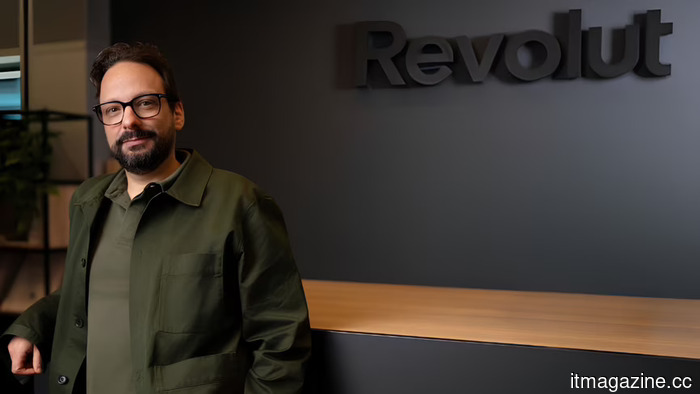 Revolut appoints former Chase UK chief Kuba Fast to head its European banking operations.
Revolut has appointed Kuba Fast, the former head of Chase UK, as the CEO of Revolut Bank UAB and its European operations, taking over from Joe Heneghan.
Revolut appoints former Chase UK chief Kuba Fast to head its European banking operations.
Revolut has appointed Kuba Fast, the former head of Chase UK, as the CEO of Revolut Bank UAB and its European operations, taking over from Joe Heneghan.
 Sonos experiences the departure of a decade’s worth of design expertise as layoffs affect its upper management.
Sonos has let go of senior design and product leaders who had been with the company for ten years or longer, in a restructuring that the CEO describes as a move towards greater speed, while some employees refer to it as cost-cutting.
Sonos experiences the departure of a decade’s worth of design expertise as layoffs affect its upper management.
Sonos has let go of senior design and product leaders who had been with the company for ten years or longer, in a restructuring that the CEO describes as a move towards greater speed, while some employees refer to it as cost-cutting.
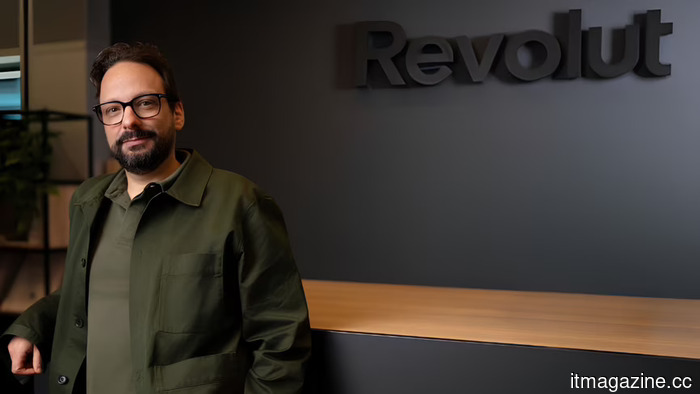 Revolut appoints former Chase UK chief Kuba Fast to head its European banking operations.
Revolut has appointed Kuba Fast, the former chief of Chase UK, as the CEO of Revolut Bank UAB and its European operations, taking over from Joe Heneghan.
Revolut appoints former Chase UK chief Kuba Fast to head its European banking operations.
Revolut has appointed Kuba Fast, the former chief of Chase UK, as the CEO of Revolut Bank UAB and its European operations, taking over from Joe Heneghan.
US states may file a lawsuit next week to prevent Paramount's $110 billion deal with Warner Bros.
Sources informed Reuters that California, New York, and several other states may file lawsuits as early as next week to prevent Paramount’s $110 billion acquisition of Warner Bros. Discovery.