

A survey reveals that parents are concerned that AI is becoming a dependency for their children, while schools are finding it challenging to adapt.
Only 1 in 3 schools has AI guidelines, while almost 50% of parents express concern about their children becoming overly dependent on AI.
Kids are turning to AI for homework, leading to uncertainty among half of their parents regarding the appropriateness of this reliance. The 2026 Back-to-School Survey from Deloitte, which surveyed 1,207 parents of K-12 students, revealed that 49% of parents are worried their child is too reliant on AI.
The results indicate that the adoption of AI is advancing much quicker than the policies intended to govern its use, leaving many parents uncertain about how these tools are being integrated into education.
Insights from the survey regarding children and AI in schools
The 2026 Deloitte Back-to-School Survey
The data illustrates a notable disconnect between the use of AI and the regulation of its application. While 28% of students are already incorporating generative AI into their schoolwork, merely 33% of schools have established guidelines for its use. Only 22% of schools offer or endorse specific generative AI tools for students.
Perhaps most significant is that 38% of parents are unaware if their child’s school has an AI policy, highlighting both a breakdown in communication and a policymaking issue. Additionally, 35% of parents expressed concerns that schools are not adequately preparing students for an AI-centric future. The disparity between students' activities and schools' formal recognition of them continues to widen each semester.
How parents are addressing the gap
The 2026 Deloitte Back-to-School Survey
As schools are slow to respond, some parents are taking proactive steps. About 13% intend to invest in generative AI-related classes or tutoring outside of school, indicating that a private sector for AI education is beginning to emerge.
Moreover, there's an ironic twist. The same survey found that parents utilizing generative AI alongside search engines and social media for their back-to-school shopping spend an average of $737 per child, nearly double the $381 spent by those who do not use any digital tools.
This suggests that both AI anxiety and adoption are increasing within the same households. If schools do not accelerate their development of AI guidelines, parents will continue to find their own solutions, widening the divide between students who are prepared and those who are not.
As AI becomes a standard study tool for many students, the critical question remains whether schools can effectively teach children to use it wisely, rather than allowing it to do their thinking for them.


Other articles
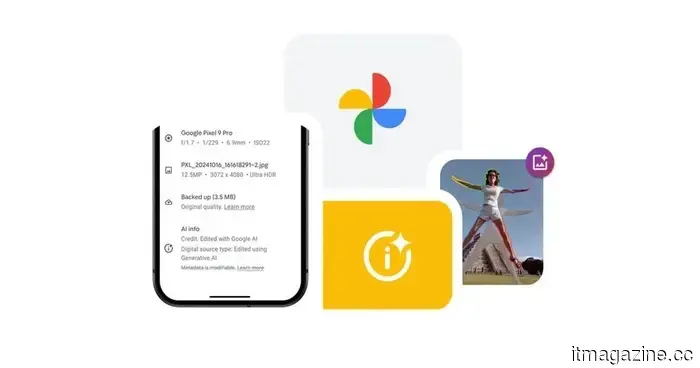 Google's Photos app has just provided Android users with yet another reason to be envious of iPhone users.
Google Photos for Android is now receiving the floating redesign that iPhone users have enjoyed for several months, resulting in a cleaner interface and a more prominent placement for the Gemini-powered Ask Photos feature.
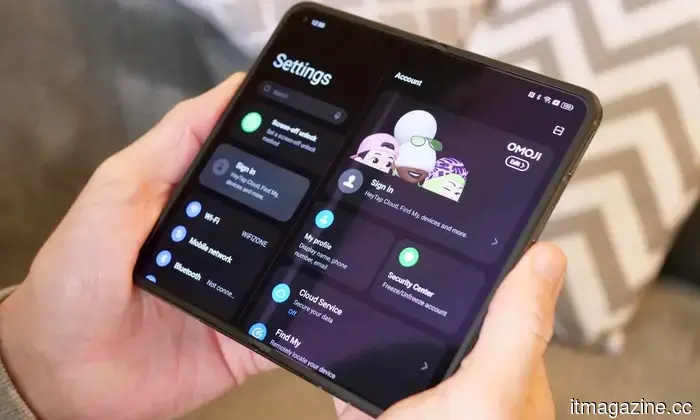 Following Samsung and Apple, Oppo may be the next to enter the expanding foldable market.
Oppo might enter the competition in the growing wide foldable market alongside Samsung and Apple, featuring a device powered by the Snapdragon 8 Gen 6 and equipped with a notably large 6,500mAh battery.
 Following Samsung and Apple, Oppo may soon be the next to enter the extensive foldable market.
Oppo could enter the competition for wide foldable devices alongside Samsung and Apple, featuring a Snapdragon 8 Gen 6 chipset and an unusually large 6,500mAh battery.
 Ensuring the security of Shadow IT in the corporate setting
Shadow IT introduces security vulnerabilities for enterprises that are not covered by monitoring, patching, and access controls. This article explores the increasing exposure of shadow IT, including unauthorized SaaS, shadow AI, and risks related to geopolitical data sovereignty, and discusses how vendor risk assessment manages third-party risks on a broader scale.
 John Deere's victory regarding the right-to-repair primarily concerns software.
The settlement between the FTC and John Deere marks the largest right-to-repair victory in the US so far, serving as a cautionary tale regarding software lock-in for all the devices you possess.
 AI image generators have moved beyond their troubling beginnings and entered a phase of artificial luxury.
I evaluated Meta Muse, Gemini Nano Banana 2, and ChatGPT Images 2.0. While the glaring AI errors are decreasing, the new issues are more challenging to dismiss.
A survey reveals that parents are concerned that AI is becoming a dependency for their children, while schools are finding it challenging to adapt.
A recent survey conducted by Deloitte discovered that 49% of parents are concerned their child depends too heavily on AI, whereas only 33% of schools have established any AI-related guidelines.