

Ensuring the security of Shadow IT in the corporate setting
Every organization operates within two technology environments: the one built, documented, and overseen by IT, and the one that employees create independently to expedite their work processes. This latter environment is known as shadow IT and is often larger, more diverse, and more integrated into daily operations than security teams are willing to admit. Shadow IT encompasses unauthorized SaaS tools, personal cloud storage, browser extensions with extensive data access, AI assistants handling sensitive documents, and third-party integrations that have never undergone security scrutiny. This shadow landscape is growing more rapidly than traditional governance frameworks can monitor.
The security risks posed by shadow IT are tangible. It introduces vulnerabilities that exist outside the monitoring, patching, and access control measures established by enterprise security teams, often via channels that employees do not perceive as risky. This article explores the areas where shadow IT vulnerabilities are proliferating, how vendor risk relates to the shadow IT issue, and what a practical approach to managing it entails.
The Vendor Dimension of Shadow IT
Shadow IT is frequently viewed as an employee behavior issue, leading to governance measures focused on policy enforcement and user awareness. These responses merely address symptoms without confronting the underlying causes that sustain shadow IT. Employees turn to unauthorized tools because approved alternatives are often slower, less functional, or harder to access than what they can set up themselves in a matter of minutes. Until this disparity is resolved, policy enforcement will only marginally reduce shadow IT without removing the underlying incentives for its adoption.
Vendor risk assessment addresses the third-party aspect of this issue at scale. When an employee utilizes a SaaS tool, they establish a vendor relationship for the organization, regardless of whether the organization acknowledges it. This vendor could access corporate credentials via OAuth integrations, store data in regions with differing regulations, and possess a security posture that would fail basic scrutiny if evaluated.
Continual assessment of the vendor ecosystem, particularly the shadow vendors introduced without formal procurement, provides security teams with the necessary visibility to understand the actual exposure posed by third parties, rather than relying on what the approved vendor list suggests. The critical security question isn’t whether employees are using unauthorized tools but rather what these tools are doing with corporate data and their access levels to important systems and credentials.
A Forbes article on shadow AI highlighted that employees are now routinely using AI tools that the organization lacks visibility into, processing sensitive documents, customer data, and internal communications through systems whose data handling practices have never been evaluated by anyone in security. The risks associated with this behavior differ significantly from those posed by an employee using an unauthorized project management tool.
Where the Vulnerabilities Are Surfacing
Recent incidents involving shadow IT breaches offer valuable insights. A breach of a messaging platform showcased how seemingly secure communications tools may house vulnerabilities that remain undetected because they are treated as trusted despite lacking ongoing security verification. The assumption of security based on institutional origin rather than continuous assessment is a mindset that shadow IT exploits, as the tools employees select are trusted by them regardless of an established security basis for that trust.
The discovery that an AI agent uncovered multiple zero-day vulnerabilities in widely used software, including browser infrastructure, indicates a related issue. The software components within the tools employees use, including those operating outside IT’s visibility, hold vulnerability profiles that are in a state of constant change as new vulnerabilities are identified. An unauthorized tool built on a vulnerable library represents a risk that no amount of employee policy enforcement can mitigate because the vulnerability exists below the employee’s awareness and outside the organization’s monitoring capabilities.
The SSL and Certificate Layer
One often-overlooked aspect of shadow IT security is the certificate infrastructure linked to unauthorized tools and integrations. Monitoring SSL certificates is crucial in the shadow IT context, as expired or misconfigured certificates on actively used tools create man-in-the-middle vulnerabilities that neither employees nor security teams can detect without specific monitoring frameworks in place. Shadow IT tools are considerably less likely than sanctioned enterprise software to maintain stringent certificate standards, as they function outside the organization’s certificate management processes and the vendors supporting them may lack the operational maturity required by enterprise-level procurement.
As a result, this creates a category of exposure that resides at the intersection of shadow IT and third-party risk, visible only to organizations that have implemented monitoring across both areas.
The Geopolitical Dimension of Shadow Risk
The landscape of business risk for enterprise security has expanded beyond mere technical vulnerabilities into the realm of geopolitical issues, which shadow IT governance has not yet fully recognized. Global instability influencing business risk has introduced concerns regarding data sovereignty, vendor jurisdiction, and supply chain origins, making the nationality and regulatory environment of shadow IT vendors a legitimate security issue rather than simply a compliance consideration. When an employee uses a cloud storage service based in a jurisdiction with strict data access laws, they introduce a sovereign risk exposure that the organization’s data governance framework was likely not designed to tackle.
As geopolitical tensions have intensified, the practical implications of data residency and vendor jurisdiction have turned the shadow vendor ecosystem into a more significant exposure than it was when these matters were largely theoretical.
The table provided below outlines common shadow IT
Other articles
 John Deere's victory regarding the right to repair primarily concerns software.
The settlement between the FTC and John Deere represents the largest right-to-repair victory in the US thus far, serving as a caution regarding software restrictions in all your devices.
John Deere's victory regarding the right to repair primarily concerns software.
The settlement between the FTC and John Deere represents the largest right-to-repair victory in the US thus far, serving as a caution regarding software restrictions in all your devices.
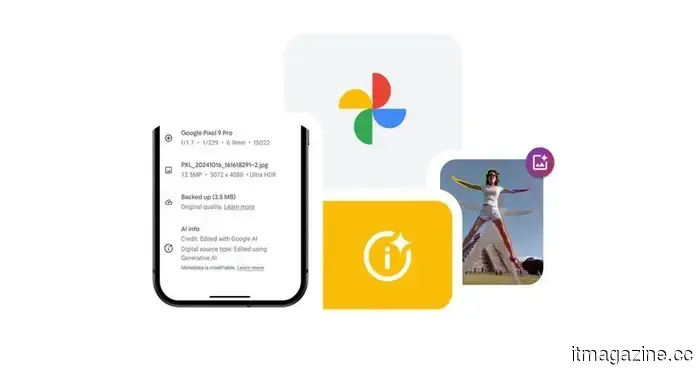 Google's Photos app has just provided Android users with yet another reason to be envious of iPhone users.
Google Photos for Android is now receiving the floating redesign that iPhone users have enjoyed for several months, resulting in a cleaner interface and a more prominent placement for the Gemini-powered Ask Photos feature.
Google's Photos app has just provided Android users with yet another reason to be envious of iPhone users.
Google Photos for Android is now receiving the floating redesign that iPhone users have enjoyed for several months, resulting in a cleaner interface and a more prominent placement for the Gemini-powered Ask Photos feature.
 Samsung aims to incorporate its own chip into your next PC, focusing on enhancing AI tasks.
Samsung's rumored Gaia accelerator may introduce specialized on-device AI hardware to upcoming PCs, positioning the company in a competitive landscape alongside Nvidia and Qualcomm.
Samsung aims to incorporate its own chip into your next PC, focusing on enhancing AI tasks.
Samsung's rumored Gaia accelerator may introduce specialized on-device AI hardware to upcoming PCs, positioning the company in a competitive landscape alongside Nvidia and Qualcomm.
 AI image generators have moved beyond their troubling beginnings and entered a phase of artificial luxury.
I evaluated Meta Muse, Gemini Nano Banana 2, and ChatGPT Images 2.0. While the glaring AI errors are decreasing, the new issues are more challenging to dismiss.
AI image generators have moved beyond their troubling beginnings and entered a phase of artificial luxury.
I evaluated Meta Muse, Gemini Nano Banana 2, and ChatGPT Images 2.0. While the glaring AI errors are decreasing, the new issues are more challenging to dismiss.
 Following Samsung and Apple, Oppo may be the next company to enter the growing foldable market.
Oppo might enter the expanding competition of wide foldable devices alongside Samsung and Apple, with a Snapdragon 8 Gen 6-equipped device that features a notably large 6,500mAh battery.
Following Samsung and Apple, Oppo may be the next company to enter the growing foldable market.
Oppo might enter the expanding competition of wide foldable devices alongside Samsung and Apple, with a Snapdragon 8 Gen 6-equipped device that features a notably large 6,500mAh battery.
 A survey reveals that parents are concerned that AI is becoming a dependency for their children, while schools are finding it challenging to adapt.
A recent survey conducted by Deloitte discovered that 49% of parents are concerned their child depends too heavily on AI, whereas only 33% of schools have established any AI-related guidelines.
A survey reveals that parents are concerned that AI is becoming a dependency for their children, while schools are finding it challenging to adapt.
A recent survey conducted by Deloitte discovered that 49% of parents are concerned their child depends too heavily on AI, whereas only 33% of schools have established any AI-related guidelines.
Ensuring the security of Shadow IT in the corporate setting
Shadow IT introduces security vulnerabilities for enterprises that are not covered by monitoring, patching, and access controls. This article explores the increasing exposure of shadow IT, including unauthorized SaaS, shadow AI, and risks related to geopolitical data sovereignty, and discusses how vendor risk assessment manages third-party risks on a broader scale.