

Venus Aerospace secures $91 million for its detonation engine project.
A startup based in Texas has successfully secured $91 million to develop a rocket engine that many in the industry previously deemed too challenging to create. Venus Aerospace has announced its $91 million Series B funding round aimed at advancing its Rotating Detonation Rocket Engine (RDRE), with Mercury Fund leading the investment.
The list of investors resembles a lineup of defense industry heavyweights. Lockheed Martin Ventures participated, along with MESH, PEAK6, Draper Associates, Starboard Star Venture Capital, Green Sands Equity, and others. This funding will support testing and the design of vehicles tailored for specific clients. While this amount is small compared to the funding directed toward Europe’s space leaders, it remains significant.
A novel approach to rocketry
Unlike traditional rockets that burn fuel in a conventional combustion chamber, the RDRE operates by generating a continuous supersonic combustion wave that rotates around a ring. This method theoretically uses less propellant. However, the underlying physics proved to be highly challenging, causing the concept to remain dormant for many years.
Advancements in 3D printing and simulation technologies have changed the landscape. The first successful test occurred in 2020 at the University of Central Florida. NASA conducted a ground demonstration in 2022, and Japan’s JAXA launched a version in space in 2021. In May, Venus made history when its RDRE became the first to propel a rocket into flight.
From commercial aviation to defense capabilities
Initially, the founders, Sassie and Andrew Duggleby—a husband-and-wife duo—envisioned creating clean hypersonic jets for passenger transport when they founded the company in 2020. However, the success of the May flight shifted their focus. “The world looked at us and said, ‘oh my gosh, you have a working RDRE; would you sell us one?’” stated CEO Sassie Duggleby in an interview with TechCrunch.
Now, the company is targeting the defense sector. They aim to replace the solid rocket motors used in many missiles with their innovative thruster and develop high-speed space vehicles for military use. Chief Technology Officer Andrew Duggleby emphasized that the RDRE “integrates efficiency, throttling, reusability, and manufacturability in a manner that is essential for genuine defense and space missions.”
Significance of the development
The critical challenge ahead is achieving endurance. Throughout 600 tests, Venus has operated its engine for a maximum of 32 seconds. However, clients will require performance ranging from six to 15 minutes. A grant from the Texas Space Commission is funding the construction of a larger test stand to address this requirement. If successful, a decades-old concept will finally materialize as a viable product, positioning a small startup at the center of the defense technology boom.
Other articles
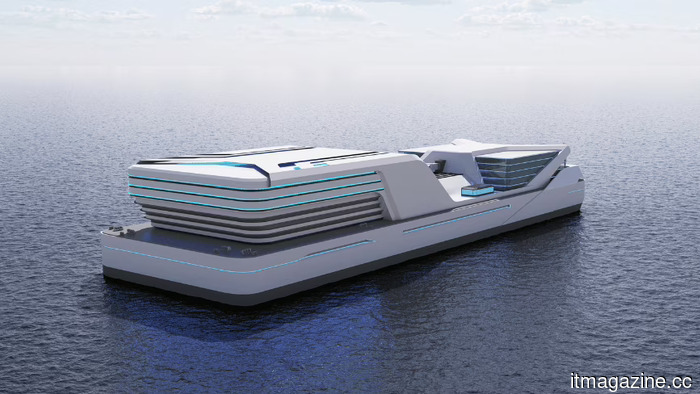 Samsung intends to establish a floating AI data center by the year 2028.
Samsung Heavy Industries aims to create a dedicated, 50MW floating data center by 2028, as challenges such as limited land, water availability, and local resistance hinder AI initiatives on land.
Samsung intends to establish a floating AI data center by the year 2028.
Samsung Heavy Industries aims to create a dedicated, 50MW floating data center by 2028, as challenges such as limited land, water availability, and local resistance hinder AI initiatives on land.
 Privacy concerns surrounding smart glasses: New York's ban confronts Meta's solution.
New York has prohibited smart glasses in all 1,240 courts as Meta secures its recording indicator, despite experimenting with always-on "super-sensing" eyewear.
Privacy concerns surrounding smart glasses: New York's ban confronts Meta's solution.
New York has prohibited smart glasses in all 1,240 courts as Meta secures its recording indicator, despite experimenting with always-on "super-sensing" eyewear.
 Official renders of the Galaxy Z Flip 8 showcase Samsung's well-known foldable device in three new colors.
Official-looking renders of the Galaxy Z Flip 8 have surfaced, showcasing three color options and a design that feels very recognizable. However, Samsung might be counting on the fact that this is precisely what consumers are seeking.
Official renders of the Galaxy Z Flip 8 showcase Samsung's well-known foldable device in three new colors.
Official-looking renders of the Galaxy Z Flip 8 have surfaced, showcasing three color options and a design that feels very recognizable. However, Samsung might be counting on the fact that this is precisely what consumers are seeking.
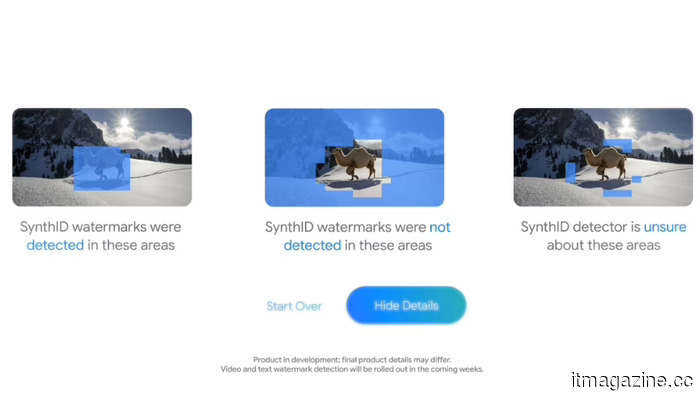 Google's SynthID watermark has successfully exposed its first notable deepfake: a fabricated image of Mitch McConnell.
Snopes employed Google's invisible SynthID watermark to verify the authenticity of a viral AI-generated image depicting Senator McConnell in a hospital bed. The watermark remained intact even in screenshots.
Google's SynthID watermark has successfully exposed its first notable deepfake: a fabricated image of Mitch McConnell.
Snopes employed Google's invisible SynthID watermark to verify the authenticity of a viral AI-generated image depicting Senator McConnell in a hospital bed. The watermark remained intact even in screenshots.
 Still holding out for a more affordable Vision Pro? A new report has some disappointing updates.
Apple's more affordable Vision Pro appears to be less likely to materialize, as Samsung Display has reportedly chosen to halt the development of the budget-friendly screen technology intended for the headset.
Still holding out for a more affordable Vision Pro? A new report has some disappointing updates.
Apple's more affordable Vision Pro appears to be less likely to materialize, as Samsung Display has reportedly chosen to halt the development of the budget-friendly screen technology intended for the headset.
 HubSpot retracts its decision regarding the use of customer data for AI purposes.
HubSpot has abandoned its proposal to aggregate customer data for an AI feature following a backlash that lasted four days, highlighting how sensitive the issue of AI and data collection has become.
HubSpot retracts its decision regarding the use of customer data for AI purposes.
HubSpot has abandoned its proposal to aggregate customer data for an AI feature following a backlash that lasted four days, highlighting how sensitive the issue of AI and data collection has become.
Venus Aerospace secures $91 million for its detonation engine project.
Venus Aerospace has secured $91 million in a Series B funding round to develop its rotating detonation rocket engine into hardware suitable for missiles and high-speed spacecraft.