

Rilla spends $1.7 million annually on rent for staff working 72 hours a week.
Tech enjoys offering perks, but few take it this far. Rilla, an AI startup that develops coaching software for sales teams, invests around $1.7 million annually in housing stipends to allow employees to live close to its New York office, according to Fortune. In exchange, workers are expected to commit to a 72-hour work week.
Employees who reside within a 10-minute bike ride from the Williamsburg office receive an annual housing stipend of $18,000, with about 80% opting in. This assistance is particularly beneficial in a neighborhood where studio rents average about $4,000 per month.
Focus over comfort
CEO Sebastian Jimenez describes this expenditure as a means to enhance focus rather than as corporate excess. “We’re not attempting to pamper our employees,” he told Business Insider. “Many companies provide perks that end up distracting their workforce. We ask ourselves, ‘Does this help someone achieve flow?’”
This reasoning applies to the entire benefits package. Rilla covers three meals daily and is constructing a gym that will feature a sauna and cold plunge. The company even employed a Harvard expert on healthy buildings to select an office with ventilation designed to improve concentration.
The reality of a 72-hour work week
The costs are significant for a small company. Rilla allocates about $37,000 yearly per employee for these additional benefits, totaling nearly $4.4 million for around 120 staff members, and has signed a decade-long lease. Jimenez insists that the investment is justified, claiming each engineer generates between $4 million to $5 million in annual revenue. Employees work 12 hours a day, six days a week, and he states that he recruits individuals—from Division I athletes to entrepreneurs—who are seeking this type of commitment.
This aligns with a broader trend toward a stricter work culture in the tech industry. While the sector debates whether AI will create or eliminate jobs, some startups are opting for the latter approach by hiring a small group of elite staff and requiring them to work long hours. Competitors offer more moderate versions of this concept, such as JPMorgan’s tennis courts and Goldman’s cycling studios.
Why it matters
The stipend may appear generous, but it also serves as a strategic tool. By reducing commuting times and minimizing distractions, the workday can extend. Critics of the always-active office environment—those cautioning against downsizing junior employees or prioritizing sheer output—might describe it as a gilded cage. Jimenez, however, has a different perspective: “Our objective isn't merely to bring people into the office; it’s to create an environment where they can achieve their best work.”
Other articles
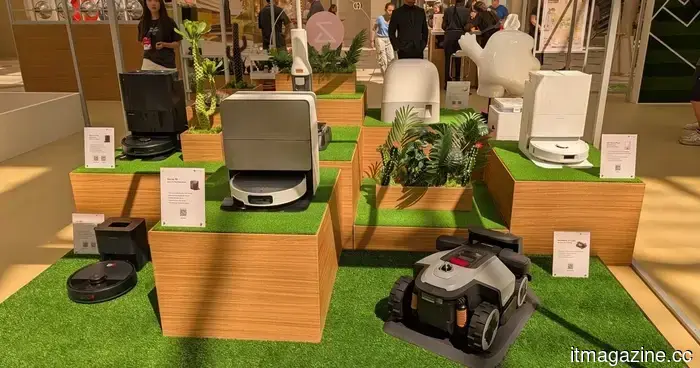 Roborock brought the excitement of the FIFA World Cup to Miami, and it was an amazing experience.
Roborock transformed Miami's Aventura Mall into a distinctive celebration of technology and football, creating a remarkable event.
Roborock brought the excitement of the FIFA World Cup to Miami, and it was an amazing experience.
Roborock transformed Miami's Aventura Mall into a distinctive celebration of technology and football, creating a remarkable event.
 Smart glasses privacy dilemma: New York's ban confronts Meta's solution.
New York prohibits smart glasses in all 1,240 courts as Meta secures its recording light, despite experimenting with always-on "super-sensing" eyewear.
Smart glasses privacy dilemma: New York's ban confronts Meta's solution.
New York prohibits smart glasses in all 1,240 courts as Meta secures its recording light, despite experimenting with always-on "super-sensing" eyewear.
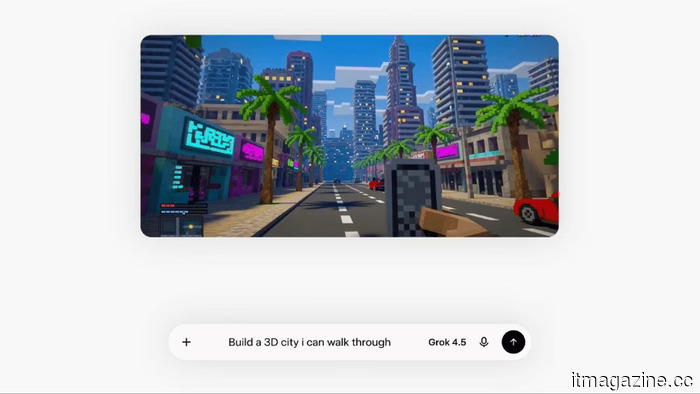 SpaceXAI introduces Grok 4.5, its inaugural model featuring Cursor.
SpaceXAI has introduced Grok 4.5, the initial model developed using Cursor. Musk refers to it as "Opus-class" but more affordable, targeting tasks in coding, legal, and finance sectors.
SpaceXAI introduces Grok 4.5, its inaugural model featuring Cursor.
SpaceXAI has introduced Grok 4.5, the initial model developed using Cursor. Musk refers to it as "Opus-class" but more affordable, targeting tasks in coding, legal, and finance sectors.
 Nvidia collaborates with chip competitor d-Matrix on inference technology.
Nvidia is partnering its GPUs with d-Matrix's inference chips in a collaborative system, marking the latest indication that it prefers to ally with chip competitors rather than oppose them.
Fi places Starlink satellites inside a dog collar.
Fi's latest product, the Fi Ultra, is the inaugural dog collar that utilizes Starlink's direct-to-cell satellites, allowing for pet tracking beyond the reach of mobile towers, according to Fortune.
Nvidia collaborates with chip competitor d-Matrix on inference technology.
Nvidia is partnering its GPUs with d-Matrix's inference chips in a collaborative system, marking the latest indication that it prefers to ally with chip competitors rather than oppose them.
Fi places Starlink satellites inside a dog collar.
Fi's latest product, the Fi Ultra, is the inaugural dog collar that utilizes Starlink's direct-to-cell satellites, allowing for pet tracking beyond the reach of mobile towers, according to Fortune.
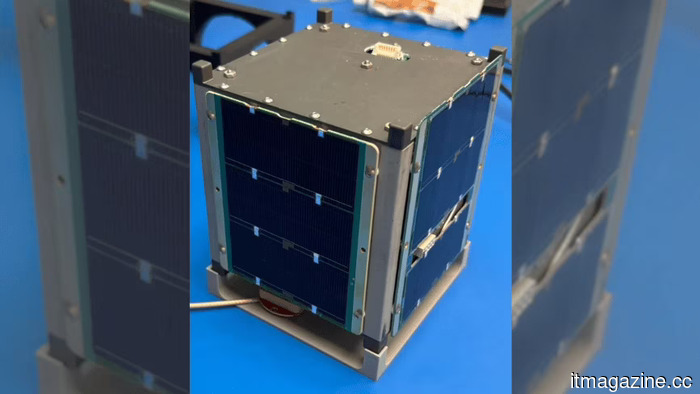 City Labs introduces the inaugural commercial nuclear satellite.
City Labs' BOHR is the inaugural commercial nuclear power source located in orbit, a tritium betavoltaic battery designed to operate in areas where solar panels are ineffective.
City Labs introduces the inaugural commercial nuclear satellite.
City Labs' BOHR is the inaugural commercial nuclear power source located in orbit, a tritium betavoltaic battery designed to operate in areas where solar panels are ineffective.
Rilla spends $1.7 million annually on rent for staff working 72 hours a week.
AI startup Rilla allocates $1.7 million annually for housing stipends to ensure that employees reside close to its New York City office while working 72-hour weeks. The CEO emphasizes that the focus is on productivity rather than comfort.