
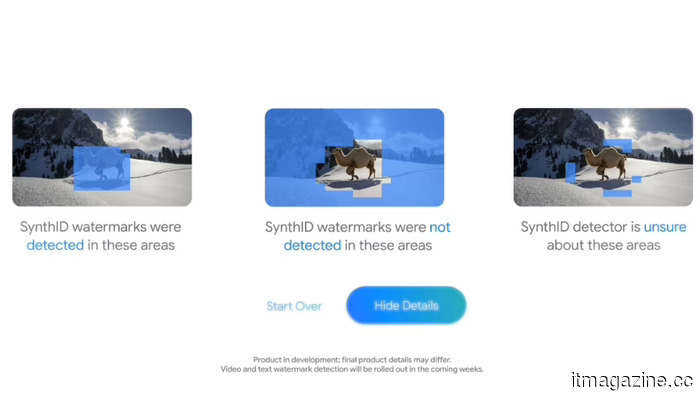
Google's SynthID watermark has successfully exposed its first notable deepfake: a fabricated image of Mitch McConnell.
TL;DR: Google’s SynthID watermark helped debunk a viral fabricated image of Senator McConnell in a hospital. The watermark survived screenshotting across various platforms, marking its first major successful application in the real world.
This week, Google’s SynthID watermarking system achieved a significant milestone when Snopes used it to dismiss an AI-generated image of Senator Mitch McConnell that had gained traction on Reddit and X. The image, which depicted McConnell connected to tubes in a hospital bed and appearing to be in distress, was identified as AI-generated after Snopes discovered the embedded invisible SynthID watermark.
Since his hospitalization following an emergency call on June 14, there has been rampant speculation regarding McConnell’s health, as he has remained mostly out of the public eye. In this instance, the claims were entirely fabricated, and the watermark functioned precisely as intended.
SynthID, which was introduced at Google I/O in 2025, embeds an invisible signature within AI-generated images. This signature is part of the image data itself, allowing it to endure screenshots, resizing, and compression on various platforms. This durability was crucial in debunking the McConnell image, as it was shared widely, yet the watermark remained intact. OpenAI joined the SynthID initiative in May 2026, incorporating the watermark with C2PA metadata in its image creations, though Anthropic is not a participant.
The primary limitation of SynthID is that it only functions when the image-generation tool is actively involved. Since their launch, Gemini models have included the watermark. Users can verify images by querying a Gemini model or uploading them to OpenAI’s public verification tool. However, images generated by tools outside of the initiative, such as open-source models and those from non-participating organizations, do not feature a watermark. Additionally, YouTube has initiated the auto-labeling of AI-generated videos, but the overarching issue remains that watermarking can only be effective with broad adoption, which is still voluntary.
Other articles
 Venus Aerospace secures $91 million for its detonation engine project.
Venus Aerospace has secured $91 million in a Series B funding round to develop its rotating detonation rocket engine into hardware suitable for missiles and high-speed spacecraft.
Venus Aerospace secures $91 million for its detonation engine project.
Venus Aerospace has secured $91 million in a Series B funding round to develop its rotating detonation rocket engine into hardware suitable for missiles and high-speed spacecraft.
 Official renders of the Galaxy Z Flip 8 showcase Samsung's well-known foldable device in three new colors.
Official-looking renders of the Galaxy Z Flip 8 have surfaced, showcasing three color options and a design that feels immediately recognizable — yet Samsung might be counting on the fact that this is precisely what consumers are looking for.
Official renders of the Galaxy Z Flip 8 showcase Samsung's well-known foldable device in three new colors.
Official-looking renders of the Galaxy Z Flip 8 have surfaced, showcasing three color options and a design that feels immediately recognizable — yet Samsung might be counting on the fact that this is precisely what consumers are looking for.
 HubSpot retracts its decision on utilizing customer data for AI purposes.
HubSpot has abandoned its proposal to consolidate customer data for an AI feature following a four-day wave of criticism, highlighting how sensitive the issue of AI and data collection has become.
HubSpot retracts its decision on utilizing customer data for AI purposes.
HubSpot has abandoned its proposal to consolidate customer data for an AI feature following a four-day wave of criticism, highlighting how sensitive the issue of AI and data collection has become.
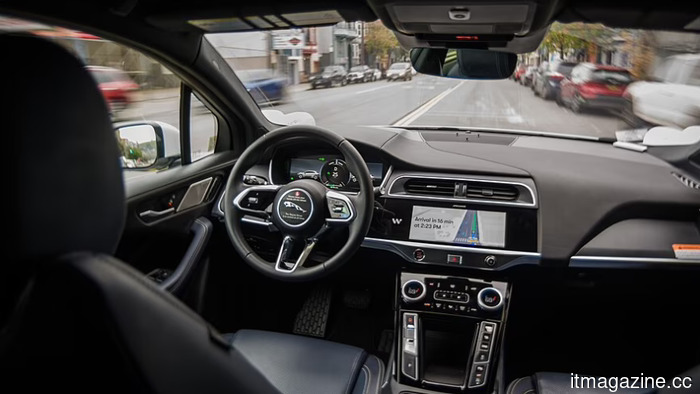 NHTSA requires companies developing autonomous vehicles to address issues related to first responder interference by the end of July.
The NHTSA reports that autonomous vehicles are interfering with emergency situations by obstructing ambulances. It has requested that developers of these vehicles provide solutions by the end of this month.
NHTSA requires companies developing autonomous vehicles to address issues related to first responder interference by the end of July.
The NHTSA reports that autonomous vehicles are interfering with emergency situations by obstructing ambulances. It has requested that developers of these vehicles provide solutions by the end of this month.
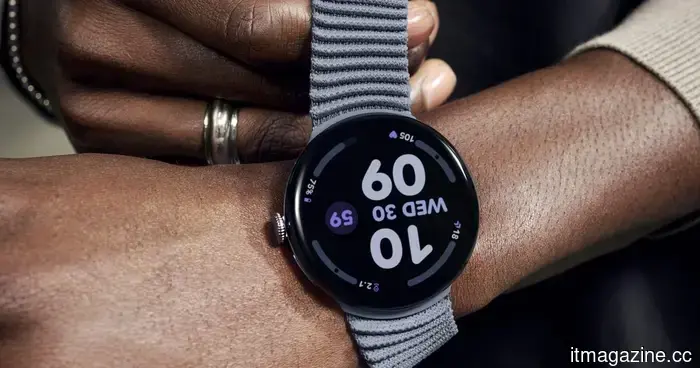 The Pixel Watch 5 from Google might not avoid the price increases set for 2026.
Pricing details for the Pixel Watch 5 have surfaced ahead of Google's event in August, indicating modest increases for certain models.
The Pixel Watch 5 from Google might not avoid the price increases set for 2026.
Pricing details for the Pixel Watch 5 have surfaced ahead of Google's event in August, indicating modest increases for certain models.
 Venus Aerospace secures $91 million for its detonation engine.
Venus Aerospace has secured $91 million in a Series B funding round to develop its rotating detonation rocket engine into equipment for missiles and high-speed space vehicles.
Venus Aerospace secures $91 million for its detonation engine.
Venus Aerospace has secured $91 million in a Series B funding round to develop its rotating detonation rocket engine into equipment for missiles and high-speed space vehicles.
Google's SynthID watermark has successfully exposed its first notable deepfake: a fabricated image of Mitch McConnell.
Snopes employed Google's invisible SynthID watermark to verify the authenticity of a viral AI-generated image depicting Senator McConnell in a hospital bed. The watermark remained intact even in screenshots.