

SambaNova secures new funding at an $11 billion valuation as interest in Nvidia alternatives intensifies.
SambaNova has secured new funding at an $11 billion valuation, as reported by Bloomberg, concluding a period where the AI chip startup has nearly increased its value fivefold in just a few months. This valuation has risen from the approximately $10 billion assessed when the funding round began in late June.
The rapid revaluation is key to this narrative as much as the actual figure itself. A company that was valued at around $2 billion earlier this year is now worth more than five times that amount on paper. This dramatic shift is fueled by investors eager to support any viable alternative to Nvidia. This same demand has encouraged competitive investments, such as Qualcomm’s acquisition of Modular and various inference-centric startups.
SambaNova develops chips and systems optimized for efficient execution of large AI models, utilizing an architecture it refers to as Reconfigurable Dataflow Unit, in contrast to the graphics-based design popularized by Nvidia. The company's proposition to clients revolves around lower costs and reduced power consumption for the inference tasks that dominate AI expenditures.
Financial backing has followed this proposition, with the company raising nearly $1.5 billion to date from a notable lineup of investors, including SoftBank’s Vision Fund, Vista Equity Partners, Intel, GV, BlackRock, and Temasek.
The broader AI chip market is the source of this enthusiasm. As investment transitions from model training to execution, the expense of inference has become the decisive factor in an AI product’s profitability, leading buyers to seek alternatives to a sole pricing power.
The company’s most recent funding round, a $350 million raise, concluded only in February, accentuating the sharp increase in valuation since then. Funding rounds that were once spaced a year or more apart are now occurring within months due to demand for computational power surpassing supply.
An unusual aspect at the helm of the company is its chairman, Lip-Bu Tan, who also serves as the CEO of Intel. This connection ties the startup to one of the established players it aims to circumvent.
This partnership has already led to hardware developments. Intel and Foxconn have collaborated with SambaNova to create rack-scale AI infrastructure, combining its dataflow chips with the necessary manufacturing capabilities for high-volume system delivery.
The context for all this is a market eager for alternatives. Nvidia continues to lead in AI training and much of inference, with its customers—cloud providers and model labs—driven to support a second source.
This is why funding continues to flow to challengers even before they demonstrate the capacity to capture significant market share. European newcomers like Fractile are garnering similar interest based on the premise that large-scale inference cannot be reliant on a single supplier.
The key question remains whether SambaNova can transform its skyrocketing valuation into sustainable revenue. Established roughly nine years ago, the company has pivoted its focus from training to enterprise inference as market demands have evolved.
It has considerable competition in this area. A number of specialized firms, including Cerebras and Groq, are pursuing the same opportunities, each claiming that their specific designs are better suited for the economics of inference than general-purpose GPUs.
Such a valuation also raises the prospect of an exit. Valuations in the double-digit billions typically indicate a move towards public offerings, and an $11 billion private valuation tends to intensify discussions around an IPO.
Neither SambaNova nor its investors have disclosed the precise amount of the new funding round or its intended uses. However, the $11 billion valuation clearly signifies that, for the time being, investment is prioritizing alternatives in anticipation of future results.
Other articles
 Samsung's Galaxy Unpacked event on July 22 will focus on foldable devices. Here’s how you can watch it live.
Samsung has planned its upcoming Galaxy Unpacked event for July 22 in London, with an invitation that clearly hints at new foldable devices. Here’s the start time, where to watch the stream, and what to anticipate.
The initial AI model from SpaceXAI and Cursor might be launched today.
SpaceXAI and Cursor are set to debut their first collaboratively created AI model as early as Wednesday, targeting Anthropic's Opus 4.8 and OpenAI's GPT-5.5.
Samsung's Galaxy Unpacked event on July 22 will focus on foldable devices. Here’s how you can watch it live.
Samsung has planned its upcoming Galaxy Unpacked event for July 22 in London, with an invitation that clearly hints at new foldable devices. Here’s the start time, where to watch the stream, and what to anticipate.
The initial AI model from SpaceXAI and Cursor might be launched today.
SpaceXAI and Cursor are set to debut their first collaboratively created AI model as early as Wednesday, targeting Anthropic's Opus 4.8 and OpenAI's GPT-5.5.
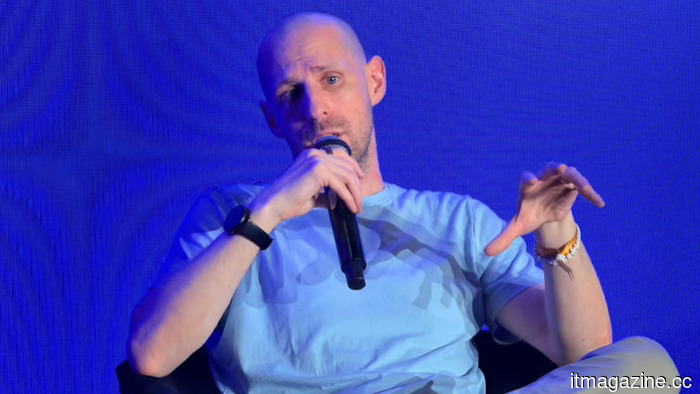 "It can genuinely harm your business": n8n’s argument for model-agnostic AI.
At the Raise Summit, Jan Oberhauser, the founder of n8n, argued for the importance of serving as AI’s orchestration layer as model sovereignty emerged as a key topic in boardrooms.
"It can genuinely harm your business": n8n’s argument for model-agnostic AI.
At the Raise Summit, Jan Oberhauser, the founder of n8n, argued for the importance of serving as AI’s orchestration layer as model sovereignty emerged as a key topic in boardrooms.
 Affordable smartphones are facing pressure, and one factor contributing to this is AI.
An Omdia report cautions that smartphones costing less than $400 may experience a decline of over 22% by 2026, as increasing memory costs, partly driven by AI demands, transform the global smartphone market.
Affordable smartphones are facing pressure, and one factor contributing to this is AI.
An Omdia report cautions that smartphones costing less than $400 may experience a decline of over 22% by 2026, as increasing memory costs, partly driven by AI demands, transform the global smartphone market.
 Residents of London oppose a data center on Brick Lane, not even for AI purposes.
Residents are opposing a datacentre proposed for the old Truman Brewery on Brick Lane. The interesting aspect is that it would cater to high-frequency trading rather than AI.
Residents of London oppose a data center on Brick Lane, not even for AI purposes.
Residents are opposing a datacentre proposed for the old Truman Brewery on Brick Lane. The interesting aspect is that it would cater to high-frequency trading rather than AI.
 Budget smartphones are facing increasing pressure, partly due to the impact of AI.
A report from Omdia cautions that smartphones costing under $400 may see a drop of over 22% by 2026, as increasing memory expenses driven partly by AI requirements transform the worldwide smartphone market.
Budget smartphones are facing increasing pressure, partly due to the impact of AI.
A report from Omdia cautions that smartphones costing under $400 may see a drop of over 22% by 2026, as increasing memory expenses driven partly by AI requirements transform the worldwide smartphone market.
SambaNova secures new funding at an $11 billion valuation as interest in Nvidia alternatives intensifies.
AI chip startup SambaNova has secured funding at an $11 billion valuation, approximately five times its value from a few months ago, as investors seek alternatives to Nvidia.