

SambaNova secures new funding at a valuation of $11 billion as competition to Nvidia intensifies.
SambaNova has secured new funding, achieving an $11 billion valuation, as reported by Bloomberg, marking a significant increase in the AI chip startup's value by approximately five times within just a few months. This figure rises from the roughly $10 billion valuation noted when the funding round began forming in late June.
The rapid change in valuation is a key aspect, as a company valued at about $2 billion earlier this year is now valued at more than five times that amount, a shift driven by investors eager to support any viable alternative to Nvidia. This demand has also led to increased investments in competitors, such as Qualcomm's venture into Modular and various inference-focused startups.
SambaNova develops chips and systems aimed at efficiently operating large AI models, utilizing an architecture it refers to as a Reconfigurable Dataflow Unit instead of the graphics-based design popularized by Nvidia. The company's appeal to customers includes offering lower costs and reduced power consumption for inference workloads that dominate AI expenditures.
Investors have responded positively to this approach. The company has amassed nearly $1.5 billion over its lifetime from a list of backers, including SoftBank’s Vision Fund, Vista Equity Partners, Intel, GV, BlackRock, and Temasek.
The excitement in the broader AI chip market fuels this enthusiasm. As investment shifts from training models to running them, the cost of inference has become crucial in determining the profitability of AI products, driving demand for more than one company to control pricing.
SambaNova's previous funding round, a $350 million raise, concluded just in February, highlighting the stark increase in valuation since then. Funding rounds that were once spaced a year or more apart are now occurring within months due to demand for computing outpacing supply.
An interesting aspect of the company is its chairman, Lip-Bu Tan, who is also the CEO of Intel, creating a connection to one of the established players that SambaNova is partially seeking to surpass.
This connection has already led to collaboration in hardware development. Intel and Foxconn are partnering with SambaNova to create rackscale AI infrastructure, combining its dataflow chips with the production capacity required for large-scale system deliveries.
The overall context of this situation is a market in need of alternatives. Nvidia remains the leader in both AI training and a significant portion of inference, and its clients, including cloud providers and model labs, are motivated to support a second supplier.
Consequently, funding continues to flow to challengers even before they demonstrate the ability to capture substantial market share. European companies like Fractile have attracted similar interest based on the premise that large-scale inference is too critical and costly to rely on a single vendor.
The question remains whether SambaNova can transform its soaring valuation into sustainable revenue. Founded around nine years ago, the company has adapted its focus from training to enterprise inference as the market has evolved.
It faces competition from several specialist firms, including Cerebras and Groq, all vying for the same market opportunity, each claiming that its specific design is better suited for the economics of inference than a general-purpose GPU.
Such a high valuation also raises the prospect of an exit. Valuations in the double-digit billions often lead to discussions of public listings, and an $11 billion private valuation typically intensifies speculation about an IPO.
Neither SambaNova nor its investors have provided specific details on the size of the latest funding round or how the funds will be allocated. However, the $11 billion valuation clearly indicates that, at this moment, the investment is a bet on alternatives well in advance of tangible results.
Other articles
 Samsung's Galaxy Unpacked event on July 22 will focus on foldable devices. Here’s how you can watch it live.
Samsung has planned its upcoming Galaxy Unpacked event for July 22 in London, with an invitation that clearly hints at new foldable devices. Here’s the start time, where to watch the stream, and what to anticipate.
Samsung's Galaxy Unpacked event on July 22 will focus on foldable devices. Here’s how you can watch it live.
Samsung has planned its upcoming Galaxy Unpacked event for July 22 in London, with an invitation that clearly hints at new foldable devices. Here’s the start time, where to watch the stream, and what to anticipate.
 This week, you'll have the chance to experience OpenAI's GPT-5.6 models: Sol, Terra, and Luna.
Following nearly two weeks of restricted preview access, OpenAI is set to launch GPT-5.6 Sol, Terra, and Luna to the public on July 9.
This week, you'll have the chance to experience OpenAI's GPT-5.6 models: Sol, Terra, and Luna.
Following nearly two weeks of restricted preview access, OpenAI is set to launch GPT-5.6 Sol, Terra, and Luna to the public on July 9.
 iOS 27 has finally put an end to my unintentional voice message troubles.
iOS 27 allows you to completely eliminate the record audio button from Messages, preventing any accidental sending of an uncomfortable voice note. Here’s how to disable it.
iOS 27 has finally put an end to my unintentional voice message troubles.
iOS 27 allows you to completely eliminate the record audio button from Messages, preventing any accidental sending of an uncomfortable voice note. Here’s how to disable it.
 SambaNova secures new funding at an $11 billion valuation as interest in Nvidia alternatives intensifies.
AI chip startup SambaNova has secured funding at an $11 billion valuation, approximately five times its value from a few months ago, as investors seek alternatives to Nvidia.
SambaNova secures new funding at an $11 billion valuation as interest in Nvidia alternatives intensifies.
AI chip startup SambaNova has secured funding at an $11 billion valuation, approximately five times its value from a few months ago, as investors seek alternatives to Nvidia.
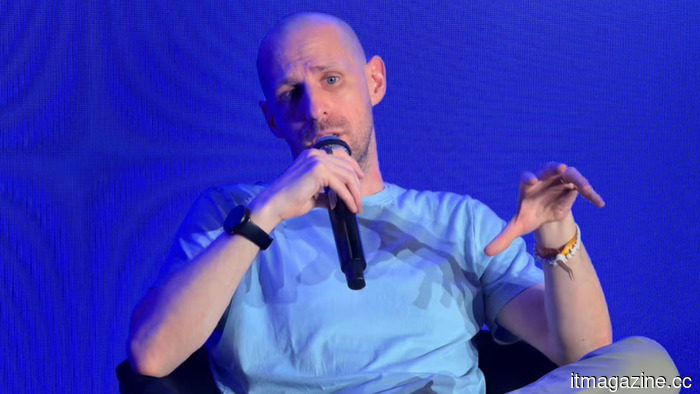 “It could genuinely jeopardize your business”: n8n’s argument for model-agnostic AI
During the Raise Summit, n8n founder Jan Oberhauser argued for the role of being AI’s orchestration layer as model sovereignty emerged as a significant topic in boardroom discussions.
“It could genuinely jeopardize your business”: n8n’s argument for model-agnostic AI
During the Raise Summit, n8n founder Jan Oberhauser argued for the role of being AI’s orchestration layer as model sovereignty emerged as a significant topic in boardroom discussions.
 Daniel Dines believes that not recruiting junior employees is a mistake.
During the Raise summit, UiPath's Daniel Dines remarked that reducing junior hiring is a mistake, as he and LDC's Guy-Laurent Arpino outlined the future of enterprise AI.
Daniel Dines believes that not recruiting junior employees is a mistake.
During the Raise summit, UiPath's Daniel Dines remarked that reducing junior hiring is a mistake, as he and LDC's Guy-Laurent Arpino outlined the future of enterprise AI.
SambaNova secures new funding at a valuation of $11 billion as competition to Nvidia intensifies.
AI chip startup SambaNova has secured funding at an $11 billion valuation, nearly five times its value from a few months ago, as investors seek alternatives to Nvidia.