

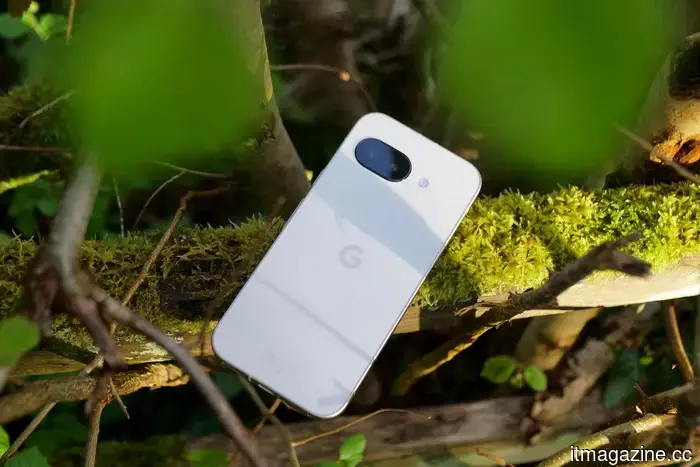
Budget smartphones are facing increasing pressure, partly due to the impact of AI.
Analysts caution that shipments of smartphones priced under $400 may decline by over 22% this year.
For years, consumers purchasing smartphones have enjoyed significant benefits. Budget smartphones now provide fast processors, high-refresh-rate screens, and cameras that would have previously been deemed suitable only for flagship models. However, this trend might be slowing down, largely due to the influence of AI.
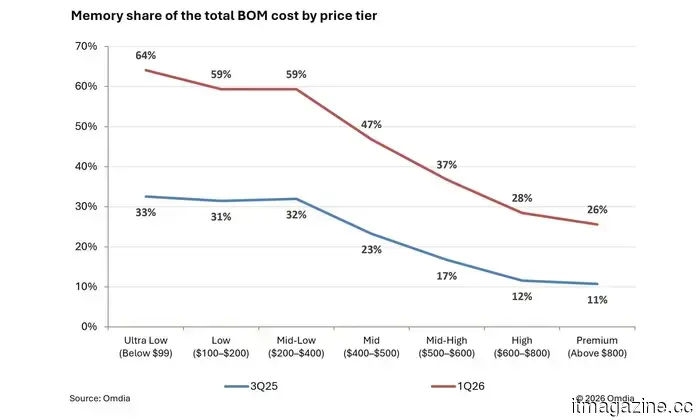
A recent report from Omdia predicts that global shipments of smartphones priced below $400 will see a decline of over 22% by 2026, primarily because the costs of DRAM and NAND memory are continuing to rise. As AI functionalities require increased memory, manufacturers are finding it more challenging to create affordable smartphones without compromising their already slim profit margins.
So, why has memory suddenly seen a spike in costs?
Memory has consistently been one of the most significant expenses in a smartphone, but Omdia indicates that it is becoming an even greater financial burden. In the first quarter of 2026, memory alone represented almost 60% of the material costs for smartphones priced under $400, increasing to over 64% for devices costing less than $99. This situation leaves manufacturers with little flexibility to handle further cost increases.
Companies have already attempted to lower expenses in other areas by opting for cheaper display panels, camera sensors, and radio components. Nevertheless, Omdia asserts that low-end smartphones have already undergone extensive optimization, limiting any potential reductions. Consequently, brands like Transsion, OPPO, vivo, Honor, and Xiaomi are increasingly compelled to either increase prices or downgrade specifications to maintain their profit margins.
Premium smartphones are not encountering the same challenges.
Interestingly, Omdia notes that this pressure seems confined mainly to the budget market. While shipments of phones priced under $400 are projected to decline by over 22%, smartphones priced above that threshold are expected to experience a 5.7% growth this year. Premium devices provide manufacturers with significantly more latitude to mitigate the impact of rising memory costs by adjusting displays, cameras, or utilizing older chipsets where applicable.
The ironic aspect is that AI was intended to enhance the capabilities of smartphones. Instead, it might make them pricier or, at the very least, complicate the creation of truly affordable phones. If Omdia’s predictions hold true, the upcoming budget smartphones may feature fewer improvements than what consumers are accustomed to, or they may even vanish altogether as brands redirect their focus towards more lucrative devices.






Other articles
 Samsung has scheduled the Unpacked event for July 22 to unveil the Galaxy Z Fold 8 series of foldable smartphones.
During its upcoming Unpacked event, Samsung is anticipated to unveil three new foldable smartphones along with updated smartwatch versions.
Samsung has scheduled the Unpacked event for July 22 to unveil the Galaxy Z Fold 8 series of foldable smartphones.
During its upcoming Unpacked event, Samsung is anticipated to unveil three new foldable smartphones along with updated smartwatch versions.
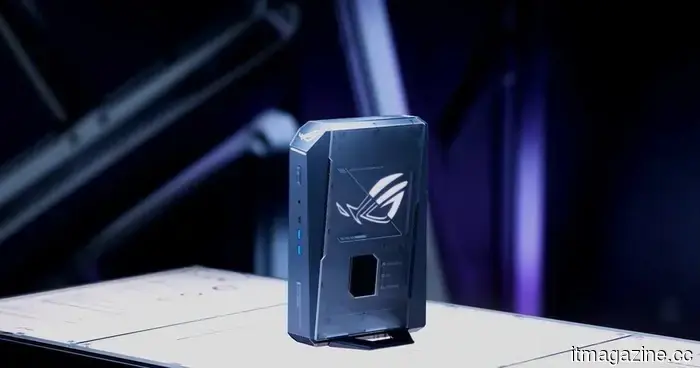 Asus created a compact AMD gaming powerhouse, and the price is the most intimidating aspect.
Asus has managed to fit an AMD Ryzen 9 processor and RTX 5070 graphics card into a three-liter gaming PC, but its small size comes with a significant price increase.
Asus created a compact AMD gaming powerhouse, and the price is the most intimidating aspect.
Asus has managed to fit an AMD Ryzen 9 processor and RTX 5070 graphics card into a three-liter gaming PC, but its small size comes with a significant price increase.
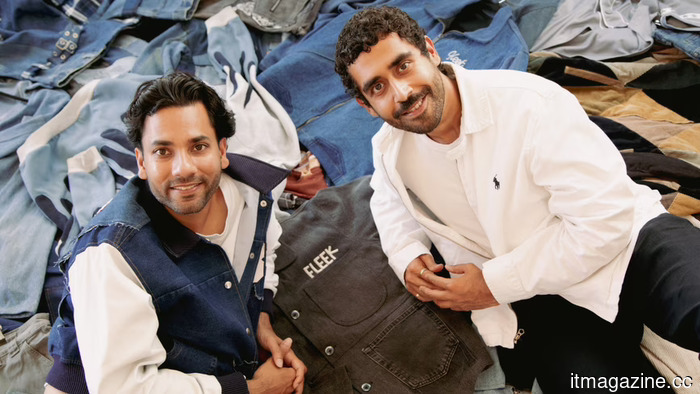 Fleek secures $25 million to develop the AI infrastructure for the worldwide secondhand fashion industry.
London-based startup Fleek has secured $25 million in Series B funding, with support from Burda, an early investor in Vinted, to enhance the AI technology it employs for sorting, grading, and pricing second-hand clothing.
Fleek secures $25 million to develop the AI infrastructure for the worldwide secondhand fashion industry.
London-based startup Fleek has secured $25 million in Series B funding, with support from Burda, an early investor in Vinted, to enhance the AI technology it employs for sorting, grading, and pricing second-hand clothing.
 Daniel Dines believes that failing to hire junior employees is an error.
At the Raise summit, UiPath's Daniel Dines stated that reducing junior hiring is a misstep, while he and LDC's Guy-Laurent Arpino discussed the future of enterprise AI.
Daniel Dines believes that failing to hire junior employees is an error.
At the Raise summit, UiPath's Daniel Dines stated that reducing junior hiring is a misstep, while he and LDC's Guy-Laurent Arpino discussed the future of enterprise AI.
 iOS 27 has finally put an end to my unintentional voice message troubles.
iOS 27 allows you to completely eliminate the record audio button from Messages, preventing any accidental sending of an uncomfortable voice note. Here’s how to disable it.
The initial AI model from SpaceXAI and Cursor might be launched today.
SpaceXAI and Cursor are set to debut their first collaboratively created AI model as early as Wednesday, targeting Anthropic's Opus 4.8 and OpenAI's GPT-5.5.
iOS 27 has finally put an end to my unintentional voice message troubles.
iOS 27 allows you to completely eliminate the record audio button from Messages, preventing any accidental sending of an uncomfortable voice note. Here’s how to disable it.
The initial AI model from SpaceXAI and Cursor might be launched today.
SpaceXAI and Cursor are set to debut their first collaboratively created AI model as early as Wednesday, targeting Anthropic's Opus 4.8 and OpenAI's GPT-5.5.
Budget smartphones are facing increasing pressure, partly due to the impact of AI.
A report from Omdia cautions that smartphones costing under $400 may see a drop of over 22% by 2026, as increasing memory expenses driven partly by AI requirements transform the worldwide smartphone market.