

Apple begins testing more affordable Chinese RAM in iPhones, but your wallet won't benefit from the savings.
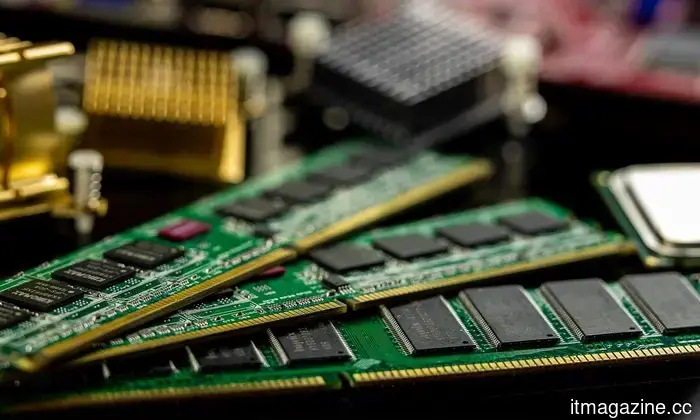
Apple has discreetly started testing a new memory supplier for certain devices sold in China, and this supplier is one that the U.S. government has been monitoring closely.
I mentioned this in a previous article, where speculation arose about Apple’s interest in a Chinese memory supplier following the company’s announcement of significant price increases for most of its products (excluding the iPhone and Apple Watch).
So, who is CXMT, and why is Apple evaluating its chips?
ChangXin Memory Technologies, known as CXMT, is headquartered in Hefei, China, and ranks as the fourth-largest DRAM producer in the world, trailing Samsung, SK Hynix, and Micron.
As reported by the Financial Times, Apple has initiated testing of CXMT’s chips for devices specifically sold in China. This move is part of a larger initiative by U.S. tech firms to gain government approval for broadening the use of CXMT’s products.
However, obtaining such approval may pose challenges, particularly since CXMT is listed on the Pentagon's Chinese Military Company registry, which creates both reputational and political concerns for Apple.
Apple encountered similar backlash in 2022 when it considered a partnership with YMTC, another Chinese chip manufacturer.
Will these developments lead to lower prices for your devices?
I doubt it. Analysts from SemiAnalysis indicate that nearly all of CXMT’s production is already allocated. Moreover, the company is anticipated to experience supply constraints for at least the next two years, even with new production facilities opening in Hefei, Shanghai, and Beijing.
Currently, CXMT accounts for approximately 11% of global DRAM wafer capacity, a figure that analysts predict could rise to 15% within the next two years.
In my opinion, Apple’s experimentation with CXMT seems more like a supply chain strategy aimed at local inventory for the Chinese market rather than a solution that would impact globally sold products.
For now, the report does not suggest any U.S. government delays regarding the decision, although such postponements have occurred multiple times in the past, which is worth considering.






Other articles
 Apple begins testing lower-cost Chinese RAM in iPhones, but it won't lead to savings for consumers.
Apple is currently testing memory chips from CXMT, a Chinese chip manufacturer that is backed by the government and is on the Pentagon's watchlist. Previously, Washington has expressed concerns about this, and it is likely to do so again.
Apple begins testing lower-cost Chinese RAM in iPhones, but it won't lead to savings for consumers.
Apple is currently testing memory chips from CXMT, a Chinese chip manufacturer that is backed by the government and is on the Pentagon's watchlist. Previously, Washington has expressed concerns about this, and it is likely to do so again.
 Rollme’s latest AirCam integrates a camera into your headphones for less than $80.
Rollme's AirCam is a bone conduction headset featuring an 8 MP camera, real-time translation capabilities, and a price that is lower than all of its competitors.
Rollme’s latest AirCam integrates a camera into your headphones for less than $80.
Rollme's AirCam is a bone conduction headset featuring an 8 MP camera, real-time translation capabilities, and a price that is lower than all of its competitors.
 Android 17's new video standard addresses one of the major issues with HDR.
Android 17 introduces a new HDR standard named Eclipsa Video, which guarantees uniform and comfortable HDR playback on all screens.
OpenAI's GPT-Live: A ChatGPT voice that both listens and speaks.
OpenAI has introduced GPT-Live, a voice feature for ChatGPT that allows for simultaneous listening and speaking, complete with live translation. This feature is being made available to all users, including those using the free version.
Android 17's new video standard addresses one of the major issues with HDR.
Android 17 introduces a new HDR standard named Eclipsa Video, which guarantees uniform and comfortable HDR playback on all screens.
OpenAI's GPT-Live: A ChatGPT voice that both listens and speaks.
OpenAI has introduced GPT-Live, a voice feature for ChatGPT that allows for simultaneous listening and speaking, complete with live translation. This feature is being made available to all users, including those using the free version.
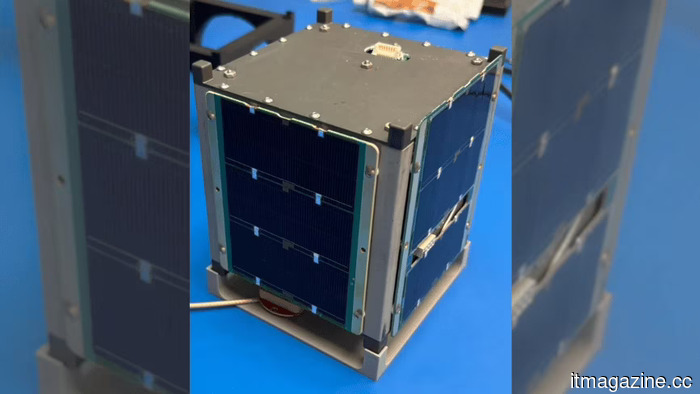 City Labs introduces the inaugural commercial nuclear satellite.
City Labs' BOHR is the first nuclear power source designed for commercial use in orbit, a tritium betavoltaic battery created to function in areas where solar panels are not viable.
City Labs introduces the inaugural commercial nuclear satellite.
City Labs' BOHR is the first nuclear power source designed for commercial use in orbit, a tritium betavoltaic battery created to function in areas where solar panels are not viable.
 Your complimentary mobile VPN is a privacy nightmare. Who would have thought?
Researchers evaluated 281 free Android VPN applications and discovered unencrypted data transfers, traffic leaks, and extensive tracking within tools that are meant to safeguard users’ privacy.
Your complimentary mobile VPN is a privacy nightmare. Who would have thought?
Researchers evaluated 281 free Android VPN applications and discovered unencrypted data transfers, traffic leaks, and extensive tracking within tools that are meant to safeguard users’ privacy.
Apple begins testing more affordable Chinese RAM in iPhones, but your wallet won't benefit from the savings.
Apple is evaluating memory chips from CXMT, a Chinese chip manufacturer that is supported by the government and is on the Pentagon's watchlist. Washington has previously opposed this and is expected to do so again.