

SpaceXAI introduces Grok 4.5, its inaugural model featuring Cursor.
SpaceXAI has introduced Grok 4.5, its most advanced model to date. This marks the company's first launch since its public offering and the acquisition of the AI coding startup Cursor. The model represents a collaboration between both companies, which aimed to complete it quickly. Elon Musk directed its focus on coding and autonomous tasks rather than casual conversations.
“It is an Opus-class model, yet it is faster, more efficient with tokens, and comes at a lower cost,” Musk stated on X. This reference highlights Anthropic’s leading Opus family. A chart accompanying the announcement reportedly indicates that Grok 4.5 outperforms Opus 4.8 on various benchmarks, as first reported by Axios.
Designed for developers and the financial sector
Grok 4.5 was developed in conjunction with Cursor, which SpaceX agreed to acquire in a transaction valuing the startup at $60 billion. According to the company's blog post, the model is engineered to manage complex, long-term tasks, including software engineering. Unlike Cursor’s previous models, it now also focuses on legal and financial services, and incorporates cybersecurity elements, as reported by Bloomberg.
The emphasis on finance is intentional. Musk mentioned earlier this year that his AI division, previously known as xAI before merging with SpaceX, had lost ground in coding capabilities. The company has since restructured its team and pursued clients on Wall Street for its Grok chatbot. Grok 4.5 clearly signifies a shift towards serving paying business customers.
Pricing strategy
Cost is a key selling point. SpaceXAI has set the price for Grok 4.5 at $2 per million input tokens and $6 per million output tokens. In comparison, Anthropic’s Opus 4.8 is priced at $5 and $25, while OpenAI’s GPT-5.6 Luna costs $1 and $6. This pricing undercuts higher-priced competitors as businesses become more cautious about token expenditures.
The company acknowledges certain limitations. It states that Grok 4.5 surpasses some models from OpenAI and Anthropic in terms of speed, pricing, and performance, but does not surpass their largest and most advanced models. Musk anticipates closing this gap in the near future. The model is currently available in Grok Build, in Cursor across all plans, and through the SpaceXAI console. A broader public release is set for Thursday, although it is not yet accessible in the EU.
Significance
This release occurs on a notably busy day. OpenAI is set to widely launch GPT-5.6 on Thursday, along with a new range of voice models, following a request from the Trump administration to stagger the launch. Government oversight looms over the industry, with regulators scrutinizing new models for potential cybersecurity risks. Cursor has indicated that it has implemented measures to "detect and block bad actors" while still enabling legitimate security research.
There is an interesting aspect to how Grok 4.5 was developed. SpaceXAI used the same computing resources it leases to competitors Anthropic and Google for the training of this model. As its own models demand more resources, the company will face a choice: to allocate those resources internally or lease them out for revenue. For the moment, Musk is wagering that a more affordable, coder-friendly version of Grok can capture business, even as it lags behind top models in sheer power.
Other articles
 AI security cameras might soon identify your gait before they can recognize your facial features.
A novel AI-based gait recognition system can recognize individuals through their walking patterns, providing security cameras with an additional long-range indication when faces are unclear, obscured, or too small to rely on.
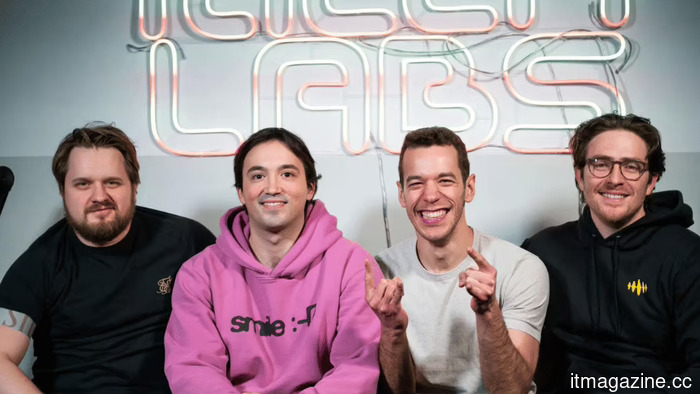 Rilla spends $1.7 million annually on rent for staff working 72 hours a week.
AI startup Rilla allocates $1.7 million annually for housing stipends to ensure that employees reside close to its New York City office while working 72-hour weeks. The CEO emphasizes that the focus is on productivity rather than comfort.
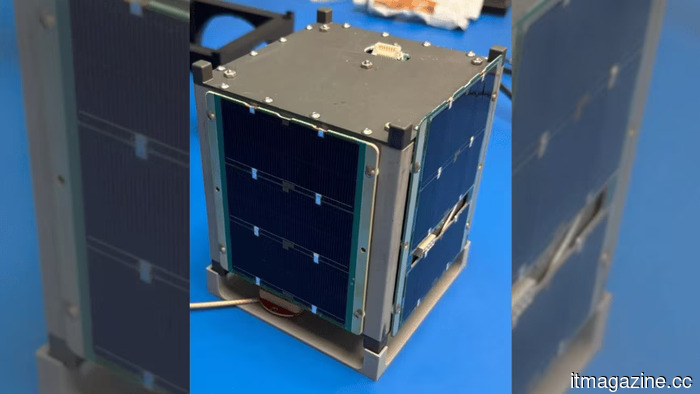 City Labs introduces the inaugural commercial nuclear satellite.
City Labs' BOHR is the inaugural commercial nuclear power source located in orbit, a tritium betavoltaic battery designed to operate in areas where solar panels are ineffective.
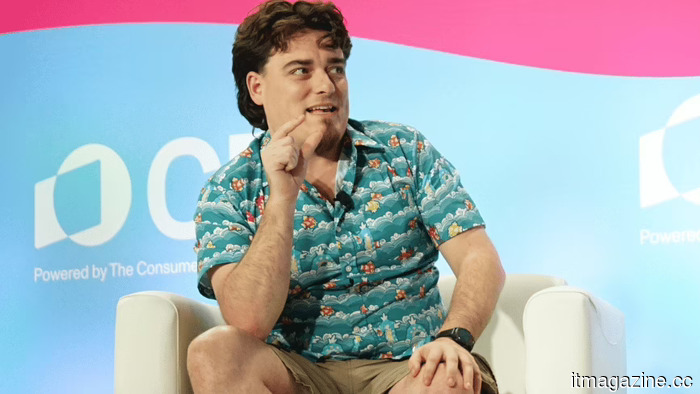 Palmer Luckey: American universities are lagging behind those in China.
Palmer Luckey of Anduril claims that U.S. universities cultivate "architecture astronauts," whereas China develops genuine engineers, a sentiment also expressed by the CEO of Pfizer.
 Venus Aerospace secures $91 million for its detonation engine.
Venus Aerospace has secured $91 million in a Series B funding round to develop its rotating detonation rocket engine into equipment for missiles and high-speed space vehicles.
 Official renders of the Galaxy Z Flip 8 showcase Samsung's well-known foldable device in three new colors.
Official-looking renders of the Galaxy Z Flip 8 have surfaced, showcasing three color options and a design that feels immediately recognizable — yet Samsung might be counting on the fact that this is precisely what consumers are looking for.
SpaceXAI introduces Grok 4.5, its inaugural model featuring Cursor.
SpaceXAI has introduced Grok 4.5, the initial model developed using Cursor. Musk refers to it as "Opus-class" but more affordable, targeting tasks in coding, legal, and finance sectors.