
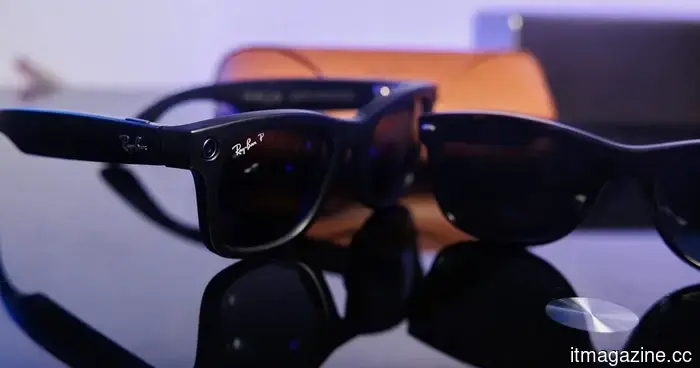
Meta may be developing smart glasses equipped with AI super sensing capabilities that would allow for constant visual and auditory perception.
Meta appears to be aiming to develop an advanced agent that is well-versed in your personal life. Yikes!
Meta is reportedly testing one of its most contentious wearable concepts. As per a Financial Times report, the tech giant is currently experimenting with "super sensing" AI glasses in its laboratories. The primary idea behind these AI glasses is to capture all visual and audio information from your surroundings. However, transforming these glasses into a device that constantly listens and records raises significant privacy concerns.
It seems that Meta intends for the data collected by its upcoming smart glasses to serve as a foundation for a personal agent or assistant. Mark Zuckerberg has hinted at the concept of a 24/7 personal assistant capable of helping you with various needs, moving beyond a basic AI that simply responds to queries based on its programming and memory.
This situation feels precarious.
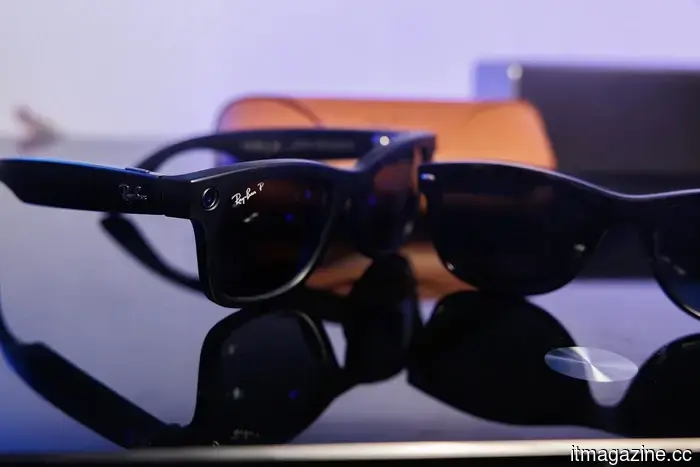
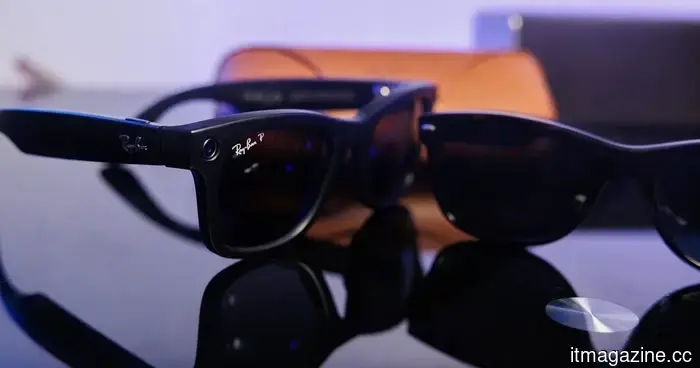
I've owned my Ray-Ban Wayfarers for nearly a decade, but the longevity of Ray-Ban Meta glasses is uncertain. Phil Nickinson / Digital Trends
Currently, whenever someone begins taking photos or videos with the onboard cameras of Meta’s smart glasses, a white ring light turns on, allowing those within the camera’s view to know they are being recorded.
However, these precautions have not been foolproof. Shortly after the release of Meta’s smart glasses, several reports indicated that the LED indicator light could be manipulated, allowing video recording to occur without notifying people within the camera's range. Last night, Meta announced that it will completely disable the camera if the LED indicator light is tampered with or obstructed. This feature will be implemented through a software update for the existing Meta smart glasses lineup.
This raises an important question: if Meta is indeed creating a super-sensing wearable that continuously records audio and video, will the LED light always be active and visible to everyone appearing within the camera’s frame?
According to multiple sources, executives are currently considering not activating the LED when using the super-sensing features. This change would make it harder for bystanders to be aware of being recorded, potentially heightening privacy concerns associated with the technology. However, these plans could still change, as reported by several insiders.
The plans appear to be in place.
Most critically, it seems the super sensing features are ready for deployment and could be activated on Meta's current range of smart glasses via a software update. Though controversial, Meta seems to have a plan in mind.
One suggestion for implementing this system is that all audio and visual data recorded by the AI smart glasses would not be available for user download, nor shared with Meta. Instead, the metadata extracted from the audio recordings and images would be utilized by Meta AI to respond to user inquiries accordingly. The company is also considering using this recorded data to enhance its own AI models, which is sure to trigger privacy concerns.
Nadeem is the Managing Editor at Digital Trends.
Still waiting for a more affordable Vision Pro? New reports bring concerning news.
Another setback for the hopes of a cheaper Vision Pro appears to have emerged.
After circulating various rumors and reports, the potential for a budget Vision Pro might be extinguished. Over recent months, there have been indications of delays, cancellations, and even suggestions of revivals. However, a fresh supply chain report indicates it may be time to cease expectations.
Apple has reportedly halted development on a lower-cost display designed for a lighter, more affordable Vision headset. Samsung Display plans to officially terminate the project in September, according to the Korean outlet The Elec. While Apple has not publicly commented on the cancellation of the headset, the absence of its dedicated display makes a launch increasingly unlikely.
Read more
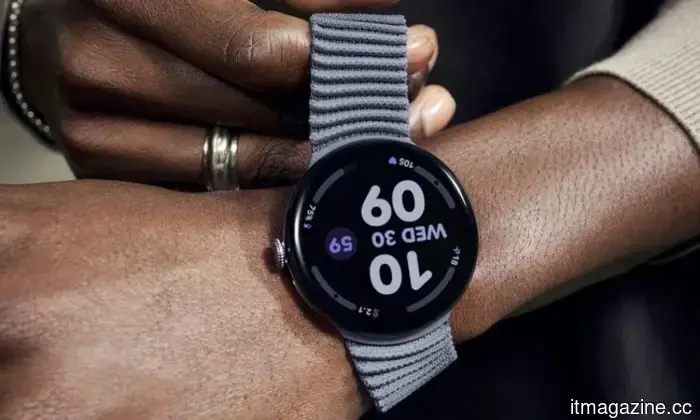
Google’s Pixel Watch 5 might not avoid price increases in 2026.
Certain Pixel Watch 5 models may maintain last year’s prices, while others could be more expensive.
Google has confirmed its upcoming Made by Google event for August 12, where it will unveil the Pixel 11 series smartphones. Although it has not been confirmed whether a new generation of wearables will launch this year, a recent price leak from Dealabs suggests that the Pixel Watch 5 could also be announced at the event, potentially with a price increase similar to that of the Pixel smartphones.
According to Dealabs, Google is expected to keep the same basic Pixel Watch 5 lineup as last year, with the watch available in 41mm and 45mm sizes and featuring Bluetooth, Wi-Fi, and 4G LTE models.
Read more
Rollme’s new AirCam integrates a camera into your headphones for under $80.
Who needs smart glasses when your headphones can already see the world for you?
Incorporating a camera into headphones is rapidly becoming less of a novelty and more of a legitimate product category. Razer showcased Project Motoko at CES 2026, VibeLens launched its MusicCam on Kickstarter last year, and Apple is reportedly looking into camera-equipped AirPods. Rollme has now entered the field as well, with its AirCam potentially being the most budget





Other articles
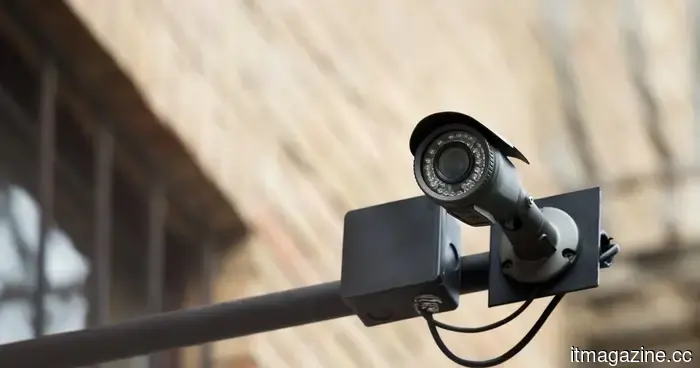 AI security cameras might soon identify your walking pattern before they are able to recognize your face.
A novel AI gait recognition system can recognize individuals based on their walking patterns, providing security cameras with an additional long-distance signal when faces are unclear, obscured, or too small to rely on.
AI security cameras might soon identify your walking pattern before they are able to recognize your face.
A novel AI gait recognition system can recognize individuals based on their walking patterns, providing security cameras with an additional long-distance signal when faces are unclear, obscured, or too small to rely on.
 CEO of ElevenLabs discusses $600 million in revenue and the AI laboratories.
During the RAISE Summit in Paris, ElevenLabs CEO Mati Staniszewski spoke about achieving a reported $600 million in revenue and outlined the startup's strategies to surpass the AI labs.
CEO of ElevenLabs discusses $600 million in revenue and the AI laboratories.
During the RAISE Summit in Paris, ElevenLabs CEO Mati Staniszewski spoke about achieving a reported $600 million in revenue and outlined the startup's strategies to surpass the AI labs.
 Meta might be developing smart glasses that are capable of always seeing and hearing, equipped with advanced AI sensing technology.
Meta is said to be experimenting with “super sensing” AI glasses designed to gather comprehensive data about your life and provide it to an AI assistant that will aid you.
Meta might be developing smart glasses that are capable of always seeing and hearing, equipped with advanced AI sensing technology.
Meta is said to be experimenting with “super sensing” AI glasses designed to gather comprehensive data about your life and provide it to an AI assistant that will aid you.
 CEO of ElevenLabs discusses $600 million in revenue and the AI laboratories.
At the RAISE Summit in Paris, Mati Staniszewski, the CEO of ElevenLabs, elaborated on the company's journey towards achieving a reported $600 million in revenue and discussed the startup's strategy for surpassing the AI laboratories.
CEO of ElevenLabs discusses $600 million in revenue and the AI laboratories.
At the RAISE Summit in Paris, Mati Staniszewski, the CEO of ElevenLabs, elaborated on the company's journey towards achieving a reported $600 million in revenue and discussed the startup's strategy for surpassing the AI laboratories.
 Palmer Luckey: American universities are lagging behind those in China.
Palmer Luckey of Anduril claims that American universities are producing 'architecture astronauts,' while China is cultivating actual engineers, a sentiment that Pfizer's CEO has also echoed.
Palmer Luckey: American universities are lagging behind those in China.
Palmer Luckey of Anduril claims that American universities are producing 'architecture astronauts,' while China is cultivating actual engineers, a sentiment that Pfizer's CEO has also echoed.
Meta may be developing smart glasses equipped with AI super sensing capabilities that would allow for constant visual and auditory perception.
Meta is said to be experimenting with "super sensing" AI glasses that will gather extensive information about your life and provide it to an AI assistant that will support you.