

Privacy concerns surrounding smart glasses: New York's ban faces Meta's solution.
The backlash against smart glasses has now moved into the legal arena. Starting July 20, New York will prohibit recording eyewear from all 1,240 of its courts, becoming the first state in the U.S. to implement such a ban. An internal memo from the New York State Unified Court System outlined this regulation, which was initially reported by Syracuse.com.
The ban is comprehensive, encompassing any eyewear or headgear capable of recording audio or video, including prescription glasses equipped with cameras. Those who enter the court wearing such devices will be required to surrender them to court officials. This rule applies to both staff and attorneys as well. The primary goal is to prevent individuals from secretly recording court proceedings, which violates New York’s civil rights law.
This backlash has been developing for years. New York is not acting in isolation; courts in Philadelphia, Hawaii, and Wisconsin have already imposed restrictions on such devices. Additionally, some cruise lines prohibit their use in public spaces. The catalyst for this movement is Meta, whose Ray-Ban and branded smart glasses have become emblematic of both the trend and the associated concerns.
Critics have dubbed these glasses “pervert glasses,” a label that gained traction after influencers used them to surreptitiously film women in public without their permission. One individual known as a “manfluencer,” who has 1.8 million followers, garnered attention by filming strangers on the street and has faced physical confrontations as a result.
Meta's main defense mechanism is a small white LED light that blinks whenever the glasses are recording, with no option to switch it off. However, some users have found ways to circumvent this safeguard. Some have taped over the light, while others underwent surgery to disable it. One tech journalist discovered an entire industry dedicated to this.
This week, Meta responded by stating in a FAQ that the glasses will completely disable the camera if tampering with the LED is detected. This update is mandatory and is currently being deployed, according to Alex Himel, VP of wearables at Meta. The company also announced plans to remove advertisements and listings for tampering services, ban the associated accounts, and pursue legal action.
Here’s an interesting twist: even while defending the recording light, Meta is testing glasses that do not utilize it. The company has “super-sensing” prototypes that can capture images repeatedly throughout the day, as reported by the Financial Times. The concept is for an always-on assistant capable of tracking where you placed your keys or what a conversation entailed.
The catch is significant. Executives intend not to activate the LED while super-sensing is in use, meaning bystanders would not know they were being recorded, according to the FT. Within Meta, there is a divide on whether to store that footage or use it for AI training purposes. One option is to retain only metadata rather than actual images, although even that could reveal specific locations and device information.
This feature could potentially be added to existing glasses via a software update, which is important because the hardware is already in use. Currently, the main limitation is battery life, as constant recording quickly depletes a small device's power.
This ongoing situation raises concerns for privacy advocates. Meta has previously proposed the use of facial recognition for its glasses, a technology it has mismanaged in the past. This comes at a time when inexpensive cameras are increasingly embedded in public life. A recent report indicated that clips used for training Meta’s AI, including footage of private moments, were reviewed by human contractors.
Not everyone perceives only risks. Meta offers free glasses to every blind veteran in the U.S., and advocates for those with disabilities highlight the real benefits. Competitors are also cautious; even Realities provides camera-free glasses while Snap’s Specs explore augmented reality differently. Companies like Google and Apple are also in the race.
The importance of this issue cannot be overstated. As smart glasses become more commonplace, they no longer appear as obvious gadgets, making it difficult to identify who is recording. Courts have taken the straightforward step of banning them outright. Meta is making efforts to regain trust with a more secure, tamper-proof light. Nevertheless, its upcoming plans indicate a trajectory towards glasses that monitor continuously without signaling their presence.
The next debate regarding privacy might not revolve around a light at all, but rather whether the camera should ever be activated.
Other articles
 Privacy concerns surrounding smart glasses: New York's ban confronts Meta's solution.
New York has prohibited smart glasses in all 1,240 courts as Meta secures its recording indicator, despite experimenting with always-on "super-sensing" eyewear.
Privacy concerns surrounding smart glasses: New York's ban confronts Meta's solution.
New York has prohibited smart glasses in all 1,240 courts as Meta secures its recording indicator, despite experimenting with always-on "super-sensing" eyewear.
 Palmer Luckey: American universities are lagging behind those in China.
Palmer Luckey of Anduril claims that American universities are producing 'architecture astronauts,' while China is cultivating actual engineers, a sentiment that Pfizer's CEO has also echoed.
Fi places Starlink satellites within a dog collar.
Fi's latest product, the Fi Ultra, is the first dog collar to utilize Starlink's direct-to-cell satellites, enabling pet tracking beyond the reach of traditional phone towers, according to a report by Fortune.
Palmer Luckey: American universities are lagging behind those in China.
Palmer Luckey of Anduril claims that American universities are producing 'architecture astronauts,' while China is cultivating actual engineers, a sentiment that Pfizer's CEO has also echoed.
Fi places Starlink satellites within a dog collar.
Fi's latest product, the Fi Ultra, is the first dog collar to utilize Starlink's direct-to-cell satellites, enabling pet tracking beyond the reach of traditional phone towers, according to a report by Fortune.
 Roborock brought the excitement of the FIFA World Cup to Miami, and it was an amazing experience.
Roborock transformed Miami's Aventura Mall into a distinctive celebration of technology and football, creating a remarkable event.
Roborock brought the excitement of the FIFA World Cup to Miami, and it was an amazing experience.
Roborock transformed Miami's Aventura Mall into a distinctive celebration of technology and football, creating a remarkable event.
 A £35 billion initiative to construct 14 small nuclear reactors in the UK.
Michał Sołowow's SGE intends to develop 14 GE Vernova Hitachi BWRX-300 small modular reactors at three locations in the UK, making a £35 billion investment in power for the AI era by 2034.
A £35 billion initiative to construct 14 small nuclear reactors in the UK.
Michał Sołowow's SGE intends to develop 14 GE Vernova Hitachi BWRX-300 small modular reactors at three locations in the UK, making a £35 billion investment in power for the AI era by 2034.
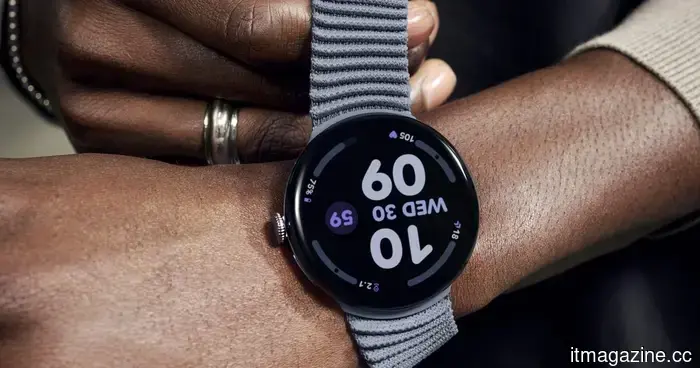 The Pixel Watch 5 from Google might not avoid the price increases set for 2026.
Pricing details for the Pixel Watch 5 have surfaced ahead of Google's event in August, indicating modest increases for certain models.
The Pixel Watch 5 from Google might not avoid the price increases set for 2026.
Pricing details for the Pixel Watch 5 have surfaced ahead of Google's event in August, indicating modest increases for certain models.
Privacy concerns surrounding smart glasses: New York's ban faces Meta's solution.
New York prohibits smart glasses in all 1,240 courts as Meta secures its recording indicator, despite testing "super-sensing" glasses that are always on.