
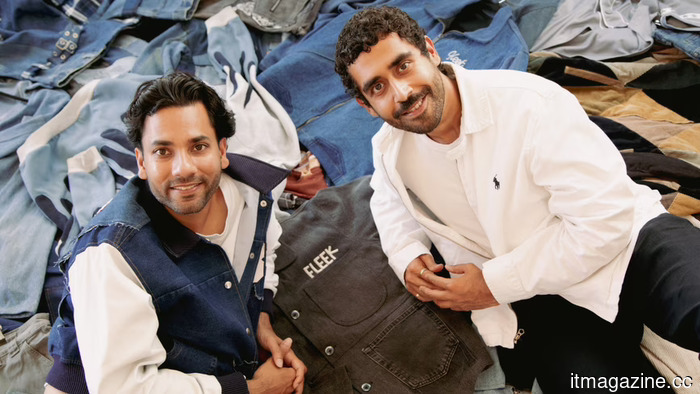
Fleek secures $25 million to develop the AI infrastructure for the worldwide secondhand fashion industry.
Fleek, a London-based startup developing the software infrastructure for the global secondhand clothing market, has secured $25 million in Series B funding to enhance the AI it utilizes for sorting, grading, and pricing pre-owned garments. This funding round brings the company's total capital raised to $45 million.
The investment was spearheaded by Burda Principal Investments, an early supporter of Vinted and a key investor in its Series C funding. Other participants included eBay, FJ Labs, H14, and current investors such as Andreessen Horowitz, HV Capital, and Y Combinator.
Fleek is addressing a challenge larger than many consumers may realize. Annually, up to 24 billion secondhand items move from donation bins in cities like London, Paris, and New York to sorting and grading facilities worldwide. However, the infrastructure facilitating this process remains largely traditional. Even in a sector valued at over $200 billion, garments are still manually assessed, graded against inconsistent criteria, and traded through fragmented networks with minimal pricing clarity.
This situation is significant because demand is outpacing the existing systems. The secondhand fashion market is expanding roughly three times faster than conventional apparel, and Fleek argues that the industry cannot grow to meet this demand while much of it remains offline.
Founded in 2021 by Abhi Arora and Sanket Agarwal, Fleek operates a B2B marketplace and develops the AI systems that support it. The software helps to digitize supply while the marketplace facilitates transactions.
At the core of Fleek's operations is Fleek Sort, a custom vision-language model developed from millions of secondhand transactions collected over the last four years. This model is already being utilized by graders in sorting centers in Pakistan, India, and Dubai, with pilot programs launching in the UK, Europe, and the US.
Fleek Sort aims to digitize a previously manual process. With the help of photos or videos, it identifies, categorizes, grades, and merchandises garments, continuously improving its accuracy by learning from actual sales data.
Once garments are processed, their inventory is automatically listed on Fleek’s marketplace, where AI-driven pricing, search, and matching features link products with buyers globally. Each sale generates additional data, which the company refers to as a proprietary intelligence layer for an industry that has historically underutilized its own data.
Fleek's network is already substantial, connecting over 2,000 verified wholesale suppliers and graders with more than 50,000 retailers, resellers, and boutiques across over 100 countries.
The company also highlights its commitment to circularity, claiming to have kept over 12 million items in circulation, saving an estimated 13 billion liters of water and preventing approximately 23,000 tonnes of CO₂ emissions.
The new capital is intended to drive further development, creating a more AI-focused marketplace, expanding engineering teams, and broadening the supplier and buyer network. This funding comes at a time when resale trends are gaining traction in the industry, evidenced by Vinted's US expansion and increased interest in live commerce targeting the same consumer base.
“Most people are unaware of what happens to their clothing after they donate it,” stated Arora, Fleek’s co-founder and CEO. “We founded Fleek because the current system is flawed, the market is rapidly growing, and no one is developing the technology and infrastructure necessary to improve it.”
His co-founder described the opportunity as one centered around untapped data. “There’s more data locked within the global secondhand supply chain than in nearly any other market,” said Sanket Agarwal, Fleek’s CTO, characterizing Fleek Sort as the first AI specifically designed to assess the nature, value, and demand for used inventory.
For Burda, this investment is a familiar strategy. “We supported Vinted at a time when secondhand fashion was still viewed as a niche market,” explained Julian von Eckartsberg, the firm’s managing director for Europe, positioning Fleek as the essential infrastructure for the future of fashion.
Other articles
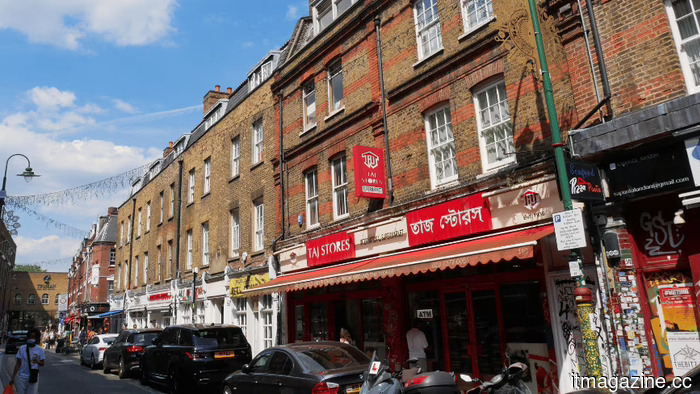 Residents of London oppose a datacentre in Brick Lane, despite its relevance to AI.
Local residents are opposing a datacentre proposed for the former Truman Brewery on Brick Lane. The unique aspect: it would cater to high-frequency trading rather than artificial intelligence.
Residents of London oppose a datacentre in Brick Lane, despite its relevance to AI.
Local residents are opposing a datacentre proposed for the former Truman Brewery on Brick Lane. The unique aspect: it would cater to high-frequency trading rather than artificial intelligence.
 Looking to cancel your PS Plus subscription? Sony might have an offer for you.
PlayStation users are reporting discounts of as much as 50% on PS Plus subscriptions when they try to cancel, indicating that Sony may be experimenting with a new strategy to retain customers.
Looking to cancel your PS Plus subscription? Sony might have an offer for you.
PlayStation users are reporting discounts of as much as 50% on PS Plus subscriptions when they try to cancel, indicating that Sony may be experimenting with a new strategy to retain customers.
 Samsung has scheduled the Unpacked event for July 22 to unveil the Galaxy Z Fold 8 series of foldable smartphones.
During its upcoming Unpacked event, Samsung is anticipated to unveil three new foldable smartphones along with updated smartwatch versions.
Samsung has scheduled the Unpacked event for July 22 to unveil the Galaxy Z Fold 8 series of foldable smartphones.
During its upcoming Unpacked event, Samsung is anticipated to unveil three new foldable smartphones along with updated smartwatch versions.
 Here’s all that you can look forward to at Samsung's Galaxy Unpacked event on July 22.
Samsung has announced the date and venue for its upcoming Galaxy Unpacked event. Although the company has not yet revealed any specific devices, leaks suggest there will be two Fold models, a new Flip, refreshed smartwatches, and potentially Samsung's first pair of smart glasses.
Amazon's hidden 'Moonraker' initiative transforms Alexa into an AI agent.
Documents that have been leaked disclose Moonraker, Amazon's expensive initiative to develop Alexa into an AI agent capable of linking tasks, with anticipated GPU expenses exceeding $100 million by 2026.
Here’s all that you can look forward to at Samsung's Galaxy Unpacked event on July 22.
Samsung has announced the date and venue for its upcoming Galaxy Unpacked event. Although the company has not yet revealed any specific devices, leaks suggest there will be two Fold models, a new Flip, refreshed smartwatches, and potentially Samsung's first pair of smart glasses.
Amazon's hidden 'Moonraker' initiative transforms Alexa into an AI agent.
Documents that have been leaked disclose Moonraker, Amazon's expensive initiative to develop Alexa into an AI agent capable of linking tasks, with anticipated GPU expenses exceeding $100 million by 2026.
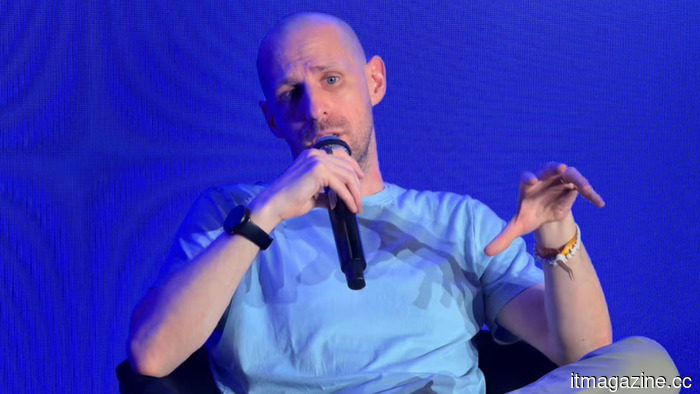 “It could genuinely jeopardize your business”: n8n’s argument for model-agnostic AI
During the Raise Summit, n8n founder Jan Oberhauser argued for the role of being AI’s orchestration layer as model sovereignty emerged as a significant topic in boardroom discussions.
“It could genuinely jeopardize your business”: n8n’s argument for model-agnostic AI
During the Raise Summit, n8n founder Jan Oberhauser argued for the role of being AI’s orchestration layer as model sovereignty emerged as a significant topic in boardroom discussions.
Fleek secures $25 million to develop the AI infrastructure for the worldwide secondhand fashion industry.
London-based startup Fleek has secured $25 million in Series B funding, with support from Burda, an early investor in Vinted, to enhance the AI technology it employs for sorting, grading, and pricing second-hand clothing.