
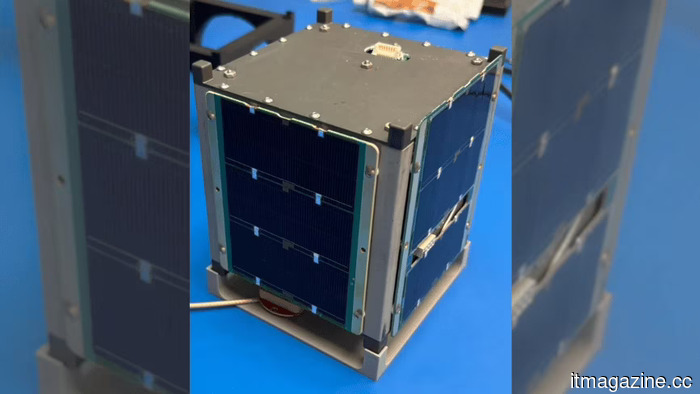
City Labs introduces the inaugural commercial nuclear satellite.
The nuclear age has subtly entered the realm of commercial spaceflight. City Labs, a company based in Miami, has introduced BOHR, which it claims is the world's first commercially operated nuclear-powered satellite and the first nuclear CubeSat. The device is approximately the size of a softball. It was launched aboard a SpaceX Falcon 9 rideshare mission on July 7, alongside 80 additional payloads, as reported by the company.
However, this claim requires some clarification. BOHR does not utilize a reactor; its satellite bus still operates on standard solar panels. The nuclear component, a small "betavoltaic" battery, is meant to power only a specific payload. The mission's objective is to demonstrate that this battery can function effectively in orbit.
How the nuclear battery functions
The battery utilizes tritium, a radioactive isotope of hydrogen. As tritium decays, it emits beta particles that interact with a semiconductor, generating a small amount of electric current. City Labs refers to this technology as NanoTritium.
The power output is minimal, ranging from nanowatts to microwatts, significantly lower than what a smartphone requires, as noted by Ars Technica. In exchange for its low output, the battery has longevity. A betavoltaic cell can operate for decades, requires no sunlight, and continues to work in extreme cold and darkness. This contrasts with solar power, which provides ample energy but ceases to function in the absence of sunlight.
Why this is significant
The timing coincides with a broader movement toward commercial space ventures. With NASA's Artemis program aiming to return humans to the Moon, engineers require a power source capable of enduring the lengthy lunar nights and the continually shadowed craters where solar power is ineffective. Long-lasting sensors operating in deep space confront similar challenges.
Previously, only governmental entities such as NASA and the US military have employed nuclear power in space. City Labs presents BOHR as the first commercial solution.
"This marks a historic milestone for commercial nuclear power in space," stated CEO Peter Cabauy. He emphasized that the mission demonstrates “safe, compact, and regulatory-approved nuclear power systems are prepared for routine commercial use,” unaffected by the constraints of sunlight or battery longevity.
Approved by regulators
The regulatory process is as significant as the technology itself. BOHR became the first commercial nuclear mission to follow the approval pathway set by the US Federal Aviation Administration for launching nuclear materials, as outlined in a national security memorandum from 2020. The FAA granted approval in September 2025, following a safety review by Sandia National Laboratories.
City Labs highlights that tritium is at the lower end of the radiation spectrum and is handled safely. The company is among several pursuing safer nuclear designs for various applications. Much of the BOHR project is funded by the US Department of War, along with support from NASA and the Air Force's research divisions. Additionally, the firm recently secured a $1.5 million DARPA contract to develop the next generation of this technology.
According to the company, BOHR acts as a trailblazer for future civil and defense missions.
Altri articoli
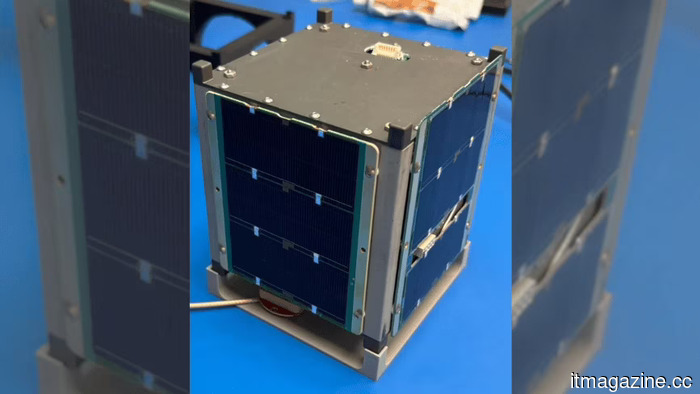 City Labs introduces the inaugural commercial nuclear satellite.
City Labs' BOHR is the inaugural commercial nuclear power source located in orbit, a tritium betavoltaic battery designed to operate in areas where solar panels are ineffective.
City Labs introduces the inaugural commercial nuclear satellite.
City Labs' BOHR is the inaugural commercial nuclear power source located in orbit, a tritium betavoltaic battery designed to operate in areas where solar panels are ineffective.
 Google's Pixel Watch 5 might not be immune to the price increases expected in 2026.
Pricing details for the Pixel Watch 5 have surfaced before Google's event in August, suggesting minor price increases for certain models.
Google's Pixel Watch 5 might not be immune to the price increases expected in 2026.
Pricing details for the Pixel Watch 5 have surfaced before Google's event in August, suggesting minor price increases for certain models.
 HubSpot retracts its decision on utilizing customer data for AI purposes.
HubSpot has abandoned its proposal to consolidate customer data for an AI feature following a four-day wave of criticism, highlighting how sensitive the issue of AI and data collection has become.
HubSpot retracts its decision on utilizing customer data for AI purposes.
HubSpot has abandoned its proposal to consolidate customer data for an AI feature following a four-day wave of criticism, highlighting how sensitive the issue of AI and data collection has become.
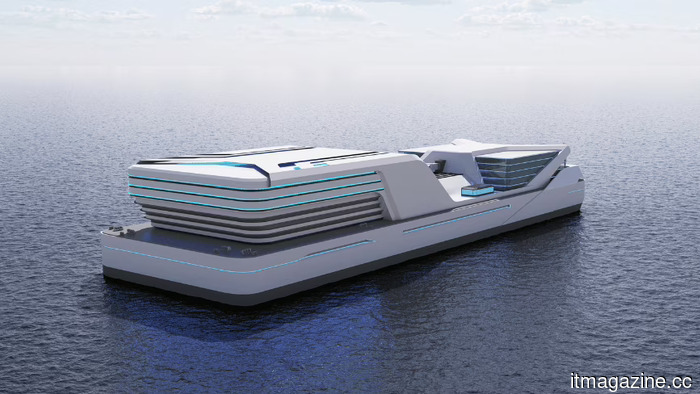 Samsung intends to establish a floating AI data center by the year 2028.
Samsung Heavy Industries aims to create a dedicated, 50MW floating data center by 2028, as challenges such as limited land, water availability, and local resistance hinder AI initiatives on land.
Samsung intends to establish a floating AI data center by the year 2028.
Samsung Heavy Industries aims to create a dedicated, 50MW floating data center by 2028, as challenges such as limited land, water availability, and local resistance hinder AI initiatives on land.
 SpaceXAI introduces Grok 4.5, its inaugural model featuring Cursor.
SpaceXAI has introduced Grok 4.5, the initial model developed using Cursor. Musk refers to it as "Opus-class" but more affordable, targeting tasks in coding, legal, and finance sectors.
SpaceXAI introduces Grok 4.5, its inaugural model featuring Cursor.
SpaceXAI has introduced Grok 4.5, the initial model developed using Cursor. Musk refers to it as "Opus-class" but more affordable, targeting tasks in coding, legal, and finance sectors.
City Labs introduces the inaugural commercial nuclear satellite.
City Labs' BOHR is the first nuclear power source designed for commercial use in orbit, a tritium betavoltaic battery created to function in areas where solar panels are not viable.