

Still hoping for a more affordable Vision Pro? A new report reveals some disappointing news.
Another setback has struck the more affordable Vision Pro.
After a series of rumors and reports, the prospect of a lower-cost Vision Pro may be officially over. We have witnessed delays, speculation of a cancellation, and even hints of a possible resurgence over the past few months. However, a new report from the supply chain indicates it might be time to give up hope.
Apple is said to have halted the development of a cost-effective display designed for a lighter, more budget-friendly Vision headset. According to a report from the Korean outlet The Elec, Samsung Display plans to officially discontinue the project in September. Although Apple has not publicly stated that the headset is canceled, the absence of the specialized display makes a future launch look increasingly unlikely.
The discontinued display, referred to in the industry as G-VR, employed micro-OLED technology based on a glass substrate. This approach was aimed at reducing manufacturing costs compared to the silicon-based OLEDoS screens used in the current Vision Pro. Samsung Display had aimed for a density of around 1,600 to 1,700 pixels per inch, roughly half of the Vision Pro panel's 3,386 PPI.
These more affordable screens were reportedly meant for a budget Apple XR headset, with mass production initially anticipated after 2028. However, the project began to taper off earlier in 2026, as industry insiders noted that Apple's pivot from XR headsets to AI-driven smart glasses diminished the momentum for the display development. Nevertheless, Samsung Display will continue to advance OLEDoS technology for other products, indicating that the cancellation is likely due to Apple's changed plans rather than any technical shortcomings.
This isn't the first indication that Apple’s budget headset has faced difficulties. Bloomberg earlier reported that Apple had put the development of this device, codenamed N100, on hold to hasten the creation of smart glasses. A subsequent report in May 2026 suggested that the cheaper headset had been completely scrapped.
It's important to note that this remains an unverified report. Furthermore, Apple continues to offer the M5-powered Vision Pro, which features a 23-million-pixel display system and starts at a price of $3,499, so the current headset is still available for now.


Other articles
 Nvidia collaborates with chip competitor d-Matrix on inference technology.
Nvidia is partnering its GPUs with d-Matrix's inference chips in a collaborative system, marking the latest indication that it prefers to ally with chip competitors rather than oppose them.
 Nvidia collaborates with chip competitor d-Matrix on inference technology.
Nvidia is integrating its GPUs with d-Matrix's inference chips in a collaborative system, marking a recent shift towards partnering with competitors in the chip industry rather than competing against them.
 NATO's AI 'Kill Web' along its eastern border
NATO is developing an AI 'Kill Web' comprising sensors, drones, and satellites along its eastern border to identify and counter a Russian assault before it occurs.
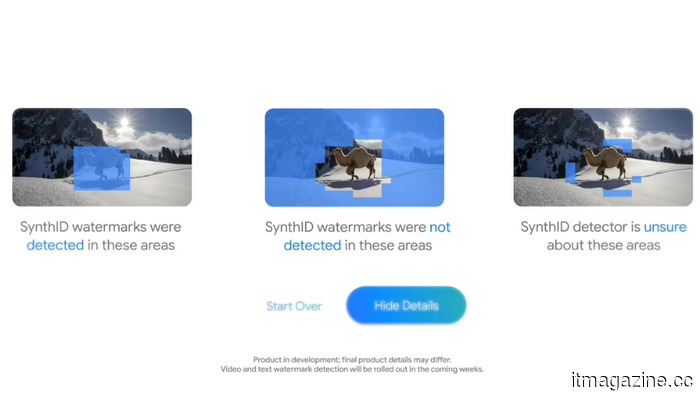 Google's SynthID watermark has successfully exposed its first notable deepfake: a fabricated image of Mitch McConnell.
Snopes utilized Google's invisible SynthID watermark to disprove a widely circulated AI-generated image of Senator McConnell in a hospital bed. The watermark remained intact even after screenshots were taken.
 A professor at Brown has demonstrated evidence of widespread cheating using artificial intelligence.
A professor at Brown shifted his exam to an in-person format, resulting in the class average plummeting from 96 to 48, transforming a vague concern regarding AI-assisted cheating into a concrete statistic.
 Privacy concerns surrounding smart glasses: New York's ban confronts Meta's solution.
New York has prohibited smart glasses in all 1,240 courts as Meta secures its recording indicator, despite experimenting with always-on "super-sensing" eyewear.
Still hoping for a more affordable Vision Pro? A new report reveals some disappointing news.
Apple's more affordable Vision Pro seems less likely to materialize as Samsung Display has reportedly chosen to halt the development of the budget-friendly screen technology intended for the headset.