
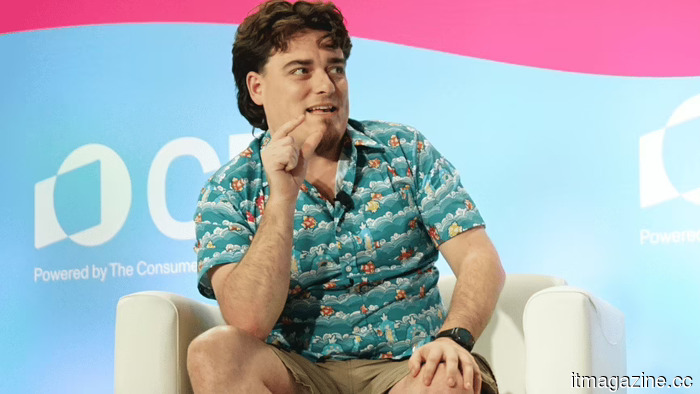
Palmer Luckey: American universities are lagging behind those in China.
Palmer Luckey delivers a stark message regarding the US-China technology competition: America is falling behind in education. The Anduril founder argues that US universities have ceased teaching engineers the practical skills needed for manufacturing. He suggests that this situation gives China an advantage that goes beyond just inexpensive labor. Luckey shared these insights during a discussion with the Hoover Institution, which was noted by Fortune.
“American companies have been weakened because our companies promote ideas to these colleges about what they should be teaching,” Luckey remarked. “Essentially, we’re no longer educating engineers to be true engineers.”
He criticizes US educational institutions for producing designers instead of creators. According to him, China boasts many of the globe's leading battery engineers, metallurgists, and optical engineers, whereas the US produces what he refers to as “architecture astronauts.” He explained, “We’re preparing students to be high-level design firms that compile design packages for actual engineers in China.” Luckey also criticized Apple, which designs its products in California while relying on manufacturing partners in China. He stated, “Apple used to need to figure out how to actually manufacture their products,” adding, “Today, most of the truly challenging work is performed by Chinese engineers.”
Luckey does concede that the US retains one advantage: it continues to produce entrepreneurs. He noted, “China’s education system doesn’t cultivate many innovators, but it produces plenty of workers.” His own experience exemplifies this. As a homeschooled teenager, he created VR headsets and left Cal State Long Beach at 19. He received a million dollars from Peter Thiel and launched Oculus. “That’s not happening in China, I can assure you,” he asserted. He later sold Oculus to Facebook for $2 billion at the age of 21 before founding Anduril, which is now valued at $61 billion.
Luckey’s concerns are echoed by other leaders as well. Pfizer CEO Albert Bourla has indicated that Chinese research now progresses “three times faster, at half the cost.” He referenced the Nature Index, where nine of the top ten positions are held by Chinese institutions.
China has aggressively pursued advancements in this area. Since 2021, it has eliminated thousands of humanities and language degrees, replacing them with programs in AI, robotics, and semiconductor engineering. As China's technical capacity expands, the gap that Luckey describes appears to be less of a mere complaint.
This issue surfaces at a time when AI and advanced manufacturing are becoming key battlegrounds in global power dynamics. If Luckey's analysis holds true, addressing this problem will take time, as it requires changes to educational curricula rather than just technological innovations. It also raises a pressing concern within the tech industry: companies continue to hire a small group of elite designers while the individuals who actually manufacture products are located elsewhere. Whether the US can still provide engineering education, not merely entrepreneurial training, may determine the outcome of the coming decade. The opposing viewpoint is straightforward: the US continues to convert risk into successful companies, a trait that has previously outperformed more orderly systems.
Другие статьи
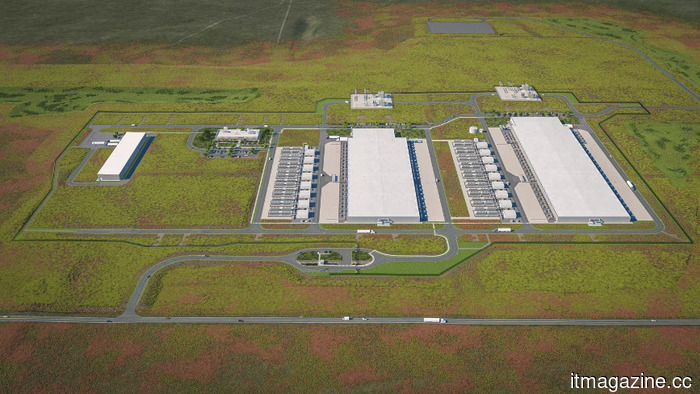 Город сообщает, что подрядчик Meta загрязнил воду в Шайенн.
Контрактор Meta сбросил редкую бактерию в водную систему Шайенна, поэтому город Вайоминг приостановил все сбросы из дата-центров, сообщает Guardian.
Город сообщает, что подрядчик Meta загрязнил воду в Шайенн.
Контрактор Meta сбросил редкую бактерию в водную систему Шайенна, поэтому город Вайоминг приостановил все сбросы из дата-центров, сообщает Guardian.
 Новый видео стандарт Android 17 решает одну из самых больших проблем HDR.
Android 17 представляет новый стандарт HDR под названием Eclipsa Video, который обещает стабильное и комфортное воспроизведение HDR на каждом экране.
Новый видео стандарт Android 17 решает одну из самых больших проблем HDR.
Android 17 представляет новый стандарт HDR под названием Eclipsa Video, который обещает стабильное и комфортное воспроизведение HDR на каждом экране.
 Новая AirCam от Rollme устанавливает камеру в ваши наушники за менее чем 80 долларов.
AirCam от Rollme — это гарнитура с костной проводимостью, 8 МП камерой, функцией перевода в реальном времени и ценой, которая обходит всех конкурентов.
Новая AirCam от Rollme устанавливает камеру в ваши наушники за менее чем 80 долларов.
AirCam от Rollme — это гарнитура с костной проводимостью, 8 МП камерой, функцией перевода в реальном времени и ценой, которая обходит всех конкурентов.
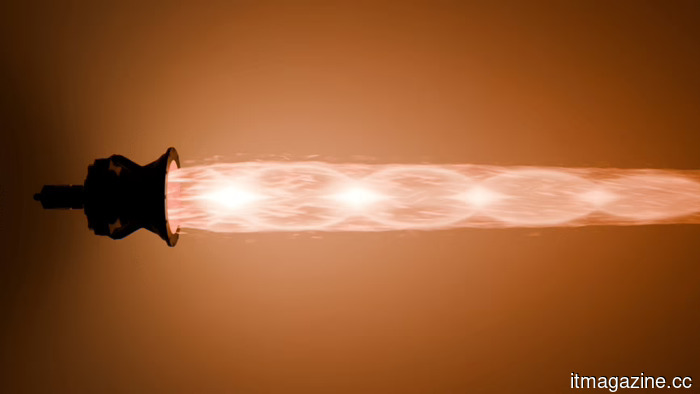 Venus Aerospace привлекла 91 миллион долларов для своего двигателя детонации
Venus Aerospace привлекла 91 миллион долларов в рамках раунда финансирования Series B, чтобы превратить свой ротационный детонационный ракетный двигатель в аппаратное обеспечение для ракет и высокоскоростных космических транспортных средств.
Venus Aerospace привлекла 91 миллион долларов для своего двигателя детонации
Venus Aerospace привлекла 91 миллион долларов в рамках раунда финансирования Series B, чтобы превратить свой ротационный детонационный ракетный двигатель в аппаратное обеспечение для ракет и высокоскоростных космических транспортных средств.
 Meta может работать над умными очками с постоянным зрением и слухом, оснащенными суперсенсорным ИИ.
Сообщается, что Meta тестирует «суперсенсорные» AI-очки, которые будут собирать всю информацию о вашей жизни и передавать её AI-агенту, который будет вам помогать.
Meta может работать над умными очками с постоянным зрением и слухом, оснащенными суперсенсорным ИИ.
Сообщается, что Meta тестирует «суперсенсорные» AI-очки, которые будут собирать всю информацию о вашей жизни и передавать её AI-агенту, который будет вам помогать.
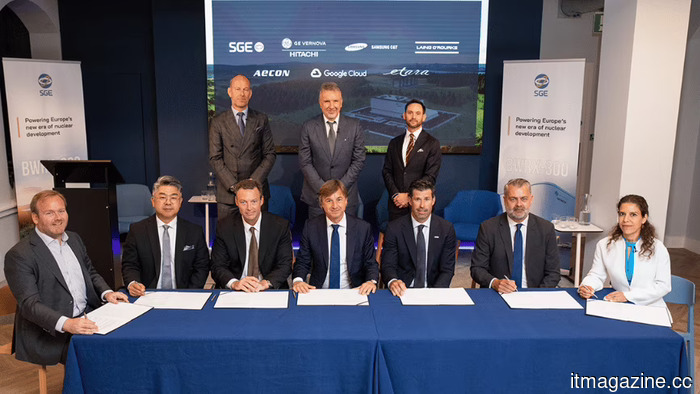 План на сумму 35 миллиардов фунтов стерлингов по строительству 14 мини-ядерных реакторов в Великобритании
Планы SGE Михаła Sołowowa включают 14 малых модульных реакторов GE Vernova Hitachi BWRX-300 на трех площадках в Великобритании, ставка в 35 миллиардов фунтов стерлингов на энергетику эпохи ИИ к 2034 году.
План на сумму 35 миллиардов фунтов стерлингов по строительству 14 мини-ядерных реакторов в Великобритании
Планы SGE Михаła Sołowowa включают 14 малых модульных реакторов GE Vernova Hitachi BWRX-300 на трех площадках в Великобритании, ставка в 35 миллиардов фунтов стерлингов на энергетику эпохи ИИ к 2034 году.
Palmer Luckey: American universities are lagging behind those in China.
Palmer Luckey of Anduril claims that U.S. universities cultivate "architecture astronauts," whereas China develops genuine engineers, a sentiment also expressed by the CEO of Pfizer.