
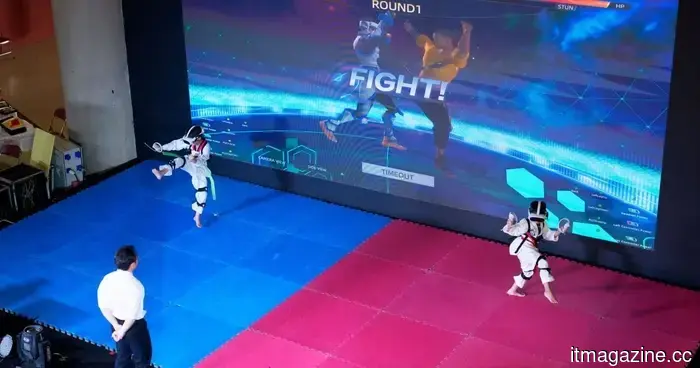
Virtual taekwondo may seem like a novelty, but it has the potential to address the most significant concern in combat sports.
The noncontact VR discipline is gaining traction in Southeast Asia as it maintains the intensity of athletic training while minimizing the injury risks that often deter many participants.
Virtual taekwondo may sound ridiculous at first glance. Donning a headset, attaching sensors to your body, taking kicks at thin air, and calling it a combat sport might seem absurd. Meanwhile, Wii Sports quietly observes.
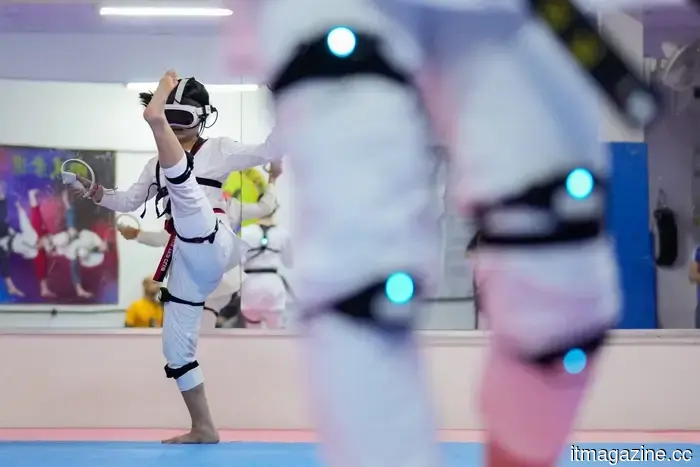
Athletes are still kicking, reacting, and breathing heavily throughout the exercise. The distinction is that their strikes are aimed at avatars rather than other competitors.
This development marks more than just a curiosity for VR at the Asian Games. The format allows taekwondo to remain physically challenging without the necessity of contact as an entry requirement.
The impact of no contact on the sport
While traditional taekwondo has a strong appeal, sparring can create a significant barrier for participation. Some individuals desire the discipline, movement, and competition but wish to avoid the risk of being kicked by another person.
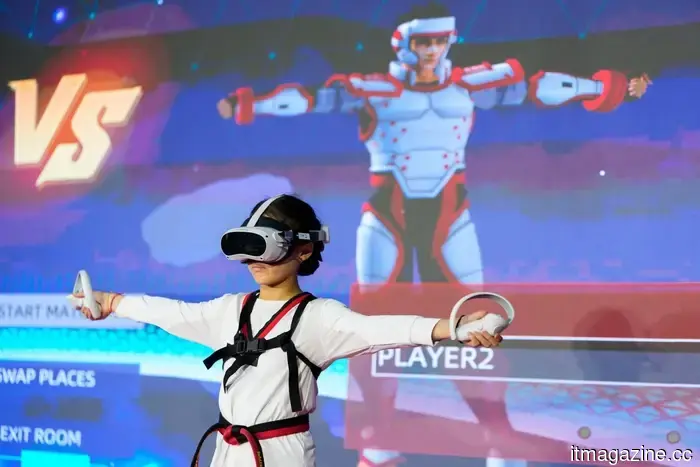
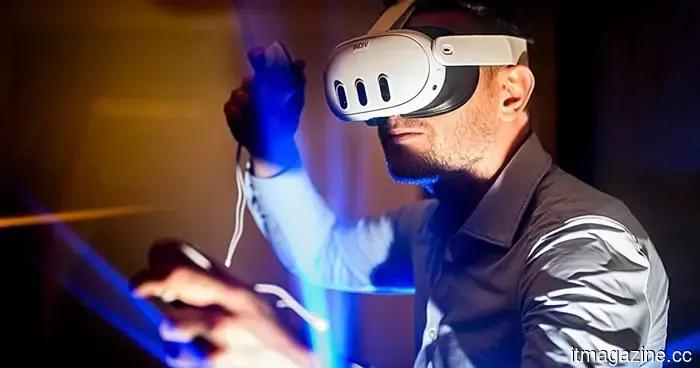
Virtual taekwondo transitions the combat into a digital setting. Competitors don VR headsets and motion-capturing sensors, using actual kicks and movements to control avatars in one-minute matches. Although speed and timing still play crucial roles, the absence of physical collisions helps alleviate the intimidation often associated with combat sports.
This format also allows greater inclusivity among competitors. Rather than separating them by age, weight, and gender, virtual taekwondo enables participants to compete together in the same digital match, where technique and fitness become the primary factors.
The challenge of VR kicking
The reduced risk of injury does not render the exercise insubstantial. Coaches view virtual taekwondo as a comprehensive sport that focuses on endurance, flexibility, and quick performance. Repeated kicks still take a toll on the lungs.
That's where the parallels with gaming start to break down. Matches are brief, yet each one demands continuous effort. Victory does not come from merely lounging with a controller.
There is also a tangible learning curve. Some competitors experienced dizziness initially. Others needed to learn how to gauge distance in an environment they couldn't physically sense. Success hinges on knowing when to move, when to strike, and how swiftly the body can react.
Who can now participate
Access is a compelling advantage of virtual taekwondo. More individuals might explore martial arts when the initial step does not involve full-contact sparring.
Coaches across Southeast Asia are noticing this change. Parents appreciate a sport that expends energy while minimizing risk of collision. Older athletes and women find a competitive format where movement and strategy take precedence over impacts.
However, cost remains a significant hurdle. The necessary equipment is still pricey, which can slow down the adoption by clubs. Yet, as virtual taekwondo evolves from showcases to medal competitions, clubs have a stronger incentive to invest. It becomes harder to dismiss something as a gimmick when people are actively training for titles.
Paulo Vargas is an English major who transitioned from reporting to technical writing, with a career that has always come back to...
You can now finally install Windows on the Steam Machine, for reasons you understand.
Official Windows drivers are finally available, even though SteamOS still often outperforms in gaming.
For years, one of the main requests from Steam Machine owners has been official support for Windows. Valve has responded by releasing a complete set of Windows drivers for the Steam Machine, enabling the installation of Windows 11 without relying on unofficial methods or lacking hardware support. The update includes drivers for vital components such as graphics, audio, Bluetooth, Wi-Fi, SD card reader, and more, making Windows a more viable choice than before. Windows on a Steam Machine is now officially endorsed.
This VR empathy game could potentially lead to something more unsettling.
Rekindle utilizes facial recognition technology to enhance player engagement, but the underlying concept may eventually influence therapy, safety systems, and emotion-responsive interfaces.
A new VR empathy game named Rekindle incorporates facial expressions as part of its controls. Players are asked to express emotions, while the game tracks their reactions to see if they align with the scenario presented. The first-person narrative explores themes of memory, identity, and empathy for the LGBTQ+ community, as players navigate a dystopian future where sexual identity has been targeted and erased, gathering memory fragments related to the protagonist's experiences.
PlayStation’s shift away from physical discs may have unexpectedly surprised the very partners that support its gaming business.
Sony’s recent decision to move away from physical discs for the PlayStation reportedly caught publishers, regional teams, and retail partners by surprise, transforming a conflict over game ownership into a business trust issue.
The reported transition away from physical discs for the PlayStation looked unfavorable for players who still value owning games. Now, it seems complicated for the companies expected to sell, support, and build around Sony’s ecosystem. Reports indicate that Sony’s choice to cease physical disc production for the PS5, and likely the PS6 by 2028, was made without prior notice to publishers, business partners, or some regional operations.




Other articles
 Victims of Predatorgate are suing the spyware company Intellexa.
Eight victims involved in Greece's Predatorgate scandal are filing lawsuits against the spyware company Intellexa and 13 individuals, seeking €1 million each due to phone hacking incidents that occurred in 2020–21.
Victims of Predatorgate are suing the spyware company Intellexa.
Eight victims involved in Greece's Predatorgate scandal are filing lawsuits against the spyware company Intellexa and 13 individuals, seeking €1 million each due to phone hacking incidents that occurred in 2020–21.
 This VR empathy game might just be the beginning of something far more unsettling.
Rekindle employs facial recognition biometrics to transform emotions into gameplay, but this concept could ultimately advance emotion-sensitive technology in therapy, safety systems, and interfaces that monitor more than just clicks.
This VR empathy game might just be the beginning of something far more unsettling.
Rekindle employs facial recognition biometrics to transform emotions into gameplay, but this concept could ultimately advance emotion-sensitive technology in therapy, safety systems, and interfaces that monitor more than just clicks.
 Hud CEO Roee Adler states that runtime intelligence will shape the future of software operations.
Roee Adler, the CEO of the Israeli startup Hud, contends that conventional observability is inadequate for AI coding agents. He believes that runtime intelligence, which captures production context at the function level, will be the architectural foundation that ensures reliable autonomous software delivery.
Hud CEO Roee Adler states that runtime intelligence will shape the future of software operations.
Roee Adler, the CEO of the Israeli startup Hud, contends that conventional observability is inadequate for AI coding agents. He believes that runtime intelligence, which captures production context at the function level, will be the architectural foundation that ensures reliable autonomous software delivery.
 Norm Ai secures $120 million at a valuation of $1.2 billion.
AI legal startup Norm Ai has successfully secured $120 million in a Series C funding round at a $1.2 billion valuation, with Khosla Ventures leading the investment. The company also operates its own AI-driven law firm, Norm Law.
Norm Ai secures $120 million at a valuation of $1.2 billion.
AI legal startup Norm Ai has successfully secured $120 million in a Series C funding round at a $1.2 billion valuation, with Khosla Ventures leading the investment. The company also operates its own AI-driven law firm, Norm Law.
 Quaise secures $134 million to explore ultra-high-temperature geothermal drilling.
The geothermal startup Quaise Energy has secured a $134 million first close of its Series B funding round, with Prelude Ventures at the helm, to drill superhot rock using millimetre-wave beams.
Quaise secures $134 million to explore ultra-high-temperature geothermal drilling.
The geothermal startup Quaise Energy has secured a $134 million first close of its Series B funding round, with Prelude Ventures at the helm, to drill superhot rock using millimetre-wave beams.
 Marshall updates its Acton and Stanmore speakers, enhancing bass quality and ease of repair.
Marshall has introduced the Acton IV and Stanmore IV Bluetooth speakers, featuring enhanced sound quality, Bluetooth Auracast technology, interchangeable components, and greater flexibility in positioning.
Marshall updates its Acton and Stanmore speakers, enhancing bass quality and ease of repair.
Marshall has introduced the Acton IV and Stanmore IV Bluetooth speakers, featuring enhanced sound quality, Bluetooth Auracast technology, interchangeable components, and greater flexibility in positioning.
Virtual taekwondo may seem like a novelty, but it has the potential to address the most significant concern in combat sports.
Virtual taekwondo may seem like a VR novelty, but its non-contact style could make martial arts more accessible for children, hesitant newcomers, women, and older participants.