

Hud CEO Roee Adler states that runtime intelligence will shape the future of software operations.
Artificial intelligence has significantly expedited software development, with coding agents now able to generate substantial amounts of production-ready code within minutes. However, despite the faster code-writing process, ensuring that software functions correctly in production is still one of the largest challenges in engineering.
For many years, observability platforms have supported teams in monitoring infrastructure via logs, metrics, and traces. Yet, according to Roee Adler, the CEO of Hud, the rapid growth of AI-assisted development is revealing the shortcomings of systems originally created for human operators instead of autonomous coding agents.
Software Is Being Developed in a New Era
Adler asserts that the change is not merely about the adoption of AI tools; rather, it signifies a fundamental shift in the software development landscape. He explains, “The fundamental change is that software is no longer primarily written by humans using the refined engineering processes; it’s being generated by coding agents who are entirely different beings.” He describes these agents as “fast, impatient, aggressive,” but notes that they lack the necessary context to make consistently safe decisions in complex environments.
Instead of hindering AI adoption, Adler suggests the industry should create infrastructure that allows coding agents to become reliable collaborators. He believes the objective is not to eliminate engineers but to provide AI with enough real-world knowledge to perform confidently in production settings.
Accelerated Development Has Led to a New Bottleneck
While AI dramatically boosts the volume of code developers can produce, Adler contends that organizations are not experiencing similar acceleration in overall software delivery.
The issue, he notes, is not that engineering teams suddenly encounter new operational blind spots. Instead, existing review and validation methods were not designed to keep pace with AI-generated development. As more code moves to production, maintaining confidence becomes increasingly difficult. Adler points out that while individual engineers have become more productive, “the bottleneck has shifted to the gate, which is trying to prevent poor changes from disrupting the system.”
He believes engineering organizations are now confronted with two urgent questions: how to review the growing volume of AI-generated code while ensuring business intent is maintained, and how to retain institutional knowledge as fewer engineers comprehend every aspect of increasingly AI-created codebases.
Why Observability Is Insufficient for AI
Engineering teams are already heavily invested in logs, metrics, traces, and application performance monitoring platforms. Although these systems are useful for identifying when services become unhealthy, Adler argues they were not designed to provide the insight AI systems require.
He states, “They’re built to indicate something is wrong but not why.” While logs, metrics, and traces assist engineers in investigating incidents, “Agents analyzing logs are what we have now, and it’s inadequate.” Instead, Adler advocates for AI needing “structured, function-level context that describes what is actually executed,” granting models direct visibility into how code performs under genuine production conditions rather than requiring them to infer behavior from fragmented data.
This philosophy underpins what Hud refers to as runtime intelligence.
Why Context Is More Crucial Than Just More Data
Traditional observability often generates vast quantities of telemetry, leaving engineers to piece together failures after they occur. Adler asserts that simply gathering more information does not resolve the issue if critical details remain hidden.
He explains, “More telemetry creates a bigger haystack, and the needle is the only thing you were searching for.” When production incidents happen, engineers do not require terabytes of logs; instead, they need the precise execution flow, affected parameters, code paths, dependency behaviors, and relevant forensic context elucidating why a failure transpired.
Hud's method focuses on automatically capturing that forensic context as incidents unfold, rather than depending on engineers to anticipate which logs, dashboards, or instrumentation will be necessary ahead of time. Adler emphasizes that this change is increasingly vital because manual configuration inherently leaves gaps in coverage. “Anything that relies on setup gets applied unevenly,” he states, adding that organizations often overlook failures they never expected.
Runtime Intelligence as a New Structural Layer
While numerous observability vendors are incorporating AI assistants into current products, Adler does not perceive runtime intelligence as merely an additional feature.
Rather, he claims it represents “a different layer, not a feature you append.” Simply adding AI to sampled telemetry means the model inherits all the limitations of the underlying data. In contrast, runtime intelligence modifies what information is captured from the outset, creating production-aware context specifically designed for AI reasoning instead of human investigation.
This distinction also clarifies Hud’s focus on capturing execution context without sampling. Adler notes that sampling may work effectively for dashboards and long-term trends but becomes problematic during incident response, as the rare event triggering the outage might be exactly what is discarded. Given that AI makes decisions based solely on the information provided, missing production data does not just slow down investigations; it may also lead models to draw incorrect conclusions.
The Future Is About Reviewing AI, Not Debugging It
Looking forward, Adler anticipates that engineers will spend significantly less time manually investigating production incidents and much more time validating AI-generated solutions.
He cites examples of organizations that have already
Other articles
 Norm Ai secures $120 million at a valuation of $1.2 billion.
AI legal startup Norm Ai has successfully secured $120 million in a Series C funding round at a $1.2 billion valuation, with Khosla Ventures leading the investment. The company also operates its own AI-driven law firm, Norm Law.
Norm Ai secures $120 million at a valuation of $1.2 billion.
AI legal startup Norm Ai has successfully secured $120 million in a Series C funding round at a $1.2 billion valuation, with Khosla Ventures leading the investment. The company also operates its own AI-driven law firm, Norm Law.
 China is considering restricting international access to its leading AI models.
Chinese officials have talked about restricting foreign access to the nation's top AI models, including open-weight models from Alibaba, ByteDance, and Z.ai.
China is considering restricting international access to its leading AI models.
Chinese officials have talked about restricting foreign access to the nation's top AI models, including open-weight models from Alibaba, ByteDance, and Z.ai.
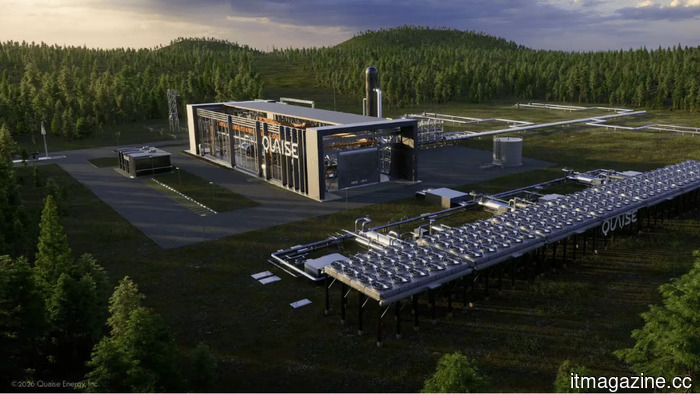 Quaise secures $134 million to explore ultra-high-temperature geothermal drilling.
The geothermal startup Quaise Energy has secured a $134 million first close of its Series B funding round, with Prelude Ventures at the helm, to drill superhot rock using millimetre-wave beams.
Quaise secures $134 million to explore ultra-high-temperature geothermal drilling.
The geothermal startup Quaise Energy has secured a $134 million first close of its Series B funding round, with Prelude Ventures at the helm, to drill superhot rock using millimetre-wave beams.
 More than 100 autonomous ATVs manufactured in the US have been engaged in combat in Ukraine for the past nine months.
Forterra's Lancer vehicles accomplished 1,100 missions and 52 casualty evacuations in Ukraine. Soldiers continue to teleoperate these vehicles since their autonomous capabilities are unable to respond to threats.
More than 100 autonomous ATVs manufactured in the US have been engaged in combat in Ukraine for the past nine months.
Forterra's Lancer vehicles accomplished 1,100 missions and 52 casualty evacuations in Ukraine. Soldiers continue to teleoperate these vehicles since their autonomous capabilities are unable to respond to threats.
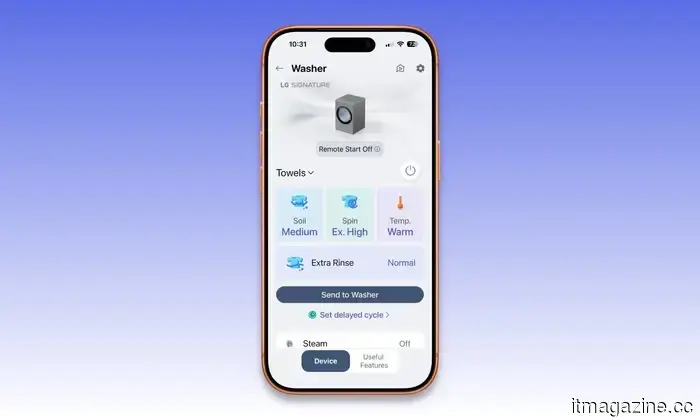 LG SIGNATURE WM9900HSA review: A washer that's just as enjoyable to use as it is aesthetically pleasing.
The impressive 5.8-cu-ft flagship washer from LG offers rapid, quiet, AI-driven cleaning and features months' worth of automatic soap dispensing, yet the beautiful LCD has difficulty in bright sunlight, and the placement of the drawer presents some risk.
LG SIGNATURE WM9900HSA review: A washer that's just as enjoyable to use as it is aesthetically pleasing.
The impressive 5.8-cu-ft flagship washer from LG offers rapid, quiet, AI-driven cleaning and features months' worth of automatic soap dispensing, yet the beautiful LCD has difficulty in bright sunlight, and the placement of the drawer presents some risk.
 This virtual reality empathy game might be the beginning of something far more unsettling.
Rekindle employs facial recognition biometrics to translate emotions into gameplay. However, this concept could also advance emotion-sensitive technology in areas like therapy, safety mechanisms, and user interfaces that monitor more than just clicks.
This virtual reality empathy game might be the beginning of something far more unsettling.
Rekindle employs facial recognition biometrics to translate emotions into gameplay. However, this concept could also advance emotion-sensitive technology in areas like therapy, safety mechanisms, and user interfaces that monitor more than just clicks.
Hud CEO Roee Adler states that runtime intelligence will shape the future of software operations.
Roee Adler, the CEO of the Israeli startup Hud, contends that conventional observability is inadequate for AI coding agents. He believes that runtime intelligence, which captures production context at the function level, will be the architectural foundation that ensures reliable autonomous software delivery.