
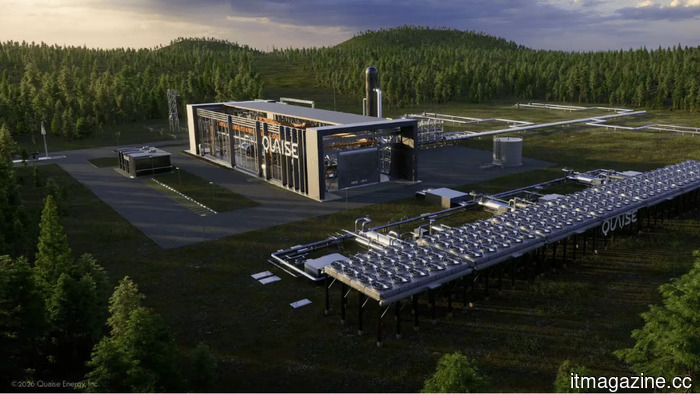
Quaise secures $134 million to explore ultra-high-temperature geothermal drilling.
Geothermal has traditionally been associated with shallow wells and moderate heat levels. However, Quaise aims to drill several kilometers deep and utilize microwaves to heat the rock, having recently secured $134 million to pursue this goal.
According to Bloomberg, Quaise Energy has raised $134 million to explore superheated rock located deep underground. Prelude Ventures spearheaded the initial close of the Series B funding round, with participation from Japanese energy companies JERA and Idemitsu. This funding round brings Quaise’s total financing to $230 million.
Instead of using traditional drill bits, the company's concept revolves around a unique approach. To access rock temperatures between 300°C and 500°C, Quaise plans to drill much deeper than current geothermal wells allow. Once a certain depth is achieved, they will replace the drill bit with an energy beam, employing microwaves to vaporize the rock.
The technology is the result of over ten years of research at MIT, aiming to extract more heat from fewer wells. The deeper and hotter rock provides greater energy output per borehole, and eliminating worn-out drill bits reduces downtime and costs. Founded in 2018, Quaise claims this approach could finally make geothermal energy affordable.
Timing also plays a crucial role in this development. The demand for reliable, continuous clean power has surged, driven by the energy requirements of AI data centers proliferating across the grid. The funds raised will support Project Obsidian in Oregon, which Quaise touts as the first commercial superhot geothermal facility in the world, with plans to begin supplying power to the grid by 2030.
Quaise has already secured a hyperscaler for the initial 50 megawatts of the project, although CEO Carlos Araque refrained from disclosing the client's name. Such demand has revitalized a previously overlooked sector. In May, geothermal developer Fervo Energy raised nearly $1.9 billion in a US IPO that exceeded its pricing range. Investors are also increasingly funding fusion technology, next-generation reactors, and the broader influx of capital into energy solutions linked to AI.
Why is this significant? The engineering remains untested on a commercial scale. Quaise's Texas test site is currently approaching a depth of one kilometer, which is the deepest achieved with its drilling technique so far. To access the hottest rock, they need to reach depths beyond five kilometers.
The funding provides more time, but not guaranteed outcomes. Quaise plans to pursue a Series C funding round next and subsequently follow in Fervo's footsteps with a stock market listing. Competitors like Mazama Energy are also drilling near the same volcano in Oregon. Ultimately, the effectiveness of microwaves in breaking rock and managing costs more efficiently than others in the field will be the key challenge, with the reward being affordable, continuous power.
Otros artículos
 Virtual taekwondo may seem like a novelty, but it has the potential to address the most significant concern in combat sports.
Virtual taekwondo may seem like a VR novelty, but its non-contact style could make martial arts more accessible for children, hesitant newcomers, women, and older participants.
Virtual taekwondo may seem like a novelty, but it has the potential to address the most significant concern in combat sports.
Virtual taekwondo may seem like a VR novelty, but its non-contact style could make martial arts more accessible for children, hesitant newcomers, women, and older participants.
 ECB advises banks to prepare for AI-related cyber threats.
The ECB has instructed euro-zone banks to present action plans addressing frontier-AI cyber threats by the end of October, as EU regulators highlight a "serious" systemic risk.
ECB advises banks to prepare for AI-related cyber threats.
The ECB has instructed euro-zone banks to present action plans addressing frontier-AI cyber threats by the end of October, as EU regulators highlight a "serious" systemic risk.
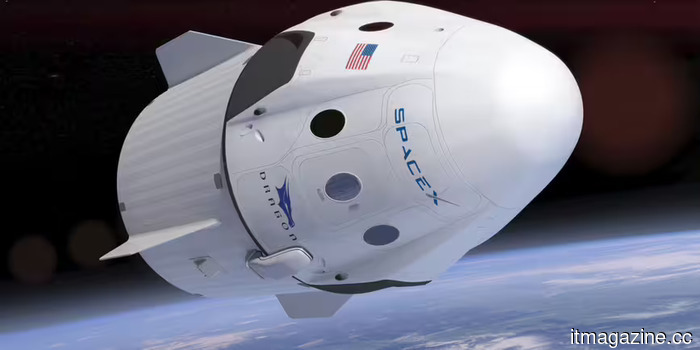 The most optimistic supporter of SpaceX predicts a valuation of $10.5 trillion.
Raymond James set a Street-high target of $800 for SpaceX, suggesting a valuation of $10.5 trillion, as the company became part of the Nasdaq 100. Meanwhile, Jeremy Grantham estimates the likelihood of a crash at 90%.
The most optimistic supporter of SpaceX predicts a valuation of $10.5 trillion.
Raymond James set a Street-high target of $800 for SpaceX, suggesting a valuation of $10.5 trillion, as the company became part of the Nasdaq 100. Meanwhile, Jeremy Grantham estimates the likelihood of a crash at 90%.
 Victims of Predatorgate are suing the spyware company Intellexa.
Eight victims involved in Greece's Predatorgate scandal are filing lawsuits against the spyware company Intellexa and 13 individuals, seeking €1 million each due to phone hacking incidents that occurred in 2020–21.
Victims of Predatorgate are suing the spyware company Intellexa.
Eight victims involved in Greece's Predatorgate scandal are filing lawsuits against the spyware company Intellexa and 13 individuals, seeking €1 million each due to phone hacking incidents that occurred in 2020–21.
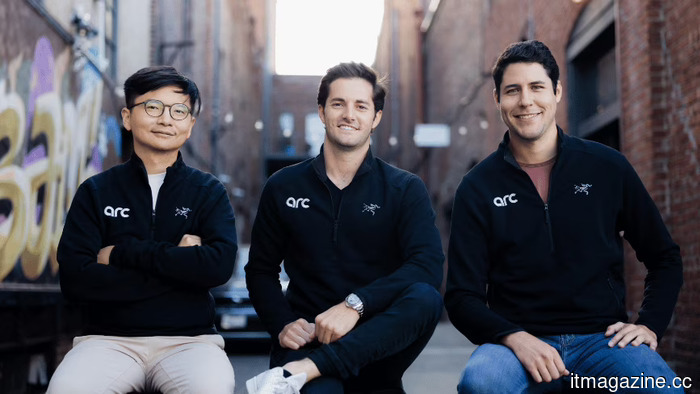 Axos acquires the AI fintech company Arc Technologies.
Axos Financial has reached an agreement to purchase Arc Technologies, an AI-driven fintech that serves technology startups, in order to combine contemporary software with an actual banking charter.
Axos acquires the AI fintech company Arc Technologies.
Axos Financial has reached an agreement to purchase Arc Technologies, an AI-driven fintech that serves technology startups, in order to combine contemporary software with an actual banking charter.
 More than 100 autonomous ATVs made in the US have been engaged in combat in Ukraine for nine months.
Forterra's Lancer vehicles have accomplished 1,100 missions and carried out 52 casualty evacuations in Ukraine. Soldiers continue to operate them remotely, as autonomous systems cannot respond to threats.
More than 100 autonomous ATVs made in the US have been engaged in combat in Ukraine for nine months.
Forterra's Lancer vehicles have accomplished 1,100 missions and carried out 52 casualty evacuations in Ukraine. Soldiers continue to operate them remotely, as autonomous systems cannot respond to threats.
Quaise secures $134 million to explore ultra-high-temperature geothermal drilling.
The geothermal startup Quaise Energy has secured a $134 million first close of its Series B funding round, with Prelude Ventures at the helm, to drill superhot rock using millimetre-wave beams.