
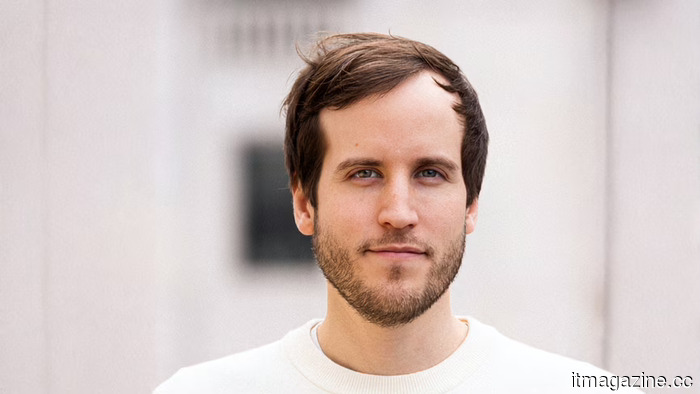
Former Tesla Optimus scientist establishes UMA to create a humanoid robot in Europe.
A former Tesla scientist, who played a key role in developing the intelligence for Elon Musk's Optimus robot, aims to recreate this success in Paris with a focus on the European market. Rémi Cadene, the CEO and co-founder of the startup UMA, has introduced plans for a lightweight, AI-powered humanoid named Northstar, as reported by Bloomberg.
This machine is being designed for use in manufacturing plants, logistics warehouses, and eventually in residences. Cadene informed Bloomberg that UMA is currently in discussions with around 50 potential clients regarding possible applications, emphasizing that Europe will be prioritized before expanding into the United States or Asia. This is significant as Europe has been working to demonstrate its capability to compete in the humanoid race, rather than letting American and Chinese companies dominate.
Cadene is not the only former Tesla employee venturing out on his own; others have left to develop advanced robotic systems and dexterous hands. His impressive background is arguably one of UMA's strongest assets. He worked at Tesla for about three years, from 2021 to 2024, contributing to the AI behind Autopilot and creating the initial neural networks for Optimus, and then joined Hugging Face to lead LeRobot, an open-source robot learning toolkit with global significance.
He has assembled a similarly qualified founding team, which includes chief science officer Pierre Sermanet from Google DeepMind and NYU, chief technology officer Simon Alibert, a co-founder of LeRobot, and chief robot officer Robert Knight, the designer of the popular open-source SO-100 arm.
UMA, which stands for Universal Mechanical Assistant, emerged from stealth mode in December 2025 and has an impressive lineup of investors, including Greycroft, Red River West, Kima Ventures, and Factorial, with advisors like Yann LeCun, Meta’s chief AI scientist and Turing Award recipient, alongside Hugging Face co-founder Thomas Wolf.
The financial details are less straightforward; before the public launch, it was reported that Cadene was seeking approximately $40 million in seed funding, but UMA has not confirmed the final amount or details of any closed funding rounds.
What UMA has clearly communicated is the design of its product. Their launch materials outline a mobile industrial robot with dual arms for warehouses and assembly lines, as well as a more compact humanoid intended for environments like hospitals, laboratories, and homes.
The company plans to conduct several pilot programs in logistics, manufacturing, and healthcare throughout 2026, positioning Northstar as a machine capable of perceiving, moving, and manipulating objects in actual chaotic environments, rather than merely in rehearsed demonstrations.
The strategy is built on Europe’s strong industrial foundation and pressing labor shortages, from high turnover in warehouses to healthcare systems needing millions of workers. These challenges are where humanoid robots for both home and factory settings are being most aggressively marketed.
The market is highly competitive and well-funded, with European companies like Germany’s Neura Robotics and Stuttgart-based Sereact securing substantial investments recently, while American firms like Figure and 1X continue to achieve significant deployment milestones and high valuations.
UMA believes that a European team with open-source origins can advance software development more rapidly than hardware improvements, and that regional customers might prefer robots produced closer to home. The pivotal question remains whether UMA can transition this talented group of researchers into a viable product, a challenge that all humanoid startups face while investing heavily in the potential of physical AI. As it stands, Cadene has established a brand, assembled a team, identified a target market, and developed a robot that must now validate its capabilities.
Other articles
 South Korea's legislation against 'fake news' is now in effect.
South Korea now permits courts to impose penalties of up to five times the documented losses on media outlets and large social media accounts for disseminating false information. Journalists express concerns about the potential chilling effect.
South Korea's legislation against 'fake news' is now in effect.
South Korea now permits courts to impose penalties of up to five times the documented losses on media outlets and large social media accounts for disseminating false information. Journalists express concerns about the potential chilling effect.
 Somalia supports India's opposition to the change in WhatsApp's username policy.
Somalia has aligned with India in opposing WhatsApp's username feature, contending that using handles instead of phone numbers could compromise traceability.
Somalia supports India's opposition to the change in WhatsApp's username policy.
Somalia has aligned with India in opposing WhatsApp's username feature, contending that using handles instead of phone numbers could compromise traceability.
 Top AI requirements management software: 8 tools paving the way in 2026
An evaluation of eight AI-driven requirements management platforms for 2026, featuring aspects such as NLP-driven quality analysis, automated test creation, and real-time traceability scoring, including Jama Connect, IBM DOORS Next, Codebeamer, Polarion, and others.
Top AI requirements management software: 8 tools paving the way in 2026
An evaluation of eight AI-driven requirements management platforms for 2026, featuring aspects such as NLP-driven quality analysis, automated test creation, and real-time traceability scoring, including Jama Connect, IBM DOORS Next, Codebeamer, Polarion, and others.
 X aims to maintain its video edits internally, beginning with captions and personalized backgrounds.
X has launched an updated Video Editor and Recorder for iOS, featuring multilingual captions and a green screen tool, allowing creators to edit their videos directly within the app.
X aims to maintain its video edits internally, beginning with captions and personalized backgrounds.
X has launched an updated Video Editor and Recorder for iOS, featuring multilingual captions and a green screen tool, allowing creators to edit their videos directly within the app.
 Carely's innovative wearables monitor elderly parents so you don't have to.
A wearable device without a screen, known as Carely, monitors vital signs and daily habits to notify families before a health concern escalates into an emergency.
Carely's innovative wearables monitor elderly parents so you don't have to.
A wearable device without a screen, known as Carely, monitors vital signs and daily habits to notify families before a health concern escalates into an emergency.
 Karina Portugal: discovering how to pose the correct question
How an advertising executive, who previously participated in Cannes Lions, emerged as a global authority on digital trust, fraud prevention, and identity for agentic AI, marketing to banks across four continents.
Karina Portugal: discovering how to pose the correct question
How an advertising executive, who previously participated in Cannes Lions, emerged as a global authority on digital trust, fraud prevention, and identity for agentic AI, marketing to banks across four continents.
Former Tesla Optimus scientist establishes UMA to create a humanoid robot in Europe.
Rémi Cadene, a former Tesla Optimus scientist, has introduced UMA’s Northstar, a lightweight humanoid robot developed in Paris, with a focus on the European market initially.