
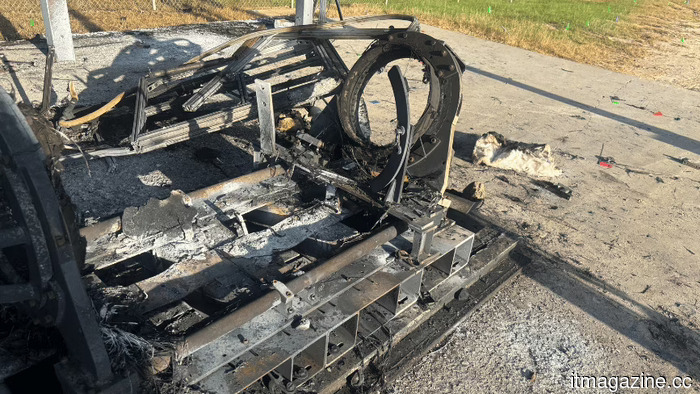
Anduril rocket engine detonates at testing location in Mississippi.
Anduril has emerged as a leading example of a rapid, software-oriented defense contractor. Last Friday, a rocket motor exploded on a test stand at its facility in Mississippi. This incident, while minor, sends a significant message regarding the challenges of missile development.
A solid rocket motor detonated during a test at Anduril’s McHenry, Mississippi factory, as confirmed by the company, but only after WIRED inquired about it, making the incident known. Fortunately, there were no injuries, and the safety mechanisms functioned correctly, with most damage being confined to the test stand itself.
Chief Operating Officer Matt Grimm opted for transparency. In a post on X featuring images of the damaged equipment, he described the explosion as a normal occurrence. He suggested that every test failure provides valuable data, strengthening subsequent designs. Grimm noted that Anduril would resume testing rockets within weeks and that the production facility remains on schedule.
A rare explosion
Not everyone views it as a normal situation. Three individuals with knowledge of the operations told WIRED that they could not recall another test concluding with an explosion in recent years, and no one knew the cause, creating uncertainty reminiscent of Blue Origin’s New Glenn failure. The incident has also interrupted a profitable phase for Anduril’s rocket division, as rebuilding the rig may take up to two months, which exceeds Grimm’s timeline.
This revenue is crucial. Before shifting to mass production of motors, Anduril generates income by manufacturing and testing prototype motors for clients such as the US Navy, a venture that reportedly earned tens of millions of dollars last year. With the test stand currently inactive, some of that revenue is now paused.
The scheduling disagreement
Grimm stated that the facility is on schedule. However, sources from WIRED express a differing viewpoint. Anduril initially aimed to begin mass production of rocket motors by July 1, 2025, yet four individuals indicated that this goal has not been achieved a year later. The company entered the industry in 2023 by acquiring a startup named Adranos, which developed the McHenry site, a location with a troubled past, including a fire in 2021 that damaged an aluminum wall.
Anduril has faced similar criticisms before and strongly defends itself. Following a WIRED investigation in March that highlighted safety and equipment issues, founder Palmer Luckey dismissed the concerns, labeling them as “whining about… inane stuff.” Chairman Trae Stephens claimed the company was “scaling faster than anyone in this industry” while “addressing problems as they arise.”
The significance of the test-stand explosion
The situation poses national stakes. Solid rocket motors serve as the propulsion for most missiles, and US production is concentrated among a few firms. This bottleneck has resulted in the Pentagon facing munitions shortages, prompting it to support startups like Anduril in resolving the issue. Although one explosion doesn’t alter the overall scenario, it serves as a reminder that rapid development slogans must contend with the realities of physics during testing.
Anduril, last valued at $61 billion and supported by significant investors including Founders Fund, can withstand this setback. The crucial question remains whether the culture suited to drone and cruise missile technology translates effectively to propellant chemistry, an area where errors can lead to explosive outcomes. This scenario is similarly unfolding in Europe, where Stark Defence and its competitors are hurrying to equip the continent. For all parties involved, Grimm’s directive remains applicable: onwards.
Other articles
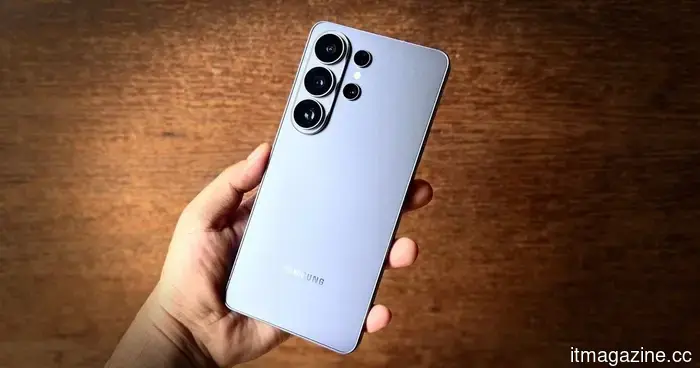 Samsung's Galaxy S27 Pro and Ultra might finally replace that outdated selfie camera.
Samsung's Galaxy S27 Pro and Ultra could replace the aging 12MP front camera with a more detailed 16MP sensor, along with enhanced telephoto and ultra-wide lenses.
Samsung's Galaxy S27 Pro and Ultra might finally replace that outdated selfie camera.
Samsung's Galaxy S27 Pro and Ultra could replace the aging 12MP front camera with a more detailed 16MP sensor, along with enhanced telephoto and ultra-wide lenses.
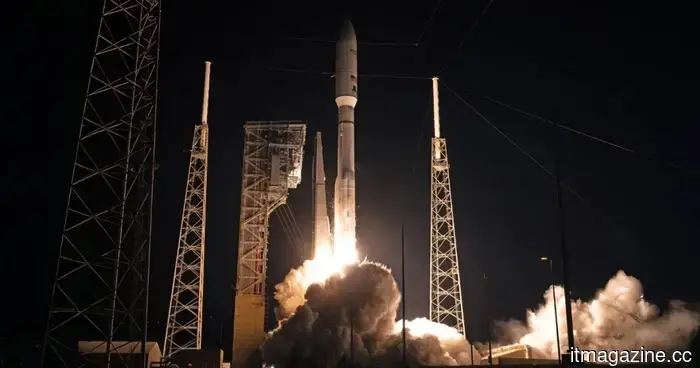 Amazon's competitor to Starlink is expected to debut its satellite internet service later this year.
Amazon intends to roll out its first Leo satellite internet service later this year after deploying nearly 400 satellites into orbit, presenting a greater challenge to SpaceX's Starlink.
Amazon's competitor to Starlink is expected to debut its satellite internet service later this year.
Amazon intends to roll out its first Leo satellite internet service later this year after deploying nearly 400 satellites into orbit, presenting a greater challenge to SpaceX's Starlink.
 Crusoe is said to be in discussions to secure $3 billion, which would triple its valuation.
According to Bloomberg, AI infrastructure firm Crusoe is in discussions to secure approximately $3 billion in funding, which could elevate its valuation to around $30 billion.
Crusoe is said to be in discussions to secure $3 billion, which would triple its valuation.
According to Bloomberg, AI infrastructure firm Crusoe is in discussions to secure approximately $3 billion in funding, which could elevate its valuation to around $30 billion.
 Brave's latest Container feature is a game-changer for those managing several accounts.
Brave now allows desktop users to open tabs in different Containers, enabling them to use multiple accounts of the same website simultaneously.
Brave's latest Container feature is a game-changer for those managing several accounts.
Brave now allows desktop users to open tabs in different Containers, enabling them to use multiple accounts of the same website simultaneously.
 Meta has just introduced a vibe-coding application for games, named Pocket.
Meta has discreetly introduced Pocket, a new app powered by AI that enables users to create, play, and share mini-games just by describing them in straightforward English.
Meta has just introduced a vibe-coding application for games, named Pocket.
Meta has discreetly introduced Pocket, a new app powered by AI that enables users to create, play, and share mini-games just by describing them in straightforward English.
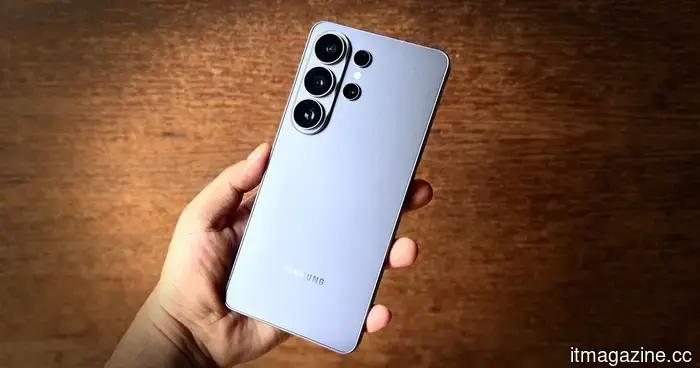 Samsung's Galaxy S27 Pro and Ultra may finally replace that outdated selfie camera.
The Galaxy S27 Pro and Ultra from Samsung might replace the outdated 12MP selfie camera with a clearer 16MP sensor, along with enhanced telephoto and ultra-wide lenses.
Samsung's Galaxy S27 Pro and Ultra may finally replace that outdated selfie camera.
The Galaxy S27 Pro and Ultra from Samsung might replace the outdated 12MP selfie camera with a clearer 16MP sensor, along with enhanced telephoto and ultra-wide lenses.
Anduril rocket engine detonates at testing location in Mississippi.
A solid rocket motor detonated at Anduril's testing facility in Mississippi. The $61 billion defense startup refers to it as a regular occurrence, but sources suggest that the timeline is falling behind.