
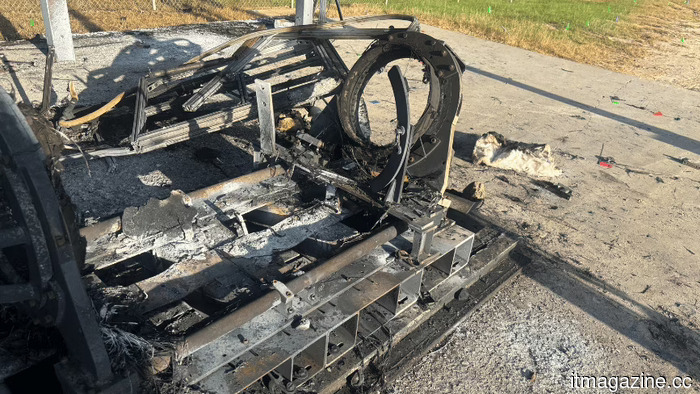
Anduril rocket engine detonates at testing facility in Mississippi.
Anduril has emerged as a leading example of a fast-paced, software-focused defense contractor. Last Friday, a rocket motor exploded during testing at a facility in Mississippi. While the incident represents a minor setback, it conveys a significant message regarding the complexities of missile development.
The company confirmed that a solid rocket motor detonated during a test at Anduril’s McHenry, Mississippi factory, following inquiries from WIRED, which first reported the event. Fortunately, there were no injuries, as safety systems functioned properly, and most of the destruction was confined to the test stand.
Chief Operating Officer Matt Grimm opted for transparency, sharing images of the damaged equipment on X. He characterized the explosion as a normal occurrence, asserting that each test failure provides valuable data for enhancing future designs. He stated that Anduril would resume rocket test firings within a few weeks, and that the production facility remained on schedule.
However, not everyone considers such incidents routine. Three insiders informed WIRED that they couldn't recall another test ending in an explosion in recent years, and none could determine the cause, reflecting uncertainties similar to those surrounding Blue Origin’s New Glenn failure. The explosion also interrupted a revenue-generating process for Anduril’s rocket division. Rebuilding the test rig could take up to two months, according to one source, which exceeds Grimm's timeframe.
This revenue is crucial, as Anduril currently generates income by designing and testing prototype motors for clients like the US Navy before mass production can commence. One individual noted that this work contributed tens of millions of dollars last year, but with the test stand out of commission, some of that revenue is now on hold.
Regarding the timeline, Grimm insisted that the plant remains on track, but WIRED’s sources provided a different perspective. Anduril aimed to begin mass production of rocket motors by July 1, 2025, but four individuals indicated that this has not yet occurred. The company entered the sector in 2023 after acquiring a startup named Adranos, which developed the McHenry facility, a site with a troubled past, including a fire in 2021 that melted an aluminum wall.
Anduril has faced scrutiny previously and has pushed back against criticisms. After a WIRED investigation in March revealed safety and equipment issues, founder Palmer Luckey dismissed some of the concerns as mere “whining about … trivial matters.” Chairman Trae Stephens stated the company was “scaling faster than anyone in this industry” and actively addressing problems as they arise.
The implications of the test-stand explosion are significant on a national level. Solid rocket motors are integral to most missiles, and with only a few companies producing them in the US, this bottleneck has resulted in the Pentagon facing a shortage of munitions, prompting it to fund startups like Anduril to resolve the issue. While one explosion doesn’t alter the overall situation, it serves as a reminder that rapid development often encounters challenges grounded in the laws of physics during testing.
Anduril, valued recently at $61 billion and supported by investors like Founders Fund, can withstand this setback. The essential question remains whether the company's approach to drones and cruise missiles can be effectively applied to the complexities of propellant chemistry, where errors can lead to catastrophic consequences. A similar dynamic is occurring in Europe, where Stark Defence and its competitors are racing to enhance the continent's armament. For all of these companies, Grimm's directive is clear: onward.
Other articles
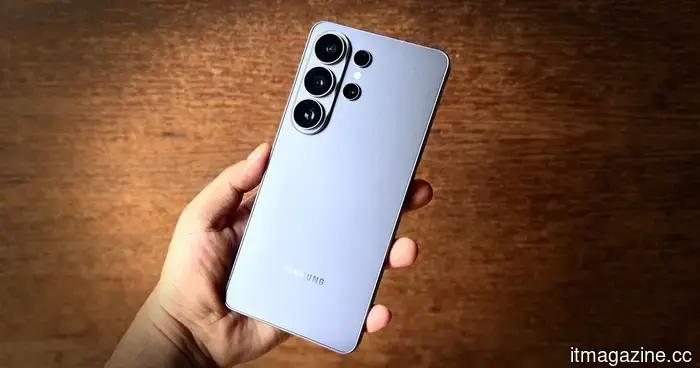 Samsung's Galaxy S27 Pro and Ultra may finally replace that outdated selfie camera.
The Galaxy S27 Pro and Ultra from Samsung might replace the outdated 12MP selfie camera with a clearer 16MP sensor, along with enhanced telephoto and ultra-wide lenses.
Samsung's Galaxy S27 Pro and Ultra may finally replace that outdated selfie camera.
The Galaxy S27 Pro and Ultra from Samsung might replace the outdated 12MP selfie camera with a clearer 16MP sensor, along with enhanced telephoto and ultra-wide lenses.
 Brave's latest Container feature is a game-changer for those managing several accounts.
Brave now allows desktop users to open tabs in different Containers, enabling them to use multiple accounts of the same website simultaneously.
Brave's latest Container feature is a game-changer for those managing several accounts.
Brave now allows desktop users to open tabs in different Containers, enabling them to use multiple accounts of the same website simultaneously.
 Meta has just introduced a vibe-coding application for games, named Pocket.
Meta has discreetly introduced Pocket, a new app powered by AI that enables users to create, play, and share mini-games just by describing them in straightforward English.
Meta has just introduced a vibe-coding application for games, named Pocket.
Meta has discreetly introduced Pocket, a new app powered by AI that enables users to create, play, and share mini-games just by describing them in straightforward English.
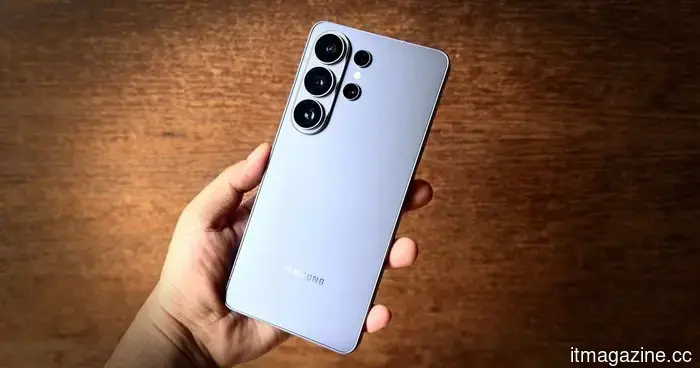 Samsung's Galaxy S27 Pro and Ultra may finally replace the outdated selfie camera.
Samsung's Galaxy S27 Pro and Ultra could replace the outdated 12MP selfie camera with a higher resolution 16MP sensor, along with enhanced telephoto and ultra-wide lenses.
Samsung's Galaxy S27 Pro and Ultra may finally replace the outdated selfie camera.
Samsung's Galaxy S27 Pro and Ultra could replace the outdated 12MP selfie camera with a higher resolution 16MP sensor, along with enhanced telephoto and ultra-wide lenses.
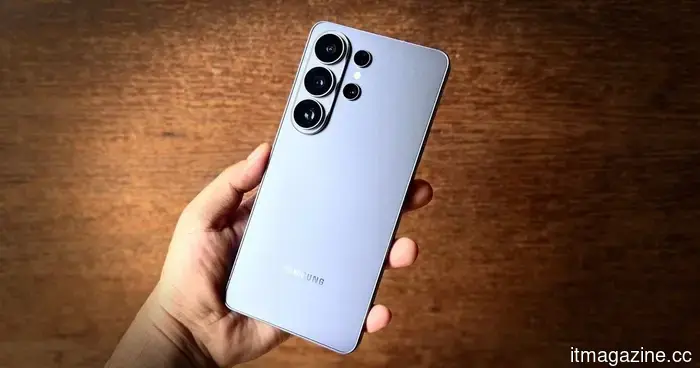 Samsung's Galaxy S27 Pro and Ultra might finally replace that outdated selfie camera.
Samsung's Galaxy S27 Pro and Ultra could replace the aging 12MP front camera with a more detailed 16MP sensor, along with enhanced telephoto and ultra-wide lenses.
Samsung's Galaxy S27 Pro and Ultra might finally replace that outdated selfie camera.
Samsung's Galaxy S27 Pro and Ultra could replace the aging 12MP front camera with a more detailed 16MP sensor, along with enhanced telephoto and ultra-wide lenses.
 Valve has just released the blueprint for its most impressive Steam Machine modification.
Valve has released the Inkterface E-Ink faceplate for the Steam Machine as open source, providing 3D files, a bill of materials (BOM), and firmware, enabling anyone to create their own.
Valve has just released the blueprint for its most impressive Steam Machine modification.
Valve has released the Inkterface E-Ink faceplate for the Steam Machine as open source, providing 3D files, a bill of materials (BOM), and firmware, enabling anyone to create their own.
Anduril rocket engine detonates at testing facility in Mississippi.
A solid rocket motor detonated at Anduril's testing facility in Mississippi. The $61 billion defense startup refers to it as a standard occurrence, but sources suggest that the timeline is slipping.