
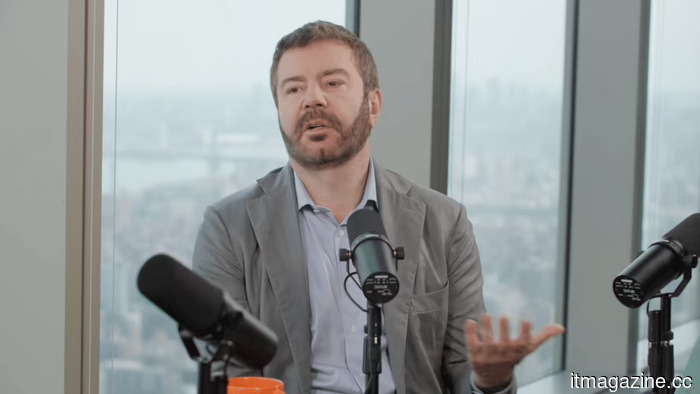
Daniel Dines of UiPath discusses AI, employment, and feelings of anxiety.
Few individuals have contributed more to office automation than Daniel Dines. Therefore, it is noteworthy that the UiPath founder's stance on AI and employment is a call for patience, accompanied by an admission that he shares in the anxiety surrounding it.
Dines transformed UiPath into one of Europe’s leading software success stories by offering robots that handle the repetitive aspects of office work. The company has since aggressively expanded into AI agents, most recently acquiring the compliance automation company WorkFusion. Yet, during an episode of the company’s podcast, The Path Forward, Dines largely focused on cautioning against the very actions his technologies facilitate: hasty staff reductions.
“Everyone experiences some level of anxiety, myself included,” he remarked while talking with his UiPath colleague, Andrada Morar. “We’re uncertain about what our children’s careers will look like.” To address this unease, he often reiterates that in times of anxiety, action is the solution.
No Einstein in the data center
Dines expresses impatience with the current hype surrounding AI. Some industry insiders refer to “50 million Einsteins in the data center,” but he contends that this perspective is only partially accurate. A model, he argues, merely reflects an average of all the information it has processed. “An average, by definition, lacks taste.”
He has personally tested this notion by asking models to produce fiction in specific styles, with the results being uninspired. According to him, taste is derived from real-life experience rather than from memory. To illustrate, he uses skiing as an example: one could memorize every book written about the sport, but that would not make them a skilled skier; actual experience on the slopes is necessary.
This distinction is significant within a company. Every business operates using the same limited number of advanced models with identical parameters. Providing them with different data does not enhance their understanding of your customers or processes. “Our memory is not our identity,” he asserted.
Two ledgers, not one
Dines delivers a straightforward message to executives: do not evaluate a job based solely on its visible outcomes. Take a lawyer who reviews contracts as an example; while the apparent result is a signed agreement that AI can expedite, the less obvious outcomes are more complex. That same lawyer might provide mentorship, maintain client relationships, or possess years of undocumented knowledge.
Dines advocates for organizations to maintain two ledgers: one for visible outcomes and another for hidden ones. He warns that making cuts without careful consideration can result in the loss of unquantifiable value. This warning carries weight coming from someone involved in automation, especially against the backdrop of real job reductions. For instance, the automotive industry has eliminated over 20,000 white-collar positions, and an increasing number of leaders are now positioning AI as a means to achieve more with fewer staff—a marked contrast to the situation two years ago.
He also emphasizes that the transition is occurring at a slower pace than the prevailing hype suggests. Agents cannot seamlessly integrate into chaotic processes; many organizations have never documented who is authorized to approve or pay invoices. Such knowledge resides within individuals and spans various departments, and documenting this will take years, not just a weekend.
The identity problem
The core concern expressed in the conversation centers not on tasks but on identity. Dines connects his interest in this issue to a conversation with a lawyer friend who shared that her apprehension was not about her job disappearing, but rather about her identity becoming insignificant. Many individuals construct their self-worth around their professional roles. He describes safeguarding that sense of identity as a collective human concern and highlights the potential human costs that enterprises risk overlooking.
Dines remains skeptical that AI will develop a sense of self. For him, it is merely a tool—more akin to electricity than a colleague. He references a concept from a 1970s American philosopher that resonates with Harry Frankfurt, distinguishing between two orders of will.
A model can desire something, but only a person can aspire to want something or strive for improvement. Pursuing a machine capable of genuine reasoning, he argues, would entail introducing pain and could lead to the creation of a Frankenstein-like entity that no one understands.
Curiosity over credentials
Morar picked up on the human aspect of the discussion. She noted that while models possess memory, they lack the drive to excel. AI can provide knowledge but cannot instill curiosity or the determination to persevere when challenges arise. She seeks those qualities in her own team and emphasizes that organizations must continue to hire and mentor junior employees.
Neglecting this will result in a shortage of senior leaders in a few years.
There is also a customer perspective to consider. As customer support increasingly shifts to automated systems, people find themselves tapping their phones in search of human assistance. This friction, she argues, is indicative of the unique contributions that only humans can make.
This perspective, however, is not entirely unbiased. UiPath markets the agents and robots that enable these workforce reductions. Advocating for a transformation that
Other articles
 I dislike sharing my Mac, but a face-recognition app has ultimately alleviated my privacy concerns.
A newly released free and open-source Mac application named FaceGate allows users to secure individual apps with Face Unlock, Touch ID, or a password, with all processing done locally on the device.
I dislike sharing my Mac, but a face-recognition app has ultimately alleviated my privacy concerns.
A newly released free and open-source Mac application named FaceGate allows users to secure individual apps with Face Unlock, Touch ID, or a password, with all processing done locally on the device.
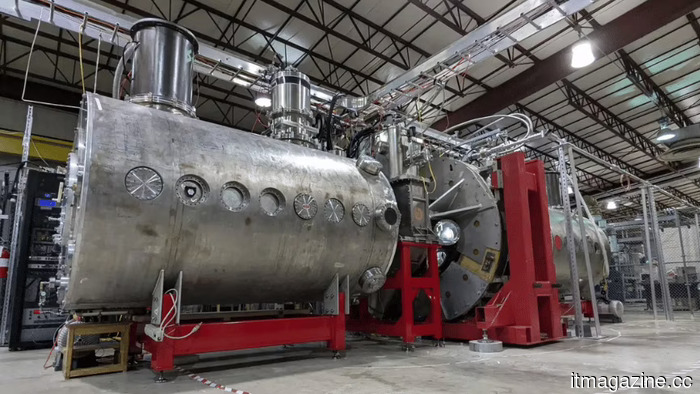 Realta Fusion drives a bulb directly from its reactor.
Realta Fusion claims to be the first commercial fusion company to generate electricity directly from its device. This is a proof of concept but has not yet achieved net power.
Realta Fusion drives a bulb directly from its reactor.
Realta Fusion claims to be the first commercial fusion company to generate electricity directly from its device. This is a proof of concept but has not yet achieved net power.
 Queue secures $12.6 million for its autonomous robotic pharmacy.
Queue has come out of stealth mode, securing a $12.6 million seed round led by AlleyCorp and introducing what it claims to be the world's first fully autonomous robotic pharmacy.
Queue secures $12.6 million for its autonomous robotic pharmacy.
Queue has come out of stealth mode, securing a $12.6 million seed round led by AlleyCorp and introducing what it claims to be the world's first fully autonomous robotic pharmacy.
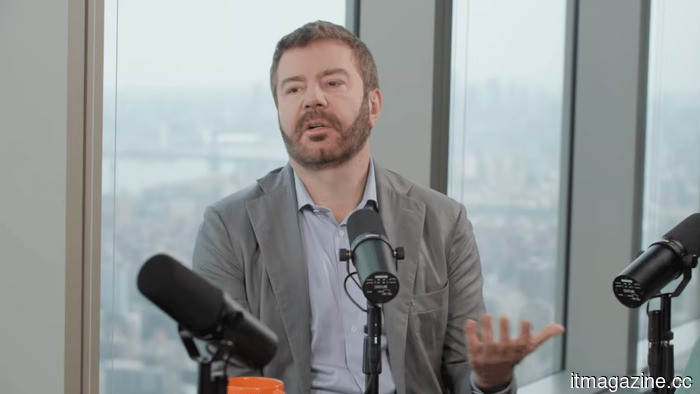 Daniel Dines from UiPath discusses AI, employment, and anxiety.
Daniel Dines from UiPath asserts that AI lacks taste, that agents are unable to quickly rectify disorganized processes, and that leaders who indiscriminately reduce staff are undermining value that they have never assessed.
Daniel Dines from UiPath discusses AI, employment, and anxiety.
Daniel Dines from UiPath asserts that AI lacks taste, that agents are unable to quickly rectify disorganized processes, and that leaders who indiscriminately reduce staff are undermining value that they have never assessed.
 Europe's cryptocurrency reformation is in progress as Venga becomes part of the initial group of firms approved under MiCA.
MiCA has reduced the number of registered crypto firms in Europe from 3,000 to only 244 authorized providers. Venga, based in Barcelona, meets the requirements, even as Binance scales back its EU services before the deadline.
Europe's cryptocurrency reformation is in progress as Venga becomes part of the initial group of firms approved under MiCA.
MiCA has reduced the number of registered crypto firms in Europe from 3,000 to only 244 authorized providers. Venga, based in Barcelona, meets the requirements, even as Binance scales back its EU services before the deadline.
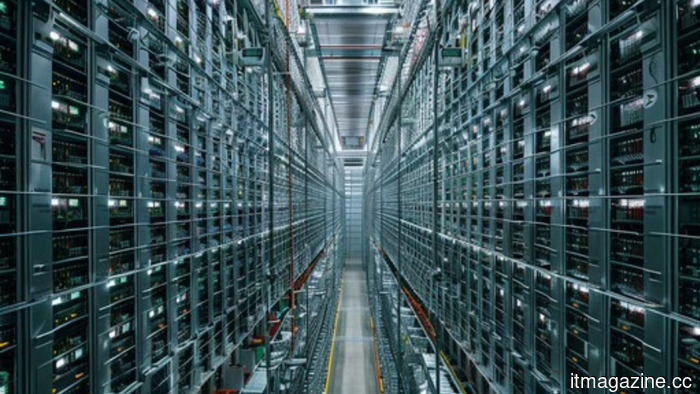 Constructing AI Infrastructure Ethically: ER Steel on the Changing Requirements of Data Center Growth
By 2030, almost 100 gigawatts of additional data center capacity could be available. ER Steel contends that the primary hurdles are not related to computing power but rather to the coordination of construction, access to the grid, and long-term operational strategies.
Constructing AI Infrastructure Ethically: ER Steel on the Changing Requirements of Data Center Growth
By 2030, almost 100 gigawatts of additional data center capacity could be available. ER Steel contends that the primary hurdles are not related to computing power but rather to the coordination of construction, access to the grid, and long-term operational strategies.
Daniel Dines of UiPath discusses AI, employment, and feelings of anxiety.
Daniel Dines from UiPath asserts that AI lacks discernment, that agents are unable to quickly rectify disorganized processes, and that leaders who indiscriminately reduce their workforce undermine value that they have never assessed.