
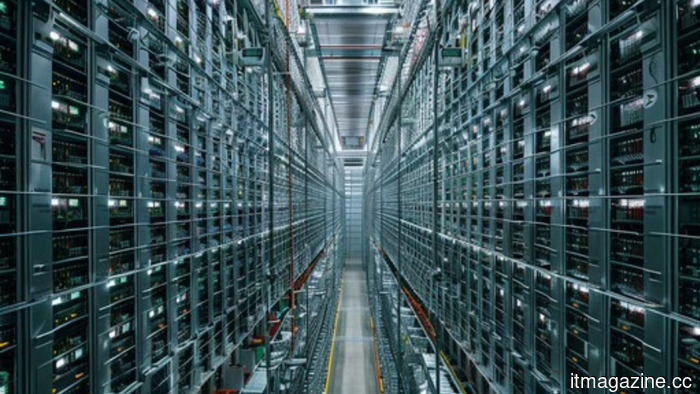
Constructing AI Infrastructure Ethically: ER Steel on the Changing Requirements of Data Center Growth
**TL;DR** As AI-driven demand for data centers is set to double global capacity by 2030, ER Steel argues that creating responsible infrastructure relies on coordinated construction management, modular fabrication, energy diversification, and environmental responsibility rather than just speed.
The swift growth of AI infrastructure has ushered data centers into a transformative stage of global progress, focusing more on computing power, digital capabilities, and rapid deployment. ER Steel notes that alongside this growth, there is an increasing conversation about the importance of building and powering these facilities in a responsible and efficient manner while ensuring long-term operational durability. As a prominent manufacturer of structural steel and building systems, ER Steel sees this moment as a chance to reconsider how large infrastructure projects are coordinated from design to completion.
The need for AI-related infrastructure is escalating as cloud computing, machine learning, and digital services proliferate across various sectors. A global data center market outlook suggests that nearly 100 gigawatts of new data center capacity could be added between 2026 and 2030, effectively doubling the global capacity in that timeframe. The report also points out that by 2030, AI workloads might constitute half of all data center operations, leading to persistent demand for new facilities and regional expansions.
Scott Dunlop, President of ER Steel, observes that the rapid growth has shifted conversations about construction capacity, access to utilities, and infrastructure readiness to the forefront of planning discussions. He believes the challenge extends beyond merely constructing buildings swiftly. “While discussions around AI infrastructure often start with computing demand, the core complexity lies in power access, construction coordination, and long-term operational strategies. These elements are crucial for ensuring a project's responsible and efficient performance years after it’s been launched,” he states.
ER Steel points out that these complexities are evident across various key data center markets, where strong investor interest is increasingly tempered by delays in interconnection, changing permitting timelines, and fragmented supply chains impacting project delivery. The company highlights that these challenges are intensifying, as wait times for grid connections in key markets are now exceeding four years, prompting developers to consider alternative energy solutions, battery storage integration, and modular deployment methods to sustain progress.
The cumulative impact of these constraints has also led to rising construction expenses, with global data center building costs increasing from $7.7 million to $10.7 million per megawatt from 2020 to 2025. As facilities grow in size and complexity, project teams are increasingly focusing on predictability in procurement, fabrication, logistics, and installation.
ER Steel’s operational model prioritizes coordination. By integrating engineering, fabrication, logistics, and project oversight into a cohesive management structure, the company aims to minimize communication gaps commonly found when multiple contractors operate independently on significant infrastructure builds. This integrated approach enables project teams to align fabrication and site delivery with installation timelines, ensuring a smooth transition through each phase of execution.
Lloyd Kamlade, COO of ER Steel, believes that consistency across various disciplines leads to better outcomes over the lifespan of a project. “Infrastructure projects consist of thousands of interconnected components, and each decision impacts another aspect of the build,” he explains. “When engineering, fabrication, logistics, and field coordination operate under the same framework, teams achieve clearer insights into timelines, sequencing, and site conditions before issues escalate.”
This visibility, ER Steel contends, is crucial in the current scenario. An analysis of the global economic ramifications of the AI infrastructure surge indicated that increased data center construction has led to greater demand for essential materials, industrial equipment, and semiconductor-related inputs. The report also noted that investment in AI has played a significant role in the growth of merchandise trade in early 2025, underscoring the magnitude and worldwide implications of the current infrastructure expansion.
As projects accelerate, ER Steel has noticed industry discussions have shifted towards how facilities are constructed, rather than just how quickly they can be finished. Dunlop emphasizes that long-term infrastructure planning necessitates balancing urgency with disciplined execution. “There’s immense pressure to shorten timelines,” he says. “However, the success of projects hinges on creating efficiencies through planning, coordination, and design integration, allowing teams to progress through the construction phase smoothly.”
This philosophy has shaped ER Steel’s approach to modular construction and integrated fabrication systems. By producing key structural components in controlled settings before transporting them to the site, modular methods enhance speed to market, improve quality, and result in more efficient installation timelines, enabling project teams to manage quality assurance earlier in the process. Such systems also provide flexibility for future growth as computing needs evolve.
In addition to these technical factors, ER Steel emphasizes that environmental stewardship increasingly influences infrastructure planning decisions. Data centers necessitate extensive cooling systems and water management strategies, particularly in areas already facing resource limitations. The company advocates for thoughtful design coordination to ensure facilities function harmoniously with surrounding communities and infrastructure systems.
“We aim for our projects to make a positive contribution to the areas they serve,” Kamlade states. “Responsible infrastructure planning involves understanding water systems, energy consumption, long-term
Other articles
 Dominion Dynamics secures CA$139 million for Arctic defense technology.
Ottawa's Dominion Dynamics has secured CA$139 million, marking the largest Series A funding round in the history of Canadian defence, aimed at developing autonomous drones and Arctic command software.
Dominion Dynamics secures CA$139 million for Arctic defense technology.
Ottawa's Dominion Dynamics has secured CA$139 million, marking the largest Series A funding round in the history of Canadian defence, aimed at developing autonomous drones and Arctic command software.
 Dominion Dynamics secures CA$139 million for Arctic defense technology.
Ottawa's Dominion Dynamics has secured CA$139 million, marking the largest Series A funding round in Canadian defense history, aimed at developing autonomous drones and software for Arctic command.
Dominion Dynamics secures CA$139 million for Arctic defense technology.
Ottawa's Dominion Dynamics has secured CA$139 million, marking the largest Series A funding round in Canadian defense history, aimed at developing autonomous drones and software for Arctic command.
 China's UBTech introduces unsettlingly realistic companion robots, and indeed, they intend to live with you.
UBTech's latest Uworld U1 humanoid robots are created to coexist with humans, acquiring routines, identifying emotions, and engaging in natural conversations. The company also imagines tailored versions that could mimic an individual's face and voice.
China's UBTech introduces unsettlingly realistic companion robots, and indeed, they intend to live with you.
UBTech's latest Uworld U1 humanoid robots are created to coexist with humans, acquiring routines, identifying emotions, and engaging in natural conversations. The company also imagines tailored versions that could mimic an individual's face and voice.
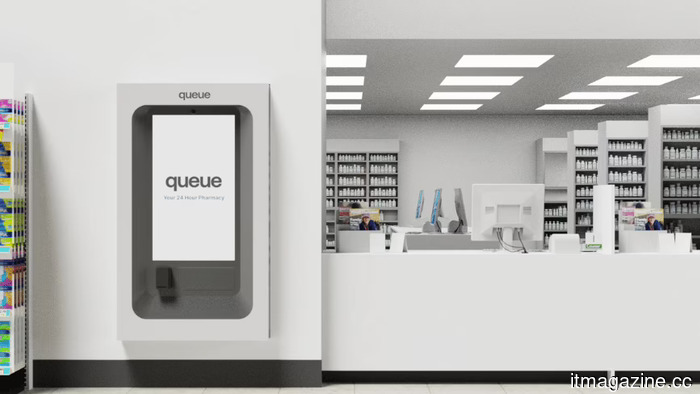 Queue secures $12.6 million for its autonomous robotic pharmacy.
Queue has come out of stealth mode, securing a $12.6 million seed round led by AlleyCorp and introducing what it claims to be the world's first fully autonomous robotic pharmacy.
Queue secures $12.6 million for its autonomous robotic pharmacy.
Queue has come out of stealth mode, securing a $12.6 million seed round led by AlleyCorp and introducing what it claims to be the world's first fully autonomous robotic pharmacy.
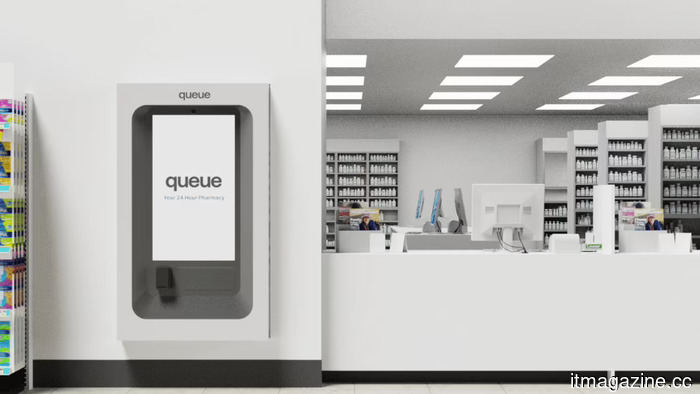 Queue secures $12.6 million for its automated robotic pharmacy.
Queue has come out of stealth mode with a $12.6 million seed round led by AlleyCorp, along with a machine they claim is the world's first fully autonomous robotic pharmacy.
Queue secures $12.6 million for its automated robotic pharmacy.
Queue has come out of stealth mode with a $12.6 million seed round led by AlleyCorp, along with a machine they claim is the world's first fully autonomous robotic pharmacy.
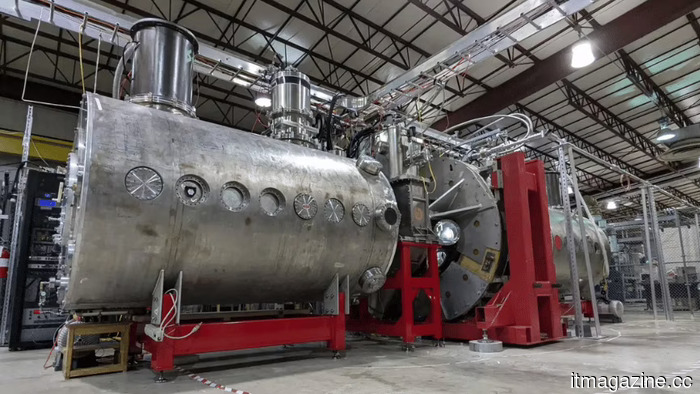 Realta Fusion drives a bulb directly from its reactor.
Realta Fusion claims to be the first commercial fusion company to generate electricity directly from its device. This is a proof of concept but has not yet achieved net power.
Realta Fusion drives a bulb directly from its reactor.
Realta Fusion claims to be the first commercial fusion company to generate electricity directly from its device. This is a proof of concept but has not yet achieved net power.
Constructing AI Infrastructure Ethically: ER Steel on the Changing Requirements of Data Center Growth
By 2030, almost 100 gigawatts of additional data center capacity could be available. ER Steel contends that the primary hurdles are not related to computing power but rather to the coordination of construction, access to the grid, and long-term operational strategies.