
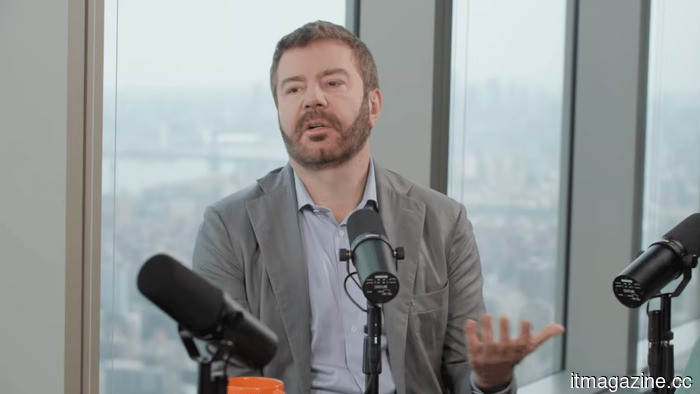
Daniel Dines from UiPath discusses AI, employment, and anxiety.
Daniel Dines has significantly contributed to automating the office environment. It is noteworthy that the founder of UiPath advocates for patience regarding AI's impact on jobs and admits to sharing the prevalent anxiety.
Dines transformed UiPath into one of Europe's leading software success stories by marketing robots that handle repetitive tasks in white-collar jobs. The company has increasingly ventured into AI agents, exemplified by its recent acquisition of the compliance-automation company WorkFusion. However, during a discussion on the company's podcast, The Path Forward, Dines emphasized caution against hastily reducing staff, which is a function enabled by his own tools.
“Everyone experiences some level of anxiety, myself included,” he stated during a conversation with UiPath colleague Andrada Morar. “We’re uncertain about what our children’s careers will look like.” His solution to this anxiety is one he frequently shares: in anxious times, taking action is crucial.
Dines is skeptical about the grand promises associated with current AI advancements. Some industry voices claim there could be "50 million Einsteins in the data centre," but he believes this view is only partially accurate. He argues that a model is merely an aggregation of everything it has consumed, stating, “An average, by definition, lacks taste.”
He tested this notion by asking AI models to generate fiction in a specific style, only to receive bland results. According to him, true taste is derived from personal experience rather than mere recollection. He illustrates this with skiing: one can memorize everything ever written about it, but that doesn't make one an accomplished skier without actual experience on the slopes.
This distinction holds significance within organizations. Every business operates with similar advanced models, using the same parameters. Feeding them different information does not enhance their understanding of individual customers or processes. “Our memory is not our identity,” he remarked.
Dines' advice to managers is straightforward: do not view a job as a single outcome. For instance, in the case of a lawyer reviewing contracts, the tangible result may be a signed agreement, which AI can expedite. However, the subtler results are often overlooked; the same lawyer may also mentor juniors, maintain client relationships, or possess years of unwritten knowledge.
He advocates for companies to maintain two sets of records: one for visible results and another for hidden aspects. He warns that making cuts without consideration can destroy unmeasured value. This message resonates strongly from someone who advocates for automation, especially against the current context of substantial job cuts in various sectors, including over 20,000 white-collar positions in the automotive industry. Many executives are now proposing AI as a means to achieve more with fewer employees—a stark contrast to the situation two years ago.
Dines also perceives the transition to AI as slower than the current excitement suggests. Agents cannot simply integrate into disorganized processes; many companies have not documented who can approve invoices or payments. This information resides in individual minds and across departments, and he believes it will take years to organize, not just a weekend.
The most profound concern raised during the discussion revolves around identity rather than tasks. Dines relates his interest in this issue to a conversation with a lawyer friend who expressed fear not of job loss but of her identity becoming obsolete. Many people derive their sense of self from their work; he sees safeguarding this as a shared human interest and emphasizes the risk of losing the human cost in enterprises.
He is skeptical about AI developing its own self-awareness. To him, it functions as a tool, more akin to electricity than a colleague. He references a concept from a 1970s American philosopher, echoing Harry Frankfurt's arguments, about two levels of will. A model can desire something, but only a person can desire to desire, to seek improvement. Pursuing a machine that genuinely reasons, he warns, would involve introducing pain, potentially resulting in an incomprehensible entity reminiscent of Frankenstein.
Morar continued along the human thread, noting that while models have memory, they lack the drive for excellence. AI can provide information, but it cannot instill curiosity or the resilience needed to navigate challenges. She values these qualities in her team and argues that companies must prioritize hiring and mentoring junior staff to cultivate future leaders.
Furthermore, there's a consumer perspective. As support increasingly shifts to bots, people are often left frustrated and seek human interaction—this friction signals the unique value that only humans can provide.
This perspective isn't impartial, as UiPath sells the agents and robots that facilitate these workforce reductions. Nevertheless, the argument for a careful, human-centric transformation inherently suggests a lengthy and resource-intensive process.
Regardless, this caution from a leader in automation is significant. Governments are already assessing the jobs affected by AI. Dines is optimistic that the remaining roles will prove to be more fulfilling, rather than diminished. The anxiety, including his own, reflects the uncertainty of what lies ahead.
Other articles
 China's UBTech introduces unsettlingly realistic companion robots, and indeed, they intend to live with you.
UBTech's latest Uworld U1 humanoid robots are created to coexist with humans, acquiring routines, identifying emotions, and engaging in natural conversations. The company also imagines tailored versions that could mimic an individual's face and voice.
China's UBTech introduces unsettlingly realistic companion robots, and indeed, they intend to live with you.
UBTech's latest Uworld U1 humanoid robots are created to coexist with humans, acquiring routines, identifying emotions, and engaging in natural conversations. The company also imagines tailored versions that could mimic an individual's face and voice.
 Queue secures $12.6 million for its autonomous robotic pharmacy.
Queue has come out of stealth mode, securing a $12.6 million seed round led by AlleyCorp and introducing what it claims to be the world's first fully autonomous robotic pharmacy.
Queue secures $12.6 million for its autonomous robotic pharmacy.
Queue has come out of stealth mode, securing a $12.6 million seed round led by AlleyCorp and introducing what it claims to be the world's first fully autonomous robotic pharmacy.
 Build secures $8.5 million to automate due diligence in data centers.
Build has secured $8.5 million in funding, led by Index Ventures, for its AI technology that reduces data center and infrastructure due diligence by 95%, offered as a service rather than as software.
Build secures $8.5 million to automate due diligence in data centers.
Build has secured $8.5 million in funding, led by Index Ventures, for its AI technology that reduces data center and infrastructure due diligence by 95%, offered as a service rather than as software.
 Europe's cryptocurrency reformation is in progress as Venga becomes part of the initial group of firms approved under MiCA.
MiCA has reduced the number of registered crypto firms in Europe from 3,000 to only 244 authorized providers. Venga, based in Barcelona, meets the requirements, even as Binance scales back its EU services before the deadline.
Europe's cryptocurrency reformation is in progress as Venga becomes part of the initial group of firms approved under MiCA.
MiCA has reduced the number of registered crypto firms in Europe from 3,000 to only 244 authorized providers. Venga, based in Barcelona, meets the requirements, even as Binance scales back its EU services before the deadline.
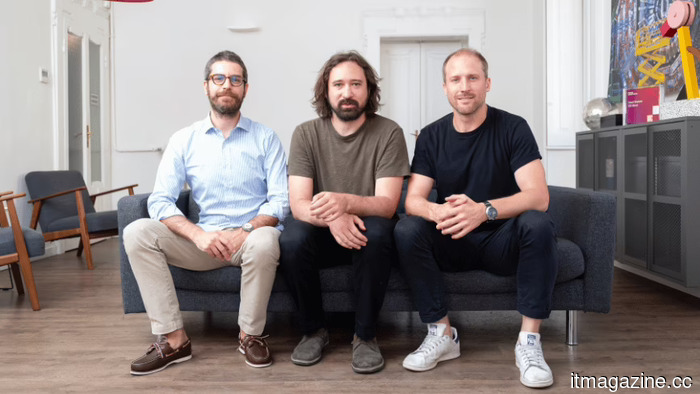 MDOTM secures $27 million for its artificial intelligence wealth management platform.
London's MDOTM has secured $27 million in funding, with Expedition leading the investment, to expand Sphere, its AI platform that currently operates over $100 billion for banks and asset managers.
MDOTM secures $27 million for its artificial intelligence wealth management platform.
London's MDOTM has secured $27 million in funding, with Expedition leading the investment, to expand Sphere, its AI platform that currently operates over $100 billion for banks and asset managers.
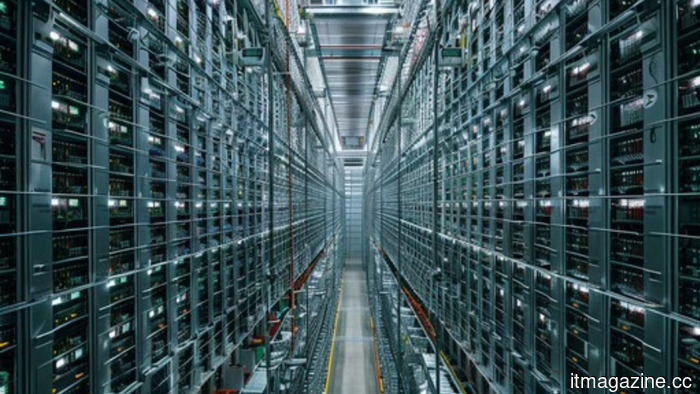 Constructing AI Infrastructure Ethically: ER Steel on the Changing Requirements of Data Center Growth
By 2030, almost 100 gigawatts of additional data center capacity could be available. ER Steel contends that the primary hurdles are not related to computing power but rather to the coordination of construction, access to the grid, and long-term operational strategies.
Constructing AI Infrastructure Ethically: ER Steel on the Changing Requirements of Data Center Growth
By 2030, almost 100 gigawatts of additional data center capacity could be available. ER Steel contends that the primary hurdles are not related to computing power but rather to the coordination of construction, access to the grid, and long-term operational strategies.
Daniel Dines from UiPath discusses AI, employment, and anxiety.
Daniel Dines from UiPath asserts that AI lacks taste, that agents are unable to quickly rectify disorganized processes, and that leaders who indiscriminately reduce staff are undermining value that they have never assessed.