
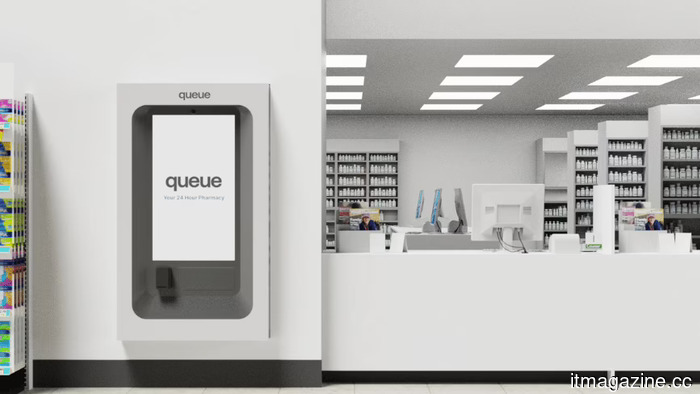
Queue secures $12.6 million for its autonomous robotic pharmacy.
A startup from Silicon Valley claims to have created a pharmacy that operates without a pharmacist present. Sealed bottles are inserted, and filled and checked prescriptions are dispensed in approximately one minute.
The company, Queue, emerged from stealth mode on Tuesday with a functional machine and new funding. It announced it has secured a $12.6 million seed round led by AlleyCorp, following a $6 million pre-seed round from Riot Ventures less than a year ago, which brings the total funds raised to $18.6 million. Ubiquity Ventures and House Capital also participated in this round.
The product is a self-contained unit that Queue describes as the world's first fully autonomous robotic pharmacy. Sealed bottles from wholesalers enter one side, while filled and verified prescription vials exit from the other.
Queue asserts that the entire process requires no human intervention, dispensing as many as 600 pills per minute and stocking 250 different medications. The company claims that the system reduces dispensing costs by 96 percent and provides prescriptions to patients in 60 seconds or less.
Addressing pharmacy shortages
Queue aims to address a genuine issue. The company reports that one-third of US pharmacies have closed, and the remaining ones are overstretching their pharmacists. Many regions now qualify as pharmacy deserts, with the nearest pharmacy located miles away.
The proposal is that a machine can handle the mechanical tasks of counting and bottling pills, thereby allowing pharmacists to focus on their unique roles, such as providing patient counseling and identifying drug interactions.
While automated dispensing is not a new concept—hospitals have utilized pill-picking robots for years, and retail chains have experimented with kiosk pharmacies—Queue's innovation lies in completely removing human involvement and consolidating an entire pharmacy into a single box that can be situated wherever patients are.
The founders have a proven history. Nick Desai has launched six companies and previously managed the house-call service Heal. His co-founder Joshua Liu has experience from Tesla, Waymo, and the delivery-drone company Zipline. The team remains relatively small, with about 20 members.
Capitalizing on the robotics trend
Queue is entering the surge of investment directed toward physical machines. Investors who have spent years focusing on software are now pursuing robots that operate in the physical world. Startups are automating jobs that were once considered secure, from hair braiding to construction, extending into healthcare, where robots now range from companion animals to prescription dispensing.
Y Combinator has even encouraged founders to develop hard tech as software begins to lose its competitive advantage. Much of the talent is transitioning from automotive companies and their autonomous driving divisions, similar to the path taken by former Tesla engineers into robotics.
Regulatory challenges ahead
The claims prompt a significant question. In many states of the US, laws necessitate that a licensed pharmacist provides the final verification before a prescription is handed to a patient. Controlled substances are subject to even stricter federal regulations. A machine that guarantees zero human involvement will need to persuade state pharmacy boards that its verification processes are equivalent to that of a human.
Queue presents the role of the pharmacist as one that is liberated rather than eliminated, which could be a crucial aspect. The robot is responsible for counting, while a pharmacist still officially retains sign-off.
Additionally, there is a distinction between a demonstration and a large-scale implementation. Queue has an operational unit and an ambitious name, but it has yet to demonstrate the system functioning across multiple locations under real prescription loads for extended periods. The funding provides an opportunity to test this theory. The challenge now is whether a robotic solution can effectively replace the community pharmacy.
Other articles
 China's UBTech introduces unsettlingly realistic companion robots, and indeed, they intend to live with you.
UBTech's latest Uworld U1 humanoid robots are created to coexist with humans, acquiring routines, identifying emotions, and engaging in natural conversations. The company also imagines tailored versions that could mimic an individual's face and voice.
China's UBTech introduces unsettlingly realistic companion robots, and indeed, they intend to live with you.
UBTech's latest Uworld U1 humanoid robots are created to coexist with humans, acquiring routines, identifying emotions, and engaging in natural conversations. The company also imagines tailored versions that could mimic an individual's face and voice.
 Amazon's latest Fire Sticks are making sideloading outdated.
The transition to Amazon's Vega OS restricts typical sideloading on the Fire Stick, resulting in a more secure streaming device for users, but limits the availability of external apps, launchers, and customization options.
Amazon's latest Fire Sticks are making sideloading outdated.
The transition to Amazon's Vega OS restricts typical sideloading on the Fire Stick, resulting in a more secure streaming device for users, but limits the availability of external apps, launchers, and customization options.
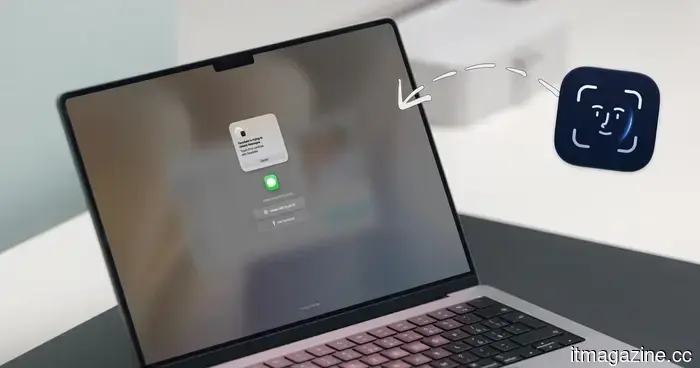 I dislike sharing my Mac, but a face-recognition app has ultimately alleviated my privacy concerns.
A newly released free and open-source Mac application named FaceGate allows users to secure individual apps with Face Unlock, Touch ID, or a password, with all processing done locally on the device.
I dislike sharing my Mac, but a face-recognition app has ultimately alleviated my privacy concerns.
A newly released free and open-source Mac application named FaceGate allows users to secure individual apps with Face Unlock, Touch ID, or a password, with all processing done locally on the device.
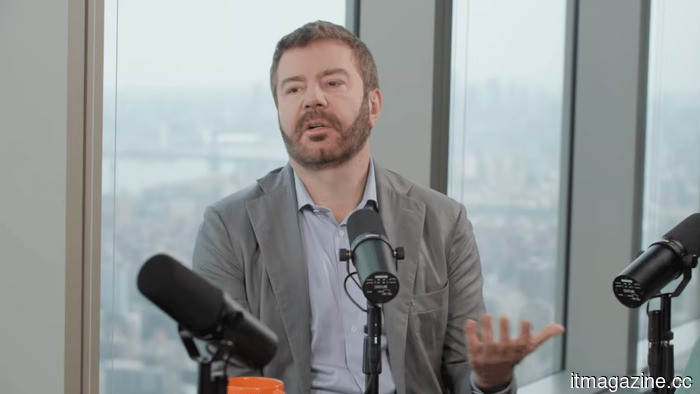 Daniel Dines from UiPath discusses AI, employment, and anxiety.
Daniel Dines from UiPath asserts that AI lacks taste, that agents are unable to quickly rectify disorganized processes, and that leaders who indiscriminately reduce staff are undermining value that they have never assessed.
Daniel Dines from UiPath discusses AI, employment, and anxiety.
Daniel Dines from UiPath asserts that AI lacks taste, that agents are unable to quickly rectify disorganized processes, and that leaders who indiscriminately reduce staff are undermining value that they have never assessed.
 Microsoft seems to have moved on from the appeal of small Windows tablets. Long live the Surface Go!
Microsoft has allegedly ceased the production of Surface Go and Surface Laptop Go devices, with only Surface Pro and Surface Laptop remaining as the company's active Surface PC lines.
Microsoft seems to have moved on from the appeal of small Windows tablets. Long live the Surface Go!
Microsoft has allegedly ceased the production of Surface Go and Surface Laptop Go devices, with only Surface Pro and Surface Laptop remaining as the company's active Surface PC lines.
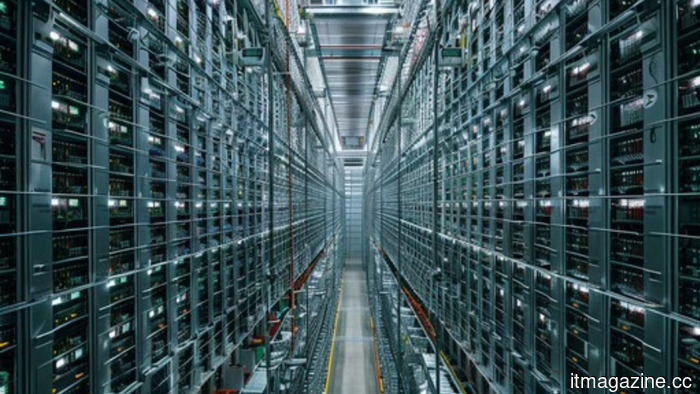 Constructing AI Infrastructure Ethically: ER Steel on the Changing Requirements of Data Center Growth
By 2030, almost 100 gigawatts of additional data center capacity could be available. ER Steel contends that the primary hurdles are not related to computing power but rather to the coordination of construction, access to the grid, and long-term operational strategies.
Constructing AI Infrastructure Ethically: ER Steel on the Changing Requirements of Data Center Growth
By 2030, almost 100 gigawatts of additional data center capacity could be available. ER Steel contends that the primary hurdles are not related to computing power but rather to the coordination of construction, access to the grid, and long-term operational strategies.
Queue secures $12.6 million for its autonomous robotic pharmacy.
Queue has come out of stealth mode, securing a $12.6 million seed round led by AlleyCorp and introducing what it claims to be the world's first fully autonomous robotic pharmacy.