
The Japanese government is set to allocate up to $926 million in grants for Rakuten's satellite project.
Japan has opted to reduce its reliance on Elon Musk for keeping its phones connected through space. The government plans to allocate up to ¥150 billion, approximately $926 million, in subsidies to a consortium led by Rakuten Group to develop a domestic low-Earth-orbit satellite communications network. Tokyo frames this initiative as a matter of economic security rather than mere commercial interest.
The financial commitment is significant and targeted. Over three years, the subsidy will help finance the necessary equipment, ground facilities, and control systems for launching and operating low-Earth-orbit satellites, which can provide low-latency connectivity directly to standard devices. This type of capital-intensive infrastructure typically requires government support to cover the uncertain initial years.
Central to the initiative is a partnership with AST SpaceMobile, an American company creating satellites meant to connect directly with regular smartphones without the need for additional hardware. Rakuten plans to establish a new joint venture with AST in 2026, with both companies holding equal shares and Rakuten managing the operations.
The technology aims to ensure that an ordinary smartphone can connect to a satellite when out of range of a ground tower, addressing gaps that terrestrial networks leave behind. The government's motivation for this investment is as much geopolitical as it is technological. Japan views a domestic satellite network as a way to lessen dependence on foreign systems like Starlink, which has raised concerns among governments globally about relying on infrastructure they do not control.
Creating a local alternative, even with the involvement of an American satellite partner, is Tokyo’s strategy to retain strategic capabilities closer to home. This trend is not exclusive to Japan; the rapid expansion of Starlink has led to a surge of national and regional initiatives aimed at developing sovereign satellite capacity, highlighting the importance of space-based connectivity as critical infrastructure. The risks associated with depending on a single private operator have become more pronounced, especially as Starlink's involvement in conflicts intensified.
In Europe, similar efforts are underway with Eutelsat, its competitor to Starlink. Brussels is also taking steps to secure two-thirds of the EU mobile-satellite spectrum for European operators. Japan's grant represents one of the larger state investments in this same idea.
For Rakuten, this project complements its ambitious foray into mobile services. The company has invested heavily in building a terrestrial mobile network in Japan, challenging established carriers. Adding a satellite component would enable coverage in areas where traditional towers are economically unfeasible, such as mountainous regions, islands, and rural areas—turning geographical disadvantages into strengths.
The partnership with AST aims to address these coverage gaps from above. The economic viability is crucial for Rakuten, whose mobile division has incurred significant losses while developing the network; satellite coverage can provide nationwide access without requiring a tower on every remote hillside.
This initiative occurs amidst a global surge of investments in space-based connectivity, with the direct-to-device concept Rakuten is pursuing becoming an increasingly competitive segment of the industry. Amazon is also gearing up for the commercial launch of its low-Earth-orbit network, Amazon Leo, reflecting a broader recognition that the orbit is becoming the next critical layer of infrastructure.
Connectivity, akin to the capital flowing into space defense, is increasingly perceived as a vital national capability rather than a service to be rented from foreign entities. Rakuten aims to offer limited service utilizing AST satellites in 2026, with full nationwide coverage anticipated in fiscal 2027, making for an ambitious timeline for an emerging network. The subsidy mitigates the risks of meeting these deadlines and indicates Japan's intention to be a frontrunner in sovereign satellite connectivity rather than a customer of someone else's solutions. The critical question for the next two years will be whether the technology can deliver reliable direct-to-device service at scale, with the government now significantly invested in the outcome.
Other articles
 Reservations for the Xreal Aura glasses are now officially available, and they largely adhere to the $1,500 price point.
Reservations for the Xreal Aura are now available, with a maximum price of $1,500, which places the Android XR glasses well below Snap’s Specs by several hundred dollars.
Reservations for the Xreal Aura glasses are now officially available, and they largely adhere to the $1,500 price point.
Reservations for the Xreal Aura are now available, with a maximum price of $1,500, which places the Android XR glasses well below Snap’s Specs by several hundred dollars.
 India's Equirus is considering a fundraising round of as much as $60 million.
Mumbai-based investment bank Equirus Capital is looking to raise as much as $60 million by issuing new shares and selling stakes, capitalizing on the thriving Indian IPO market.
India's Equirus is considering a fundraising round of as much as $60 million.
Mumbai-based investment bank Equirus Capital is looking to raise as much as $60 million by issuing new shares and selling stakes, capitalizing on the thriving Indian IPO market.
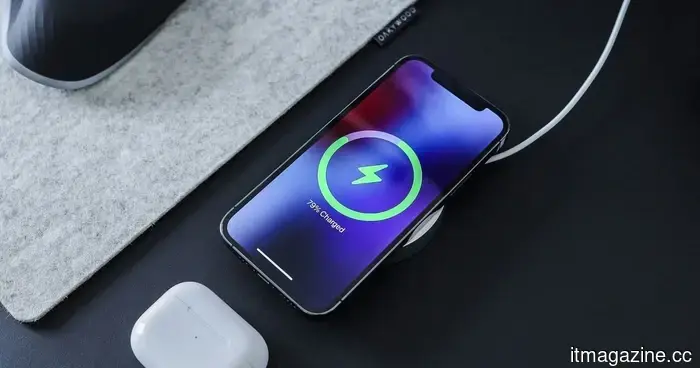 Apple and Google held talks to enable 50W wireless charging for smartphones.
The upcoming significant advancement in wireless charging might not be showcased through an extravagant smartphone release but rather through collaborative efforts behind the scenes among prominent figures in the tech sector, as noted in an ITHome report. Recently, Apple, Google, Xiaomi, and various other top tech firms convened in Beijing for the Wireless Power […]
Apple and Google held talks to enable 50W wireless charging for smartphones.
The upcoming significant advancement in wireless charging might not be showcased through an extravagant smartphone release but rather through collaborative efforts behind the scenes among prominent figures in the tech sector, as noted in an ITHome report. Recently, Apple, Google, Xiaomi, and various other top tech firms convened in Beijing for the Wireless Power […]
 The Bank of England's Breeden cautions that AI agents might lead to market collapses.
BoE Deputy Governor Sarah Breeden states that autonomous AI trading agents could increase volatility if they respond simultaneously, and this may necessitate new regulations.
The Bank of England's Breeden cautions that AI agents might lead to market collapses.
BoE Deputy Governor Sarah Breeden states that autonomous AI trading agents could increase volatility if they respond simultaneously, and this may necessitate new regulations.
 Jon and Mindy Gray wagered $55 million on AI to detect cancer in its early stages.
The president of Blackstone and his wife are supporting a new institute at Penn that employs AI and biomarkers to detect hereditary cancers in their initial stages.
Jon and Mindy Gray wagered $55 million on AI to detect cancer in its early stages.
The president of Blackstone and his wife are supporting a new institute at Penn that employs AI and biomarkers to detect hereditary cancers in their initial stages.
 AI shopping surpassed search on Prime Day, causing concerns for Amazon.
For the first time on Prime Day, AI shopping referrals surpassed search, email, and social in conversion rates, indicating a shift that poses a challenge to Amazon's dominance in product discovery.
AI shopping surpassed search on Prime Day, causing concerns for Amazon.
For the first time on Prime Day, AI shopping referrals surpassed search, email, and social in conversion rates, indicating a shift that poses a challenge to Amazon's dominance in product discovery.
The Japanese government is set to allocate up to $926 million in grants for Rakuten's satellite project.
Japan will support a satellite consortium led by Rakuten with up to ¥150 billion ($926 million) to establish a domestic low-Earth-orbit network and reduce dependence on Starlink.