
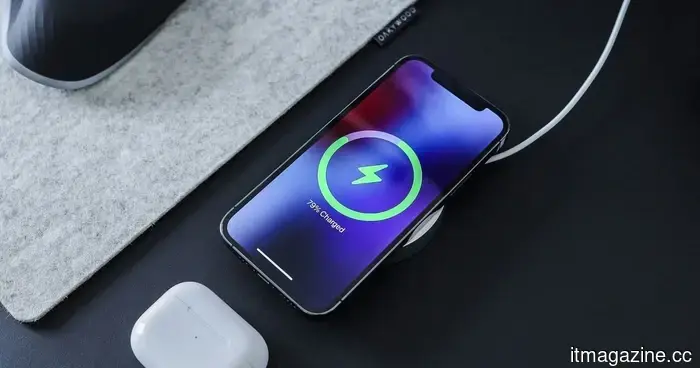
Apple and Google held talks to enable 50W wireless charging for smartphones.
The upcoming significant advancement in wireless charging might not stem from a dazzling smartphone release but rather from behind the scenes, where some of the largest tech companies are collaborating, as reported by ITHome.
Recently, Apple, Google, Xiaomi, and other prominent tech firms convened in Beijing for the Wireless Power Consortium’s (WPC) Qi Off-cycle Meeting. The discussions revolved around the development of the forthcoming Qi 50W wireless charging standard. This four-day gathering, hosted by Xiaomi, aimed at refining technical specifications, testing prototype hardware, and ensuring that devices from various brands function efficiently together.
This meeting marks the first time the WPC has conducted an Off-cycle Meeting in Beijing, representing a noteworthy step forward in the evolution of the next-generation Qi standard, which is anticipated to provide faster, safer, and more dependable wireless charging.
Apple, Google, Xiaomi, and others are collaborating on the forthcoming Qi standard.
The Wireless Power Consortium is the entity behind the Qi wireless charging standard, utilized by thousands of smartphones, earbuds, and accessories globally. With over 300 member companies and more than 13,000 Qi-certified products available, the consortium is vital for facilitating cross-brand compatibility.
The recent meeting saw participation from over 20 companies representing all segments of the wireless charging ecosystem. Attendees included Apple, Google, Xiaomi, OPPO, Huawei, Honor, vivo, Anker, Panasonic Automotive Systems, Philips, NXP, Dolby Laboratories, Renesas, and various semiconductor and component manufacturers.
According to Xiaomi, the agenda concentrated on three primary areas: finalizing the technical direction of the Qi 50W specification, testing prototype hardware, and ensuring interoperability among devices from different manufacturers.
Xiaomi is also promoting its “small inductance, low voltage, high power” design to be included in the new standard. The company claims this approach can minimize energy loss, enhance thermal performance, boost charging efficiency, and allow for slimmer smartphone designs.
The Qi 50W specification is still in the works, with a completion date anticipated in 2028.
Interestingly, smartphone manufacturers have already exceeded the 50W threshold.
Currently, the industry-standard Qi specification is attempting to catch up with proprietary charging technologies that have surpassed the 50W mark. OnePlus has implemented 50W AirVOOC wireless charging in several flagship smartphones, and OPPO similarly offers 50W AirVOOC in its premium devices. Xiaomi has also introduced 50W wireless charging commercially and has showcased experimental systems that can exceed 80W.
The downside is that these proprietary solutions generally require users to have compatible chargers and accessories from the same brand to achieve the advertised charging speeds. This is where the Qi 50W standard could provide a significant benefit. Instead of merely boosting charging power, the objective is to establish a universal solution that ensures reliability across brands while maintaining high safety standards and compatibility.
If Apple, Google, Xiaomi, and the other WPC members can reach an agreement on a unified specification, future smartphones could offer considerably quicker wireless charging without confining users to a single ecosystem. For consumers, this could ultimately be more advantageous than simply pursuing increasingly higher charging speeds. A universal 50W standard would enable the purchase of one compatible charger that operates efficiently across various devices, regardless of the brand insignia on the back of the phone.
Other articles
 Marc Andreessen becomes a member of the Pentagon’s board, causing the traditional boundaries to blur.
Marc Andreessen holds a position on the Defense Policy Board. His firm has billions at stake based on the decisions influenced by that board. The disclosure remains confidential.
Marc Andreessen becomes a member of the Pentagon’s board, causing the traditional boundaries to blur.
Marc Andreessen holds a position on the Defense Policy Board. His firm has billions at stake based on the decisions influenced by that board. The disclosure remains confidential.
 The EU has launched an antitrust investigation into Align regarding the tying of Invisalign and its scanners.
The European Commission is looking into whether Align Technology unlawfully links its iTero scanners to its Invisalign clear aligners within the EEA.
The EU has launched an antitrust investigation into Align regarding the tying of Invisalign and its scanners.
The European Commission is looking into whether Align Technology unlawfully links its iTero scanners to its Invisalign clear aligners within the EEA.
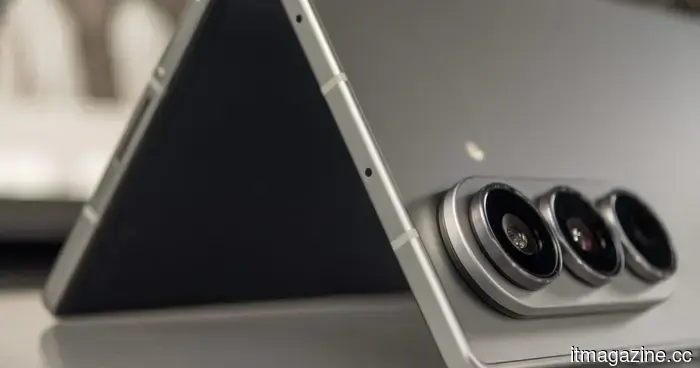 The Galaxy Z Fold 8 could be launching soon, with significant upgrades having recently been revealed.
A recent leak suggests that the Galaxy Z Fold 8 could be released soon, featuring a broader design, a lighter build, a larger battery, and quicker charging capabilities.
The Galaxy Z Fold 8 could be launching soon, with significant upgrades having recently been revealed.
A recent leak suggests that the Galaxy Z Fold 8 could be released soon, featuring a broader design, a lighter build, a larger battery, and quicker charging capabilities.
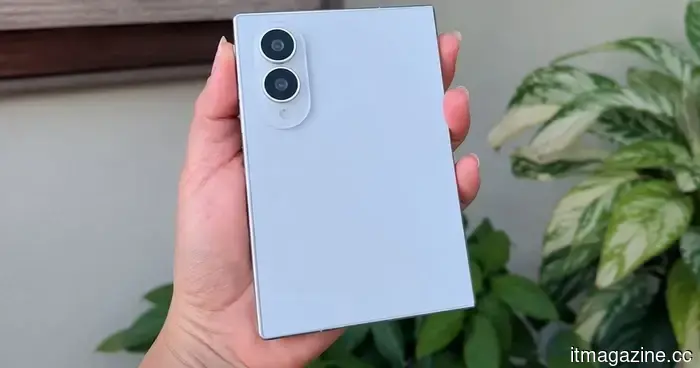 Leaked cases provide us with the most transparent glimpse so far of Samsung's forthcoming foldable devices.
Leaked cases offer the clearest preview of the Galaxy Z Fold 8, Z Fold 8 Wide, and Z Flip 8 before Samsung's Unpacked event in July.
Leaked cases provide us with the most transparent glimpse so far of Samsung's forthcoming foldable devices.
Leaked cases offer the clearest preview of the Galaxy Z Fold 8, Z Fold 8 Wide, and Z Flip 8 before Samsung's Unpacked event in July.
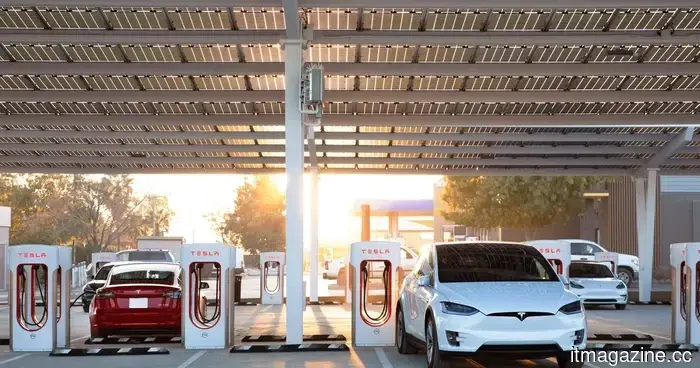 Tesla is facing an issue with battery theft.
A WIRED investigation has uncovered that organized gangs have repeatedly pilfered Tesla battery shipments from its facility in Nevada, leading to enhanced security measures and increased worries regarding supply chain weaknesses.
Tesla is facing an issue with battery theft.
A WIRED investigation has uncovered that organized gangs have repeatedly pilfered Tesla battery shipments from its facility in Nevada, leading to enhanced security measures and increased worries regarding supply chain weaknesses.
 Peacock Premium Plus enters the fray alongside YouTube as the competition for streaming bundles intensifies.
Peacock Premium Plus can now be accessed via YouTube Primetime Channels for a monthly fee of $16.99. However, current Peacock subscribers are advised to review their account and billing information before making the switch.
Peacock Premium Plus enters the fray alongside YouTube as the competition for streaming bundles intensifies.
Peacock Premium Plus can now be accessed via YouTube Primetime Channels for a monthly fee of $16.99. However, current Peacock subscribers are advised to review their account and billing information before making the switch.
Apple and Google held talks to enable 50W wireless charging for smartphones.
The upcoming significant advancement in wireless charging might not be showcased through an extravagant smartphone release but rather through collaborative efforts behind the scenes among prominent figures in the tech sector, as noted in an ITHome report. Recently, Apple, Google, Xiaomi, and various other top tech firms convened in Beijing for the Wireless Power […]