
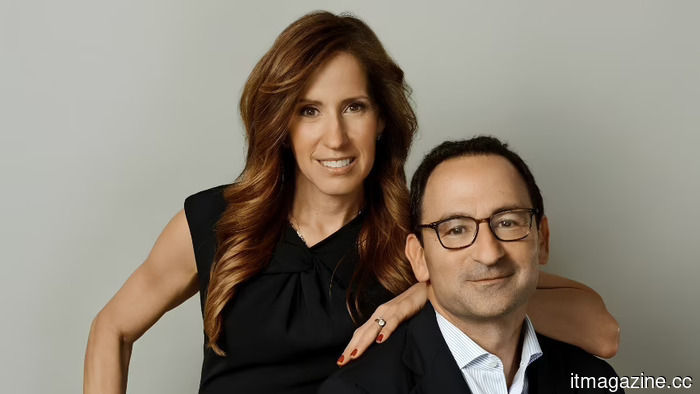
Jon and Mindy Gray wagered $55 million on AI to detect cancer in its early stages.
A new institute at Penn's Basser Center will leverage artificial intelligence and biomarkers to detect hereditary cancers at their earliest stages, before they progress into disease. The concept behind the funding is unique enough to require its distinct term. Whereas most cancer philanthropy focuses on treatment—initiated only after a tumor has manifested—Jon and Mindy Gray are investing in what advocates refer to as interception, which seeks to halt hereditary cancers before they develop into disease.
Their $55 million donation has established the Basser Cancer Interception Institute at the University of Pennsylvania, with artificial intelligence playing a pivotal role in its strategy. This institute builds on the Grays' longstanding involvement in BRCA research. Mindy Gray's sister, Faith Basser, succumbed to ovarian cancer at the age of 44, prompting the couple to create Penn's Basser Center for BRCA in her honor, beginning with a $25 million contribution and ultimately exceeding $250 million in total philanthropic commitments over the years.
The new institute aims to expand efforts from understanding the BRCA mutations that elevate cancer risk to identifying resulting cancers as early as possible. Jon Gray, typically not seen in oncology news, serves as the president and chief operating officer of Blackstone, a leading asset management firm, and is a well-known figure in American finance.
The Grays' involvement in cancer research is driven by personal loss more than professional pursuits, making them among the most notable private contributors to hereditary cancer research in the U.S. The innovative aspect of the new institute lies in its methodology. The Basser team intends to develop strategies that range from drugs and immune therapies targeting BRCA-related cancers to novel detection methods employing biomarkers and artificial intelligence.
The underlying idea is that the early indicators of cancer development—subtle patterns in blood, tissue, and molecular data—represent a challenging problem that machine learning can effectively address, enabling models to recognize signatures that might escape a human observer. If successful, interception has the potential to transform the economics and overall experience of dealing with cancer in a manner that treatment cannot.
Detecting a malignancy at its nascent molecular stages or preventing it entirely is both more cost-effective and significantly less harsh than battling an established tumor. For individuals with BRCA mutations who are aware of their heightened lifetime risk, the opportunity for early interception fundamentally alters their relationship with that risk.
This approach aligns with a broader movement of artificial intelligence into cancer biology. Machine learning systems are increasingly being trained to interpret medical images with expert-level precision, identify molecular tumor drivers, and accelerate drug discovery and oncology trials. The Gray gift directs this capability to the front end of the timeline, focusing on detection and prevention rather than later stages, where most AI cancer solutions have traditionally been applied.
Furthermore, this initiative comes amid a substantial influx of funds and computing resources into AI for scientific purposes, as foundation-model techniques are being applied to challenges in chemistry, genomics, and medicine. While much of this funding targets commercial drug development, a philanthropic investment focused specifically on interception represents a quieter, more targeted approach, supporting the less glamorous early detection research that tends to receive less market support than major therapeutic breakthroughs.
The institute is still in its early stages, and the science of interception is undoubtedly challenging, as it relies on identifying biomarkers that are reliable enough to act upon without causing false alarms or unnecessary interventions in healthy individuals. The Grays are not guaranteeing a cure; rather, they are backing the belief that the earliest signs of cancer can be discerned with the appropriate tools, and that creating an institute centered on catching the disease at its onset is worthwhile. For a couple who embarked on this journey after experiencing a cancer diagnosis that was identified too late, the rationale for pursuing early detection requires no further explanation.
Other articles
 X introduces a hosted MCP server to allow AI tools to connect directly to its API.
X now operates its own MCP server, allowing AI tools such as Claude, Cursor, and Grok to connect to the platform's API without the need for developers to create the integration.
X introduces a hosted MCP server to allow AI tools to connect directly to its API.
X now operates its own MCP server, allowing AI tools such as Claude, Cursor, and Grok to connect to the platform's API without the need for developers to create the integration.
 The Minimal Phone 2 appears to be a purposeful response to doomscrolling.
The Minimal Phone 2 is being promoted as a more serene smartphone featuring a keyboard, an aluminum casing, and enhanced software; however, essential details are still awaited before it can demonstrate its capabilities.
The Minimal Phone 2 appears to be a purposeful response to doomscrolling.
The Minimal Phone 2 is being promoted as a more serene smartphone featuring a keyboard, an aluminum casing, and enhanced software; however, essential details are still awaited before it can demonstrate its capabilities.
 OpenClaw is now available on Android and iOS, transforming your phone into a control center for your AI agent.
OpenClaw, the open source AI agent, has just released native apps for iOS and Android that connect with your self-hosted gateway.
OpenClaw is now available on Android and iOS, transforming your phone into a control center for your AI agent.
OpenClaw, the open source AI agent, has just released native apps for iOS and Android that connect with your self-hosted gateway.
 Google begins testing Gmail Live, its new voice search feature for your inbox.
Google has begun testing Gmail Live, a voice-activated search feature that responds to verbal inquiries regarding your inbox and directs you to the original email.
Google begins testing Gmail Live, its new voice search feature for your inbox.
Google has begun testing Gmail Live, a voice-activated search feature that responds to verbal inquiries regarding your inbox and directs you to the original email.
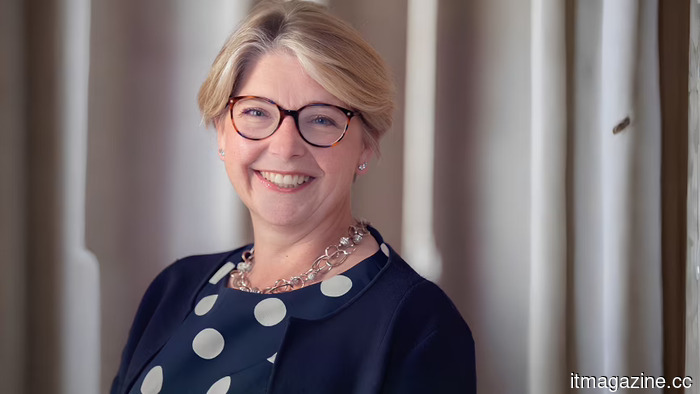 The Bank of England's Breeden cautions that AI agents may cause market collapses.
Sarah Breeden, the deputy governor of the BoE, states that independent AI trading agents might increase volatility if they act simultaneously, potentially necessitating new regulations.
The Bank of England's Breeden cautions that AI agents may cause market collapses.
Sarah Breeden, the deputy governor of the BoE, states that independent AI trading agents might increase volatility if they act simultaneously, potentially necessitating new regulations.
 India's Equirus is considering a fundraising round of as much as $60 million.
Mumbai-based investment bank Equirus Capital is looking to raise as much as $60 million by issuing new shares and selling stakes, capitalizing on the thriving Indian IPO market.
India's Equirus is considering a fundraising round of as much as $60 million.
Mumbai-based investment bank Equirus Capital is looking to raise as much as $60 million by issuing new shares and selling stakes, capitalizing on the thriving Indian IPO market.
Jon and Mindy Gray wagered $55 million on AI to detect cancer in its early stages.
The president of Blackstone and his spouse are sponsoring a new Penn institute that employs AI and biomarkers to detect hereditary cancers at their earliest stages.