
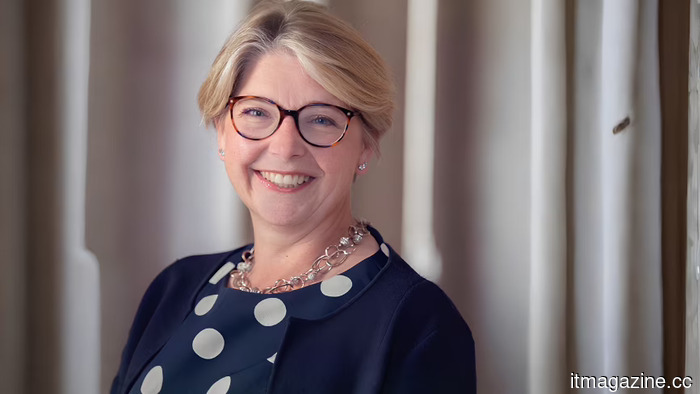
The Bank of England's Breeden cautions that AI agents might lead to market collapses.
Deputy Governor Sarah Breeden has expressed concerns that autonomous trading agents could increase market volatility if they all respond identically at the same moment, potentially necessitating new regulations. A central banker’s worst nightmare, she explains, is not typically a market crash but rather a feedback loop. At the European Central Bank’s annual forum in Sintra, Portugal, Breeden warned that autonomous AI agents might lead to a “market meltdown.” This wouldn't occur due to irrational actions, but rather from all agents reacting uniformly to the same signal at the same time.
Breeden’s worries are specifically about a new breed of AI, distinguishing it from the algorithmic trading that has influenced markets for years. The concern lies with agent-based systems capable of setting objectives and making decisions with significantly less human oversight. She indicated that if numerous firms utilize agents trained in similar manners with comparable data, these agents could "amplify volatility in stress," responding in unison to a disruption and potentially escalating a minor disturbance into a significant downturn before any human can step in.
The mechanism itself presents a real danger. Historically, markets have been susceptible to herd behavior, but human groups are generally slower and less uniform; individuals hesitate, disagree, and panic at varying rates. In contrast, a swarm of AI agents optimized for the same goals could act synchronously, triggering sales during a downturn or pursuing the same trades with a speed and scale that no human crowd could replicate. This would lead to faster and sharper fluctuations, with the agents' correlation acting as an accelerant.
Breeden, who represents the Bank on matters of financial stability, suggested that current regulations might not adequately address these challenges. She pointed out that more sophisticated regulatory frameworks may be necessary to monitor and manage the risks posed by AI in the financial landscape. This comment signals that tools designed for human-operated markets may not effectively capture the implications of autonomous software participants.
This caution isn't a standalone warning. The Bank of England has been raising awareness about AI-related threats to financial stability for months, incorporating these issues into broader assessments of potential market failures. Breeden's statements in Sintra highlight a theme gaining traction among regulators on both sides of the Atlantic: the question of accountability when an autonomous agent takes action is not just theoretical but increasingly relevant in finance.
This issue resonates beyond the trading floor. The challenge of managing AI agents with minimal supervision has spurred efforts to ensure they possess verifiable identities and that their actions can be tracked and regulated. Breeden's alert reflects a financial stability concern regarding agents that operate faster than human oversight can respond, which can be beneficial until it becomes perilous.
At the core of the issue lies a tension that Breeden recognizes. The very agents capable of exacerbating a crisis are also being embraced for their contributions to market efficiency, enabling transactions that are quicker and cheaper than human execution. Regulators are not seeking to eliminate these agents but are striving to retain their advantages without adopting a system that could potentially collapse at machine speed.
This is a more complex challenge than outright prohibition, and it is one that the Bank signals it intends to address. While Breeden did not propose specific regulations, her comments served as both a caution and a call to action rather than a concrete policy. They indicate that the threat of coordinated AI agents destabilizing markets has progressed from theoretical discussions to a key focus for those responsible for managing the consequences. The Bank has now placed this issue on the agenda. Determining whether the existing regulatory framework can adapt or requires a complete overhaul will be the next phase of work that follows.
Other articles
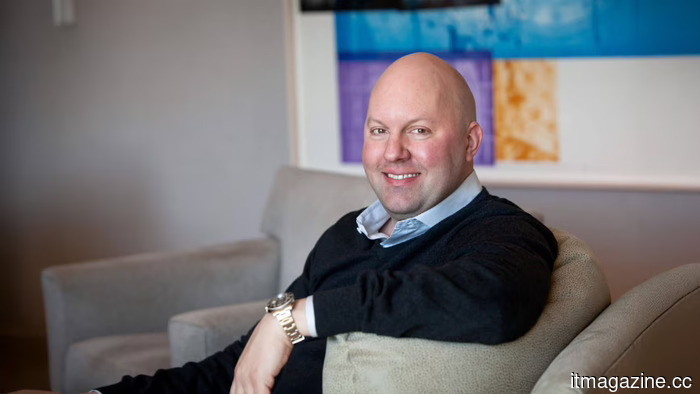 Marc Andreessen becomes a member of the Pentagon’s board, causing the traditional boundaries to blur.
Marc Andreessen holds a position on the Defense Policy Board. His firm has billions at stake based on the decisions influenced by that board. The disclosure remains confidential.
Marc Andreessen becomes a member of the Pentagon’s board, causing the traditional boundaries to blur.
Marc Andreessen holds a position on the Defense Policy Board. His firm has billions at stake based on the decisions influenced by that board. The disclosure remains confidential.
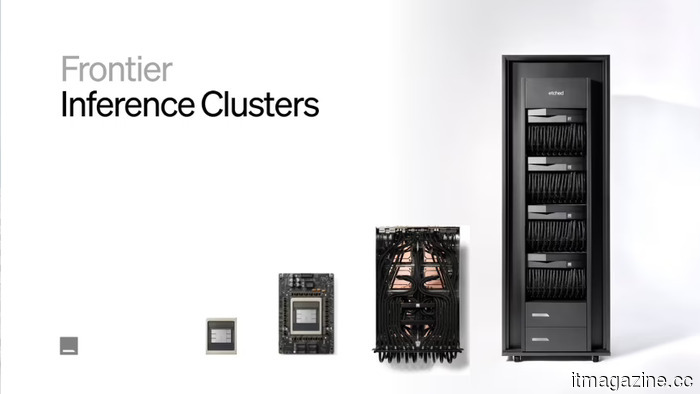 Nvidia competitor Etched has secured $800 million in funding with support from Jane Street and a fund associated with TSMC.
AI chip startup Etched has secured $800 million in funding, supported by Jane Street and the VentureTech Alliance, which is connected to TSMC. The company also has one billion dollars in signed sales agreements.
Nvidia competitor Etched has secured $800 million in funding with support from Jane Street and a fund associated with TSMC.
AI chip startup Etched has secured $800 million in funding, supported by Jane Street and the VentureTech Alliance, which is connected to TSMC. The company also has one billion dollars in signed sales agreements.
 Leaked cases offer us the most detailed glimpse so far at Samsung's forthcoming foldable devices.
The leaked cases provide us with the clearest glimpse so far of the Galaxy Z Fold 8, Z Fold 8 Wide, and Z Flip 8 in anticipation of Samsung's Unpacked event in July.
Leaked cases offer us the most detailed glimpse so far at Samsung's forthcoming foldable devices.
The leaked cases provide us with the clearest glimpse so far of the Galaxy Z Fold 8, Z Fold 8 Wide, and Z Flip 8 in anticipation of Samsung's Unpacked event in July.
 The Galaxy Z Fold 8 could be launching soon, with significant upgrades having recently been revealed.
A recent leak suggests that the Galaxy Z Fold 8 could be released soon, featuring a broader design, a lighter build, a larger battery, and quicker charging capabilities.
The Galaxy Z Fold 8 could be launching soon, with significant upgrades having recently been revealed.
A recent leak suggests that the Galaxy Z Fold 8 could be released soon, featuring a broader design, a lighter build, a larger battery, and quicker charging capabilities.
 The Japanese government is set to allocate up to $926 million in grants for Rakuten's satellite project.
Japan will support a satellite consortium led by Rakuten with up to ¥150 billion ($926 million) to establish a domestic low-Earth-orbit network and reduce dependence on Starlink.
The Japanese government is set to allocate up to $926 million in grants for Rakuten's satellite project.
Japan will support a satellite consortium led by Rakuten with up to ¥150 billion ($926 million) to establish a domestic low-Earth-orbit network and reduce dependence on Starlink.
 The EU has launched an antitrust investigation into Align regarding the tying of Invisalign and its scanners.
The European Commission is looking into whether Align Technology unlawfully links its iTero scanners to its Invisalign clear aligners within the EEA.
The EU has launched an antitrust investigation into Align regarding the tying of Invisalign and its scanners.
The European Commission is looking into whether Align Technology unlawfully links its iTero scanners to its Invisalign clear aligners within the EEA.
The Bank of England's Breeden cautions that AI agents might lead to market collapses.
BoE Deputy Governor Sarah Breeden states that autonomous AI trading agents could increase volatility if they respond simultaneously, and this may necessitate new regulations.