
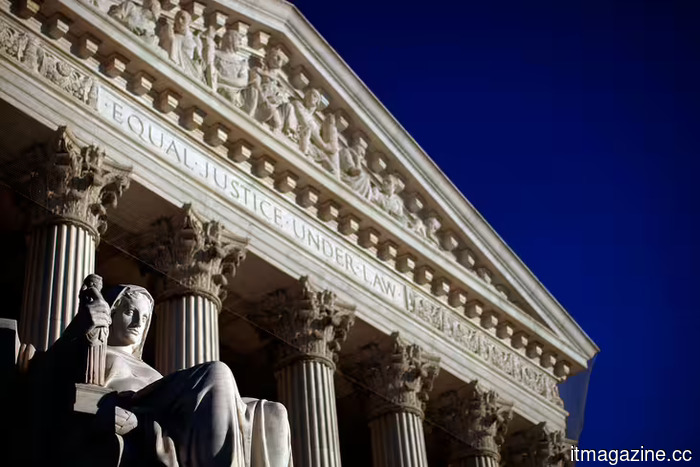
SCOTUS restricts geofence warrants in a victory for phone privacy.
Your phone maintains a detailed log of your movements minute by minute. The US Supreme Court has now determined that police cannot simply request this data without a warrant. In a significant victory for digital privacy, the court declared that geofence searches must be authorized by a warrant.
The 6-3 ruling addresses a practice that has increasingly been adopted by US law enforcement. When detectives face a crime scene but lack a suspect, they create a virtual perimeter on a map and inquire with a tech company about who was present within that area. The court's ruling has made this process considerably more difficult.
What the court decided
The decision arose from the case of Chatrie v. United States, which stems from a bank robbery in Midlothian, Virginia, in 2019. The justices concluded that accessing an individual’s phone location records constitutes a search under the Fourth Amendment, meaning that police are required to have a warrant supported by probable cause. Justice Elena Kagan authored the primary opinion, joined by four other justices, while Justice Neil Gorsuch supported the ruling for his own reasons. “An individual has a reasonable expectation of privacy in his cell-phone location information,” the court stated, as reported by TechCrunch. Justices Alito and Barrett dissented.
The reasoning was based on the 2018 Carpenter decision, which shielded cell-tower data tracking a phone’s movements. The court highlighted that location data is even more precise. For instance, Google’s service records a phone’s location approximately every two minutes, totaling around 720 times a day, providing accuracy within about 20 meters, and can even estimate which floor of a building you occupy.
How geofence searches work
A geofence warrant fundamentally alters the typical process of law enforcement. Officers generally identify a suspect first and then collect evidence. In contrast, with geofence requests, they first accumulate data on all individuals in a specific area and only afterward search for a suspect.
The Chatrie case illustrates the concerns critics have. Police requested data from Google regarding every phone located within 150 meters of the bank during the time of the robbery. Google provided anonymized information on 19 users, followed by detailed data on nine, and ultimately identified three individuals. Notably, many of those included were at a nearby church.
The government contended that users willingly shared their location with Google, thus forfeiting any claim to privacy over it. The court disagreed, asserting that people view their location history as a private record, not as information shared with law enforcement.
What it does not do
The ruling does not entirely prohibit geofence warrants. Police are still permitted to seek location data; however, they must persuade a judge, provide a legitimate basis for their request, and limit the scope of the search.
The justices also left the specifics of Chatrie’s case unresolved, sending it back to a lower court to determine whether his warrant was sufficiently narrow. Thus, while the overarching principle is established, the intricate details will return to an appeals court for further examination.
Why it matters for tech
The ruling's implications extend beyond a single robbery case. It establishes a foundational level of privacy concerning the location data generated daily by phones, apps, and platforms, shifting some power back to users.
Additionally, it alters the calculations for large technology companies. Law enforcement frequently requests user data from tech firms, and companies grapple with the extent of data they should disclose. Google has already moved much of the location history onto users’ devices, partially to minimize these requests. Companies like Microsoft, Uber, and Yahoo continue to receive such inquiries.
In an industry often navigating scrutiny regarding tracking and surveillance, the message is unmistakable: a warrant has become necessary. This rationale could also influence how courts assess other sensitive data trails, including search histories and smart-home records.
While this ruling does not resolve the broader issues surrounding digital privacy, it marks a significant point after years of law enforcement testing the boundaries of what a phone can divulge. The highest court has drawn a line: the data belongs to the individual, and the state requires a valid justification to access it.
Other articles
 Gemini will now take notes for you during Google Meet, provided you pay the minimum $20 AI tax.
The "Take notes for me" feature powered by Gemini in Google Meet is being introduced for AI Pro and Ultra subscribers, but access to this beneficial meeting enhancement requires a $20 monthly subscription.
Gemini will now take notes for you during Google Meet, provided you pay the minimum $20 AI tax.
The "Take notes for me" feature powered by Gemini in Google Meet is being introduced for AI Pro and Ultra subscribers, but access to this beneficial meeting enhancement requires a $20 monthly subscription.
 Chrome AI: what your browser installs without your consent
Chrome discreetly released a 4GB Gemini Nano AI model to users, while a fraudulent Perplexity extension intercepted searches. This highlights two aspects of Chrome's consent issue.
Chrome AI: what your browser installs without your consent
Chrome discreetly released a 4GB Gemini Nano AI model to users, while a fraudulent Perplexity extension intercepted searches. This highlights two aspects of Chrome's consent issue.
 Meta’s Brain2Qwerty v2 converts thoughts into text without requiring any brain implants.
Meta has introduced Brain2Qwerty v2, an AI technology that translates brain activity into text non-invasively, advancing assistive communication towards becoming a reality.
Meta’s Brain2Qwerty v2 converts thoughts into text without requiring any brain implants.
Meta has introduced Brain2Qwerty v2, an AI technology that translates brain activity into text non-invasively, advancing assistive communication towards becoming a reality.
 Meta’s Brain2Qwerty v2 converts thoughts into text without the need for brain implants.
Meta has introduced Brain2Qwerty v2, an AI system that translates brain activity into text non-invasively, moving assistive communication closer to becoming a reality.
Meta’s Brain2Qwerty v2 converts thoughts into text without the need for brain implants.
Meta has introduced Brain2Qwerty v2, an AI system that translates brain activity into text non-invasively, moving assistive communication closer to becoming a reality.
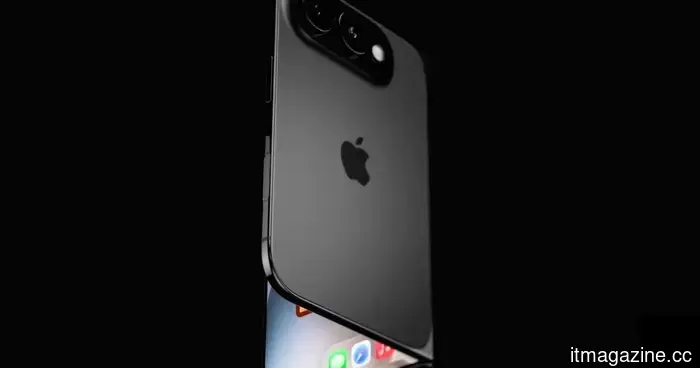 Apple is preparing to launch six new iPhones in 2027, featuring significant upgrades.
The speculated roadmap for Apple's 2027 iPhone features six models spread across two launch periods, incorporating 120Hz displays, Pro enhancements, and a second foldable iPhone Ultra.
Apple is preparing to launch six new iPhones in 2027, featuring significant upgrades.
The speculated roadmap for Apple's 2027 iPhone features six models spread across two launch periods, incorporating 120Hz displays, Pro enhancements, and a second foldable iPhone Ultra.
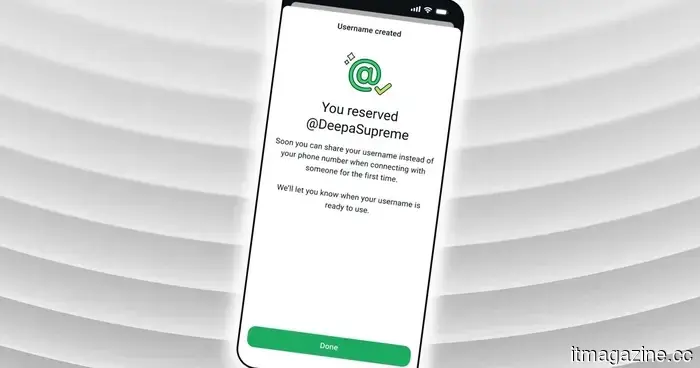 How to secure your WhatsApp username
Claiming your WhatsApp username takes less than a minute, but there are some rules and a crucial timing consideration that you should be aware of beforehand.
How to secure your WhatsApp username
Claiming your WhatsApp username takes less than a minute, but there are some rules and a crucial timing consideration that you should be aware of beforehand.
SCOTUS restricts geofence warrants in a victory for phone privacy.
The Supreme Court determined that geofence warrants require probable cause, concluding that individuals possess a reasonable expectation of privacy regarding their phone location information.