
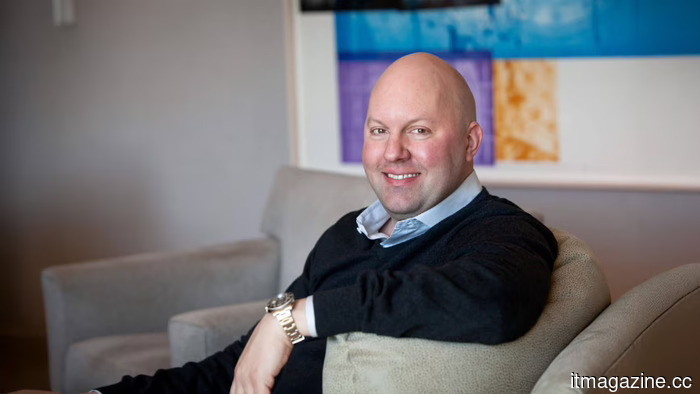
Marc Andreessen becomes a member of the Pentagon’s board, causing the traditional boundaries to blur.
Marc Andreessen now provides counsel to the leadership of the Pentagon on decisions that his firm has invested billions in. While this is legal, it prompts questions that the rules were designed to address.
Pete Hegseth recently announced the appointees of a newly formed Defense Policy Board, an advisory group that assists the Pentagon's civilian leadership on matters of force structure, modernization, and the trajectory of American military strategy.
Thirteen names were included in the announcement. Robert Lighthizer, the former trade representative, has been appointed as the chair, while Norm Coleman, a former senator, will serve as vice chair.
Amid the diplomats and defense experts, there is a venture capitalist whose firm has spent the last three years amassing one of the largest private investments concerning the future of American warfare. Although Marc Andreessen is well-known in this context, the significance of this position requires clarification. The Defense Policy Board is not merely symbolic; it provides guidance to the defense secretary and the Pentagon's policy chief on crucial issues that determine which technologies the military acquires, which doctrines it implements, and which companies it will rely on for the upcoming decade of procurement.
In essence, this board is instrumental in setting strategic direction, and Andreessen enters this sphere having already made significant investments in its direction.
The stakes are considerable. Andreessen Horowitz, the firm he co-founded, has investments in companies like Anduril, Skydio, Shield AI, Saronic, and Flock Safety—entities whose fortunes are closely tied to the Pentagon's regulatory and procurement decisions.
The most prominent of these is Anduril, which received a valuation of $61 billion in a $5 billion funding round facilitated by a16z, following a $20 billion enterprise agreement awarded by the US Army. This is not just a portfolio that coincidentally aligns with defense policy; it is nearly synonymous with it.
This overlap deserves attention, particularly regarding disclosure protocols. Board members who do not hold government positions are appointed as special government employees and must file their financial disclosures using an OGE Form 450. Unlike public filings required of senior officials, the 450 form is confidential and not accessible to the public. Consequently, when an investor with specific, disclosed stakes in defense procurement joins the advisory board, the documentation that would enable public scrutiny of potential conflicts remains unseen.
This situation is not intentionally flawed; it’s simply how these categories align, leaving an open question. The rules are substantial and designed for scenarios like this. Federal law prohibits officials from participating personally and substantially in any matter that could affect their financial interests, and an advisor facing a conflict is expected to recuse themselves.
In practice, this means one must recognize when the advice they are about to offer would benefit their invested companies and then refrain from speaking. For most board members, this is a manageable obligation, but for someone whose defense investments closely mirror Pentagon priorities, the need to recuse could be so frequent that it raises concerns about the breadth of their contributions.
However, this doesn’t suggest that Andreessen will mishandle his role. It indicates that the system is placing significant trust in his judgment, asking the public to accept the outcomes at face value.
It's important to clarify that there are no allegations of wrongdoing against Andreessen; he has not acted improperly based on available public records, and his appointment is entirely legitimate. The broader issue here is not really about him personally. He represents a more significant trend, reflecting a steady influx of talent from Sand Hill Road into federal government positions.
Since the current administration began, over three dozen individuals associated with Elon Musk, Peter Thiel, Andreessen, and Palmer Luckey have taken roles across federal agencies, influencing contracts worth billions. Andreessen is already part of the President’s Council of Advisors on Science and Technology, and he has been described by the Washington Post as a key figure in the cost-cutting initiative known as DOGE.
What distinguishes his role in defense is the magnitude of decisions being made. Venture capital investment in defense-tech startups reached a record $49 billion in 2025, nearly double the previous year, banking on a shift in how the Pentagon approaches purchasing, favoring innovative software and autonomous firms backed by a16z.
Holding a position on the board that influences such changes is not a mere token appointment—it places someone with significant financial interests in a position close to decisions worth vast sums of money.
Proponents of this arrangement present valid arguments that deserve consideration. They contend that the Pentagon has historically overpaid for outdated hardware from a shrinking number of contractors over long timelines, while the cutting edge of technology in areas like drones, autonomy, and AI has developed in startups that the procurement system has not adequately engaged with.
The rationale is to involve individuals who have financially supported this technological advancement, ensuring a defense establishment that can respond swiftly to threats. There’s merit to the notion that engaging operators knowledgeable about autonomous systems is beneficial.
The challenge lies
Other articles
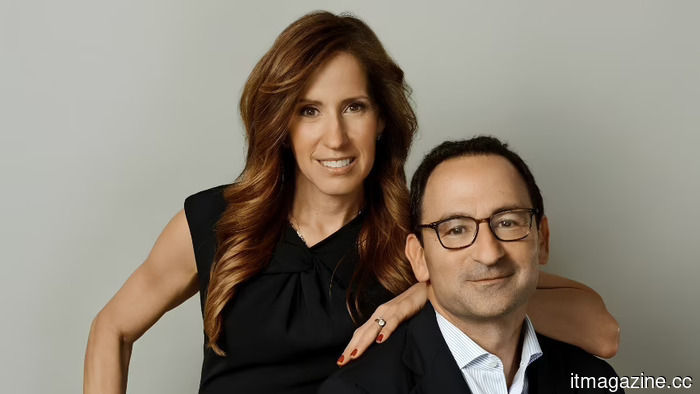 Jon and Mindy Gray wagered $55 million on AI to detect cancer in its early stages.
The president of Blackstone and his spouse are sponsoring a new Penn institute that employs AI and biomarkers to detect hereditary cancers at their earliest stages.
Jon and Mindy Gray wagered $55 million on AI to detect cancer in its early stages.
The president of Blackstone and his spouse are sponsoring a new Penn institute that employs AI and biomarkers to detect hereditary cancers at their earliest stages.
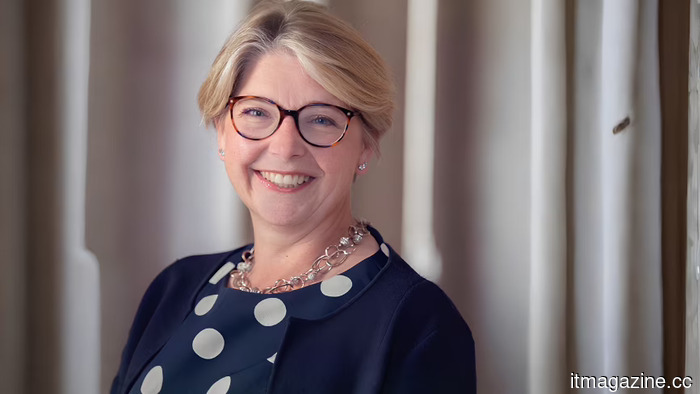 The Bank of England's Breeden cautions that AI agents might lead to market collapses.
BoE Deputy Governor Sarah Breeden states that autonomous AI trading agents could increase volatility if they respond simultaneously, and this may necessitate new regulations.
The Bank of England's Breeden cautions that AI agents might lead to market collapses.
BoE Deputy Governor Sarah Breeden states that autonomous AI trading agents could increase volatility if they respond simultaneously, and this may necessitate new regulations.
 Irish court instructs regulator to reassess the ban on TikTok's data transfer to China.
Ireland's High Court confirmed TikTok's GDPR liability along with its €530 million fine, while directing the Data Protection Commission (DPC) to reevaluate the decision to suspend data transfers to China.
Irish court instructs regulator to reassess the ban on TikTok's data transfer to China.
Ireland's High Court confirmed TikTok's GDPR liability along with its €530 million fine, while directing the Data Protection Commission (DPC) to reevaluate the decision to suspend data transfers to China.
 The Galaxy Z Fold 8 could be launching soon, with significant upgrades having recently been revealed.
A recent leak suggests that the Galaxy Z Fold 8 could be released soon, featuring a broader design, a lighter build, a larger battery, and quicker charging capabilities.
The Galaxy Z Fold 8 could be launching soon, with significant upgrades having recently been revealed.
A recent leak suggests that the Galaxy Z Fold 8 could be released soon, featuring a broader design, a lighter build, a larger battery, and quicker charging capabilities.
 Google begins testing Gmail Live, its new voice search feature for your inbox.
Google has begun testing Gmail Live, a voice-activated search feature that responds to spoken inquiries regarding your inbox and references the original email.
Google begins testing Gmail Live, its new voice search feature for your inbox.
Google has begun testing Gmail Live, a voice-activated search feature that responds to spoken inquiries regarding your inbox and references the original email.
 The Minimal Phone 2 appears to be a purposeful response to doomscrolling.
The Minimal Phone 2 is being promoted as a more serene smartphone featuring a keyboard, an aluminum casing, and enhanced software; however, essential details are still awaited before it can demonstrate its capabilities.
The Minimal Phone 2 appears to be a purposeful response to doomscrolling.
The Minimal Phone 2 is being promoted as a more serene smartphone featuring a keyboard, an aluminum casing, and enhanced software; however, essential details are still awaited before it can demonstrate its capabilities.
Marc Andreessen becomes a member of the Pentagon’s board, causing the traditional boundaries to blur.
Marc Andreessen holds a position on the Defense Policy Board. His firm has billions at stake based on the decisions influenced by that board. The disclosure remains confidential.