
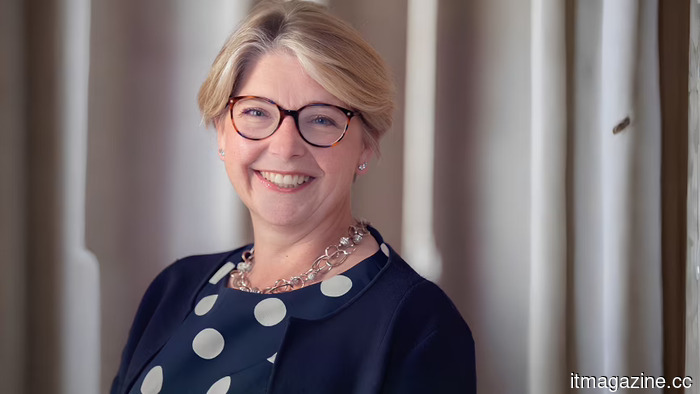
The Bank of England's Breeden cautions that AI agents may cause market collapses.
Deputy governor Sarah Breeden warns that autonomous trading agents could increase market volatility if they all respond simultaneously, potentially leading to the need for new regulations. The central banker’s worst-case scenario typically involves a feedback loop rather than a crash. Speaking at the European Central Bank’s annual forum in Sintra, Portugal, Breeden highlighted that autonomous AI agents could trigger a “market meltdown” not by behaving irrationally, but by all reacting in unison to the same signal at the same time.
Breeden's apprehension is aimed at a new breed of AI, emphasizing that the concern is not about the algorithmic trading that has shaped markets for years, but about systems that can independently pursue goals and make decisions with minimal human oversight. She argued that if many firms deploy agents trained similarly on comparable data, these agents could “amplify volatility in stress” by reacting to shocks simultaneously, transforming minor fluctuations into major declines before any human can respond.
The peril lies in the mechanism itself. While markets have always been susceptible to herd behavior, human groups act slowly and inconsistently; individuals hesitate, disagree, and panic at different rates. Conversely, a group of AI agents aligned toward identical objectives could act as one, selling off in a downturn or pursuing the same trades with a synchronized speed and scale that no human traders could match. This would lead to sharper, more rapid swings, with the alignment of agents acting as a catalyst.
Breeden, representing the Bank on matters of financial stability, suggested that current regulations may not adequately address the issue. She indicated that more advanced regulatory frameworks might be required to monitor and mitigate the risks that AI poses to the financial system, signaling from a senior policymaker that tools designed for human-managed markets may not be suited for scenarios involving autonomous software.
This warning is part of a broader narrative. The Bank of England has been highlighting AI-related financial stability risks for months, incorporating these concerns into its wider evaluations of potential market failures. Breeden's comments in Sintra sharpen a theme that regulators on both sides of the Atlantic are increasingly addressing. The issue of accountability when an autonomous agent acts is becoming a relevant topic in finance, no longer merely theoretical.
This concern resonates beyond trading floors. The challenge of governing AI agents with minimal oversight has led to ongoing discussions on how to provide them with verifiable identities and controls to ensure that their actions can be traced and managed. Breeden’s warning reflects a financial stability concern that echoes the broader problem: an agent capable of acting faster than human supervision becomes beneficial until it poses a danger.
Breeden acknowledges the tension inherent in this issue. The same agents that could exacerbate a crisis are increasingly being adopted due to their potential to enhance market efficiency by executing trades faster and at lower costs than humans. Regulators are not seeking to eliminate these agents; rather, they aim to find a way to maintain their advantages without creating a system that could collapse at machine speed.
Addressing this challenge is more complex than simple prohibition, and it is the task the Bank is signaling its intention to undertake. Breeden did not specify new regulations; her statements served as both a warning and a call to action rather than a formal policy announcement. However, they indicate that the risk of correlated AI agents destabilizing markets has transitioned from academic discussion to the priorities of those who would need to manage the consequences. The Bank has brought this issue to the forefront, and now the focus shifts to determining whether the existing framework can adapt or if a complete overhaul is necessary.
Other articles
 Irish court instructs regulator to reassess the ban on TikTok's data transfer to China.
Ireland's High Court confirmed TikTok's GDPR liability along with its €530 million fine, while directing the Data Protection Commission (DPC) to reevaluate the decision to suspend data transfers to China.
Irish court instructs regulator to reassess the ban on TikTok's data transfer to China.
Ireland's High Court confirmed TikTok's GDPR liability along with its €530 million fine, while directing the Data Protection Commission (DPC) to reevaluate the decision to suspend data transfers to China.
 The Clicks Communicator has just revealed its software, and it does appear to be quite promising.
Clicks has finally unveiled the functional Communicator software, and for those who long for physical keyboards, this initial glimpse is packed with innovative features that are truly exciting.
The Clicks Communicator has just revealed its software, and it does appear to be quite promising.
Clicks has finally unveiled the functional Communicator software, and for those who long for physical keyboards, this initial glimpse is packed with innovative features that are truly exciting.
 AI shopping outperformed search results on Prime Day, shaking things up for Amazon.
For the first time during Prime Day, AI shopping recommendations outperformed search, email, and social media in conversions, indicating a potential challenge to Amazon's dominance in product discovery.
AI shopping outperformed search results on Prime Day, shaking things up for Amazon.
For the first time during Prime Day, AI shopping recommendations outperformed search, email, and social media in conversions, indicating a potential challenge to Amazon's dominance in product discovery.
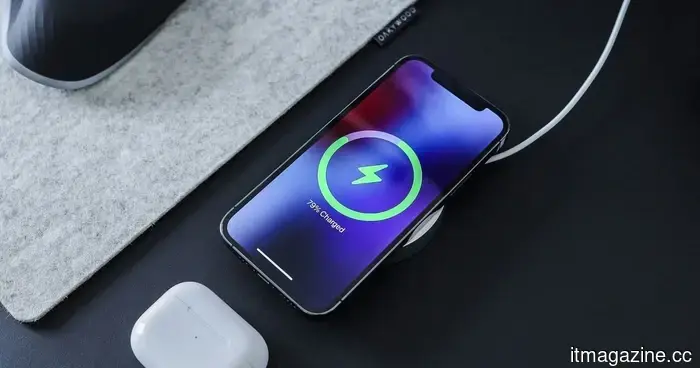 Apple and Google held talks to enable 50W wireless charging for smartphones.
The upcoming significant advancement in wireless charging might not be showcased through an extravagant smartphone release but rather through collaborative efforts behind the scenes among prominent figures in the tech sector, as noted in an ITHome report. Recently, Apple, Google, Xiaomi, and various other top tech firms convened in Beijing for the Wireless Power […]
Apple and Google held talks to enable 50W wireless charging for smartphones.
The upcoming significant advancement in wireless charging might not be showcased through an extravagant smartphone release but rather through collaborative efforts behind the scenes among prominent figures in the tech sector, as noted in an ITHome report. Recently, Apple, Google, Xiaomi, and various other top tech firms convened in Beijing for the Wireless Power […]
 The EU has launched an antitrust investigation into Align regarding the tying of Invisalign and its scanners.
The European Commission is looking into whether Align Technology unlawfully links its iTero scanners to its Invisalign clear aligners within the EEA.
The EU has launched an antitrust investigation into Align regarding the tying of Invisalign and its scanners.
The European Commission is looking into whether Align Technology unlawfully links its iTero scanners to its Invisalign clear aligners within the EEA.
 OpenClaw is now available on Android and iOS, transforming your phone into a control center for your AI agent.
OpenClaw, the open source AI agent, has just released native apps for iOS and Android that connect with your self-hosted gateway.
OpenClaw is now available on Android and iOS, transforming your phone into a control center for your AI agent.
OpenClaw, the open source AI agent, has just released native apps for iOS and Android that connect with your self-hosted gateway.
The Bank of England's Breeden cautions that AI agents may cause market collapses.
Sarah Breeden, the deputy governor of the BoE, states that independent AI trading agents might increase volatility if they act simultaneously, potentially necessitating new regulations.