
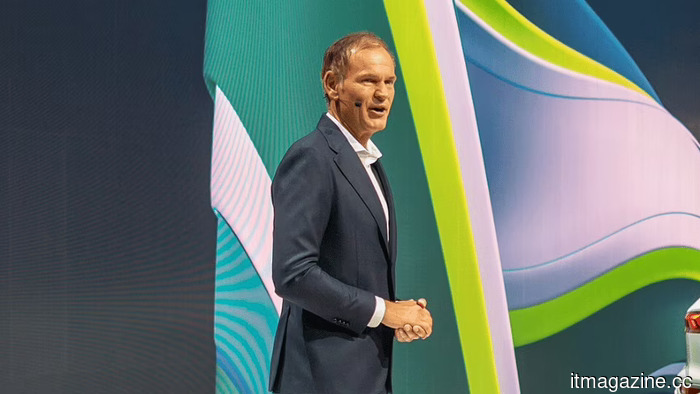
Volkswagen is said to be planning to reduce its workforce by 100,000 positions.
Volkswagen is allegedly looking to eliminate 100,000 jobs, which accounts for about 15% of its workforce, and shut down plants in Germany. This drastic measure would mark the largest revision in the company's history, and labor unions are pledging to oppose it.
As Europe's automotive sector contracts, Volkswagen, the continent's most prominent car manufacturer, is at the forefront of this retreat. Reports indicate that Volkswagen intends to reduce its workforce by approximately 100,000 positions at its German locations, roughly 15% of its global employees. If implemented, this would represent the most significant restructuring in the company's 89-year existence.
The information comes from the German business publication Manager Magazin, which stated that CEO Oliver Blume is pursuing these cuts in the coming years to enhance the competitiveness of Europe’s largest carmaker. Volkswagen has not verified the specifics of this information, citing internal confidential documents.
However, the company did not refute the overall direction. A spokesperson informed CNBC, “The entire Group, including its brands and subsidiaries, must undertake substantial changes.” This is about as close to an acknowledgment of intent as an automaker typically gets prior to negotiations commencing.
The magnitude of these potential cuts sets this situation apart. Volkswagen employs hundreds of thousands globally, and a 15% reduction would predominantly impact Germany, its industrial core. These job reductions would unfold over several years rather than occurring all at once. Nevertheless, a figure like 100,000 alters the perspective on what a downturn looks like for a national champion.
The report identifies specific facilities impacted, with production likely ceasing at Hanover, Zwickau, and Emden, along with the Audi plant in Neckarsulm. For a company with a long history of manufacturing in Germany, shutting down domestic plants is nearly unthinkable. Yet, it is now a possibility.
The closure of Zwickau would be particularly painful. Volkswagen recently transformed this Saxony plant to produce electric vehicles, delivering six models across the VW, Audi, and Cupra brands. It was envisioned as the future of production, but the plant has faced repeated production halts due to weak demand for electric vehicles.
This situation is at the core of Volkswagen's challenges. The company invested heavily in electric vehicles, but demand has not developed as swiftly as anticipated. Sales for electric vehicles in Europe have stagnated, resulting in reduced output, with factories designed for an electric surge now operating below their intended capacity.
Timing has also played a detrimental role. Germany eliminated its consumer electric vehicle subsidies at the end of 2023, cooling sales just as Volkswagen completed its retooling for electric production. The company prepared for a surge that the subsequent policy changes hindered. This mismatch has culminated in idle factories and an excess of staff.
The rise of cheaper Chinese competitors further intensifies the pressure. These companies are selling electric vehicles in Europe at prices that Volkswagen finds difficult to compete with. Additionally, tariffs imposed by President Trump on imports exacerbate the situation, making it costlier for Volkswagen to manufacture vehicles in Germany than many consumers are willing to pay.
Blume's argument is straightforward regarding costs. He asserts that the size of the company's plants and workforce was configured for a market that no longer exists. His aim is to create a leaner Volkswagen capable of withstanding a decade of cheaper competition. However, labor unions interpret the same data and arrive at a vastly different conclusion.
Volkswagen is not the only company feeling the pressure. Tesla and VW have long been both competitors and collaborators in the electric vehicle sector, and both are now confronting a market that is maturing and increasingly competitive. The era of effortless electric growth is over for all players.
There is also a breached promise at stake. Earlier this year, Volkswagen had already announced plans for 50,000 job cuts, attributing the reductions to Trump's tariffs and diminishing sales in China. The unions had agreed to those job losses in a deal made late last year, contingent on the company not cutting deeper or closing plants before 2030.
This new proposal overrides that agreement. Doubling the cuts and shutting down plants violates the spirit, if not the specifics, of the original deal. The unions responded predictably.
“If such plans progress, we will resist them with all our strength,” the IG Metall union and the General Works Council stated jointly. In Germany, where labor representatives are on the supervisory board, this is not an empty threat.
The political implications heighten the stakes even further. The state of Lower Saxony has a significant stake in Volkswagen and holds seats on the board, providing regional politicians with a direct influence and a strong incentive to protect local jobs. A plan of this magnitude becomes a national debate rather than merely a corporate issue.
Volkswagen is a key indicator of the industry. As the largest car manufacturer in Europe and a major private employer, when it potentially cuts 100,000 jobs, the reverberations will be felt throughout suppliers, communities, and an entire industrial framework centered around the German
Other articles
 As AI voices become increasingly difficult to detect, ElevenLabs is incorporating Google's SynthID to assist you in identifying the fakes.
Voices generated by AI are becoming extremely difficult to detect. ElevenLabs is now incorporating invisible watermarks into its audio, allowing you to recognize when you're hearing AI-generated content.
As AI voices become increasingly difficult to detect, ElevenLabs is incorporating Google's SynthID to assist you in identifying the fakes.
Voices generated by AI are becoming extremely difficult to detect. ElevenLabs is now incorporating invisible watermarks into its audio, allowing you to recognize when you're hearing AI-generated content.
 Framework has discovered a method to reduce the cost of its new laptop, but hold off on celebrating just yet.
Certain purchasers of the Framework Laptop 13 Pro will receive an upgrade from 500GB to 1TB SSD storage, along with a reduction in their order price.
Framework has discovered a method to reduce the cost of its new laptop, but hold off on celebrating just yet.
Certain purchasers of the Framework Laptop 13 Pro will receive an upgrade from 500GB to 1TB SSD storage, along with a reduction in their order price.
 onsemi's Synaptics agreement: a $7 billion wager on tangible AI
The onsemi Synaptics agreement, valued at approximately $7 billion, is based on the belief that the next phase of AI development will occur in automobiles, manufacturing facilities, and robotics rather than in the cloud.
onsemi's Synaptics agreement: a $7 billion wager on tangible AI
The onsemi Synaptics agreement, valued at approximately $7 billion, is based on the belief that the next phase of AI development will occur in automobiles, manufacturing facilities, and robotics rather than in the cloud.
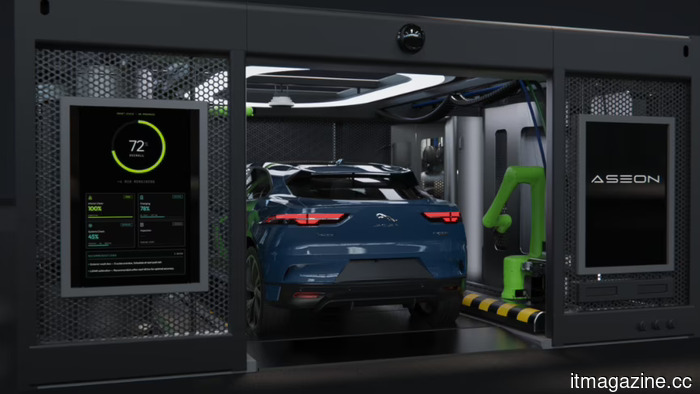 Aseon Labs secures ten million dollars to develop pods the size of parking spaces designed for charging and cleaning robotaxis.
Aseon Labs, supported by Y Combinator, secured $10 million to develop automated pods designed for charging, cleaning, and inspecting robotaxis, reducing the deadhead miles that drain fleet resources.
Aseon Labs secures ten million dollars to develop pods the size of parking spaces designed for charging and cleaning robotaxis.
Aseon Labs, supported by Y Combinator, secured $10 million to develop automated pods designed for charging, cleaning, and inspecting robotaxis, reducing the deadhead miles that drain fleet resources.
 I discovered two budget charger deals for Prime Day that don’t seem like the usual cable-drawer clutter.
These Anker and Belkin charger deals for Prime Day are affordable, functional, and from brands I would trust more than taking chances with random wall chargers.
I discovered two budget charger deals for Prime Day that don’t seem like the usual cable-drawer clutter.
These Anker and Belkin charger deals for Prime Day are affordable, functional, and from brands I would trust more than taking chances with random wall chargers.
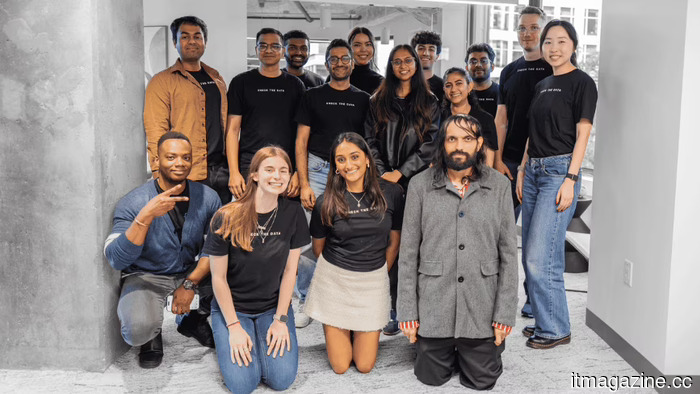 Patronus AI secures $50 million to conduct stress tests on AI agents.
Patronus AI has secured $50 million to develop simulated digital environments that assess AI agents under stress before they are deployed. Investors describe the demand as insatiable.
Patronus AI secures $50 million to conduct stress tests on AI agents.
Patronus AI has secured $50 million to develop simulated digital environments that assess AI agents under stress before they are deployed. Investors describe the demand as insatiable.
Volkswagen is said to be planning to reduce its workforce by 100,000 positions.
Volkswagen is said to be planning to eliminate 100,000 positions, which constitutes roughly 15% of its workforce, and shut down factories in Germany, marking the largest restructuring in the company’s history.