

onsemi's Synaptics agreement: a $7 billion wager on tangible AI
Onsemi is acquiring Synaptics through an all-stock transaction valued at approximately $7 billion. This deal reflects onsemi's belief that the next evolution of AI will take place not in the cloud, but within automobiles, manufacturing plants, and robotics.
The chip sector has spent the last three years focusing on AI in substantial data centers, while onsemi has taken a contrary stance. The American semiconductor company plans to purchase Synaptics, which specializes in chips for smart devices. The acquisition, valued at roughly $6.2 billion, results in a total enterprise value of around $7 billion when including debt. Both companies released a joint statement outlining the terms, which were unanimously approved by their respective boards. The transaction is expected to finalize by mid-2027, pending a vote from Synaptics shareholders and necessary regulatory approvals.
The rationale for the acquisition hinges on a concept onsemi frequently emphasizes: physical AI. CEO Hassane El-Khoury describes it as a means to integrate intelligence into the machines that surround us, targeting the device rather than the data center.
He notes that the upcoming phase will rely on “systems that can sense, decide, act, and adapt in real-time,” focusing on four key components: power, sensing, connected computing, and control.
Understanding the synergy is simpler once you recognize what each company produces. Based in Scottsdale, Arizona, onsemi manufactures power and sensing chips, which manage electricity and interpret the environment in vehicles, factories, and AI data centers. The firm excels in silicon that facilitates movement and measurement but has limitations in areas concerning cognitive functionality.
Synaptics bridges that gap. The San Jose-based company manufactures the chips for touch screens, fingerprint scanners, and wireless communication. Its Astra platform combines specialized AI processors and NPUs with Wi-Fi, Bluetooth, and GPS, alongside an open-source software framework. Onsemi thus enhances its offerings with “connected compute” to complement its existing power and sensing products. The true benefit for onsemi lies in content, as software and embedded IP can generate increased revenue per platform with improved margins, aligning with higher-value systems the company has pursued for years.
Synaptics' CEO Rahul Patel positioned the merger as a growth opportunity for his company as well, claiming the union encompasses “every layer of the Edge AI stack.” The all-stock format allows his shareholders to partake in future gains.
The deal terms specify that Synaptics shareholders will receive 1.350 onsemi shares for each share they hold, which equates to an approximate 19% premium based on the average price of both stocks over the preceding 10 trading days. This arrangement would leave them with about 12% ownership in the merged entity, and one director from Synaptics is expected to join onsemi's board.
Onsemi anticipates that the acquisition will increase adjusted earnings within 18 months post-closing, with potential annual savings of around $200 million. Furthermore, the company believes the deal will expand its accessible market by $30 billion, raising it to $243 billion by 2030. Both companies reiterated their current financial projections in conjunction with this announcement.
Onsemi has communicated the rationale behind the deal in well-known business terms: complementary product lines, strengthened customer relationships, and a diversified mix of system-level offerings. Morgan Stanley led the advisory team for onsemi, with J.P. Morgan and Skadden also participating. Synaptics received advice from Qatalyst and Baker McKenzie.
However, not all investors were immediately convinced. Following the announcement, onsemi's stock fell by 8.2% in extended trading, while Synaptics shares rose by 12%. This divergence in market response indicates skepticism regarding whether onsemi is investing in unproven growth.
Previous experience feeds this uncertainty. A year ago, onsemi abandoned a $6.9 billion bid for Allegro MicroSystems, citing a lack of “actionable path forward.” A second large acquisition in rapid succession raises a pertinent question: will this deal succeed where the last did not?
The anticipated savings may also come at a human cost. El-Khoury informed Bloomberg that the merger would likely result in job reductions, primarily in operating expenses, while attempting to safeguard research and development roles. Additionally, plaintiff law firms have started to take an interest, common with major public transactions. Ademi LLP has announced an investigation to determine if Synaptics is being offered a fair valuation for its shareholders.
This trend of focusing on the edge is not unique to onsemi. Many companies are recognizing that AI’s core of influence is shifting outside traditional centers. As AI models transition from data centers to applications like autonomous driving, robotics, and wearables, the value is moving toward chips that can run intelligent processes efficiently and locally at the edge, which has quickly become a crowded space.
The competitive landscape is evolving as companies reevaluate ownership dynamics. Firms like Intel and Qualcomm have opted to pursue smaller chip designers instead of developing competing architectures from scratch, while startups are
Other articles
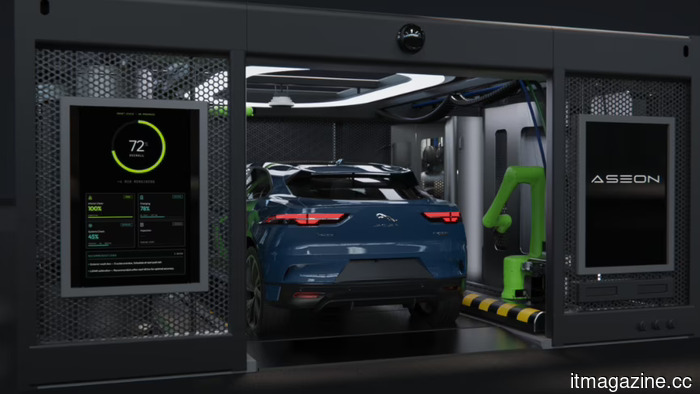 Aseon Labs secures ten million dollars to develop pods the size of parking spaces designed to recharge and clean robotaxis.
Aseon Labs, supported by Y Combinator, secured $10 million to develop automated pods designed to charge, clean, and inspect robotaxis, thereby reducing the unnecessary miles that are draining fleet resources.
Aseon Labs secures ten million dollars to develop pods the size of parking spaces designed to recharge and clean robotaxis.
Aseon Labs, supported by Y Combinator, secured $10 million to develop automated pods designed to charge, clean, and inspect robotaxis, thereby reducing the unnecessary miles that are draining fleet resources.
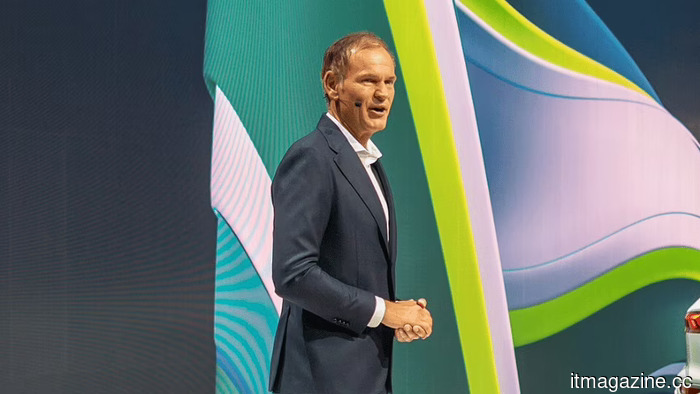 Volkswagen is said to be planning to reduce its workforce by 100,000 positions.
Volkswagen is said to be planning to eliminate 100,000 positions, which constitutes roughly 15% of its workforce, and shut down factories in Germany, marking the largest restructuring in the company’s history.
Volkswagen is said to be planning to reduce its workforce by 100,000 positions.
Volkswagen is said to be planning to eliminate 100,000 positions, which constitutes roughly 15% of its workforce, and shut down factories in Germany, marking the largest restructuring in the company’s history.
 California introduces its inaugural AI job-loss monitoring system.
California has introduced the nation's first AI job-loss tracker. Initial data indicates there are no large-scale layoffs, although there are some concerning signals in the Bay Area.
California introduces its inaugural AI job-loss monitoring system.
California has introduced the nation's first AI job-loss tracker. Initial data indicates there are no large-scale layoffs, although there are some concerning signals in the Bay Area.
 Your Windows 10 computer has received an additional year of security updates; here's how to obtain them at no cost.
Millions of Windows 10 PCs that aren't able to run Windows 11 have received some relief, as Microsoft has extended its free security update program until October 2027.
Your Windows 10 computer has received an additional year of security updates; here's how to obtain them at no cost.
Millions of Windows 10 PCs that aren't able to run Windows 11 have received some relief, as Microsoft has extended its free security update program until October 2027.
 Apple M7 chips: it is bypassing the premium M6.
Apple's top Macs will feature M7 chips starting in 2027, bypassing the high-end M6 to accelerate on-device AI development during a memory shortage.
Apple M7 chips: it is bypassing the premium M6.
Apple's top Macs will feature M7 chips starting in 2027, bypassing the high-end M6 to accelerate on-device AI development during a memory shortage.
 OpenAI presents ChatGPT advertisements at Cannes amid a drop in CPM.
OpenAI made its first appearance at the Cannes Lions with a large number of advertisers, yet its ad pricing fell from $60 to $25 CPM within a matter of weeks. Is it possible for ChatGPT to achieve $100 billion in advertising revenue by 2030?
OpenAI presents ChatGPT advertisements at Cannes amid a drop in CPM.
OpenAI made its first appearance at the Cannes Lions with a large number of advertisers, yet its ad pricing fell from $60 to $25 CPM within a matter of weeks. Is it possible for ChatGPT to achieve $100 billion in advertising revenue by 2030?
onsemi's Synaptics agreement: a $7 billion wager on tangible AI
The onsemi Synaptics agreement, valued at approximately $7 billion, is based on the belief that the next phase of AI development will occur in automobiles, manufacturing facilities, and robotics rather than in the cloud.